John Everett Millais
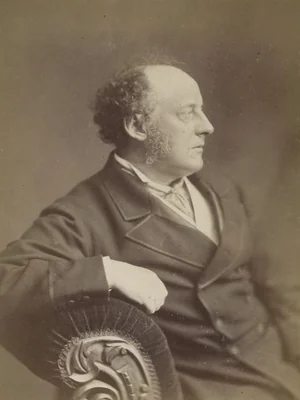
Sir John Everett Millais (1829-1896) stands as one of the definitive figures of Victorian painting and a co-founder of the Pre-Raphaelite Brotherhood (PRB). Recognized early as a remarkable child prodigy, Millais achieved the distinction of becoming the youngest student ever admitted to the Royal Academy Schools at the astonishing age of eleven. This early, formal immersion, however, did not deter him from radical artistic revolution just a decade later.
In 1848, the Pre-Raphaelite Brotherhood was formally established at his family residence in London, 83 Gower Street. The movement sought to reject the perceived superficiality and classicism of High Renaissance art, favoring instead a return to the intense color, meticulous detail, and moral complexity found in art preceding Raphael. Millais quickly emerged as the style's most skilled technical practitioner, capable of executing the hyper-detailed rendering demanded by the movement’s mandate.
His early works generated immediate, often vociferous public reaction. The painting Christ in the House of His Parents (1849–50), with its unsparing realism depicting Christ’s childhood in a working-class environment, shocked critics who expected idealized, sanitized religious imagery. Millais, however, perfected the historical and naturalist focus of the group, a synthesis that culminated in his enduringly famous canvas, Ophelia (1851–1852). Drawing upon Shakespearean tragedy, this painting exemplifies the Brotherhood’s commitment to capturing meticulous botanical detail combined with deep emotional narrative. It is perhaps one of the most successful pieces of visual poetry ever produced in English art, even if its creation famously involved forcing the model, Elizabeth Siddal, to pose in a tub of increasingly chilly water.
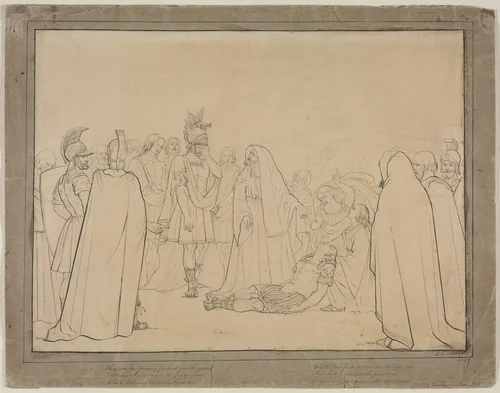
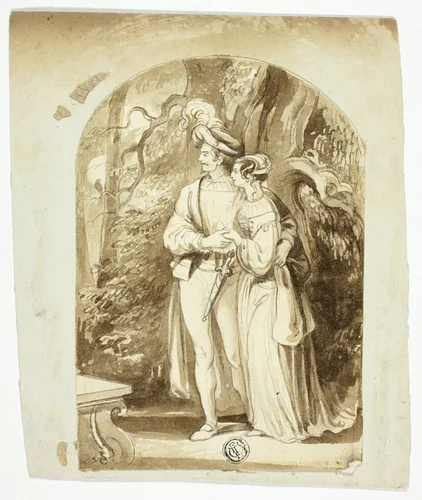
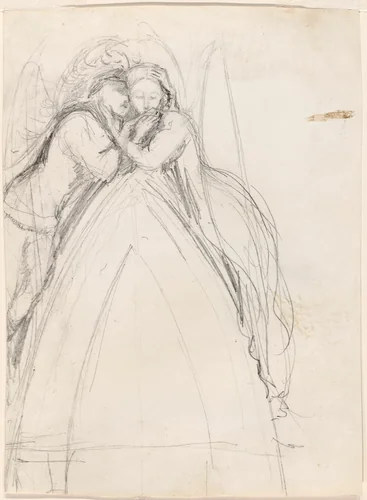
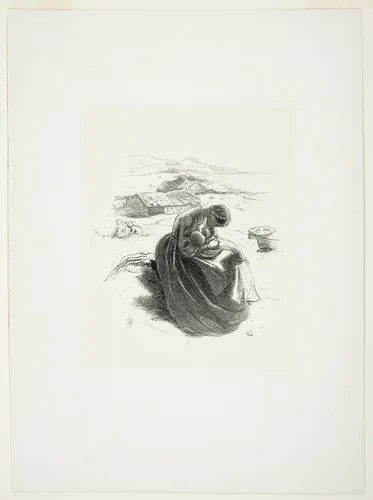
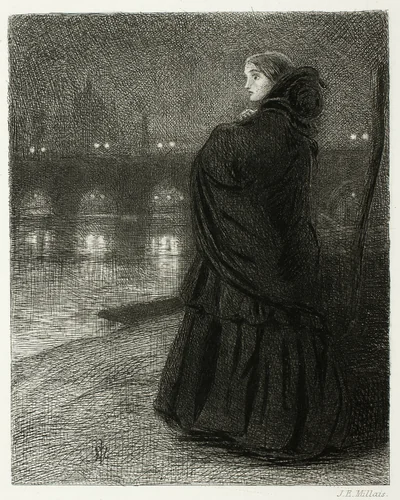
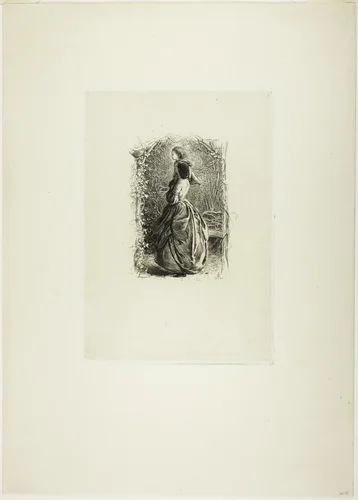
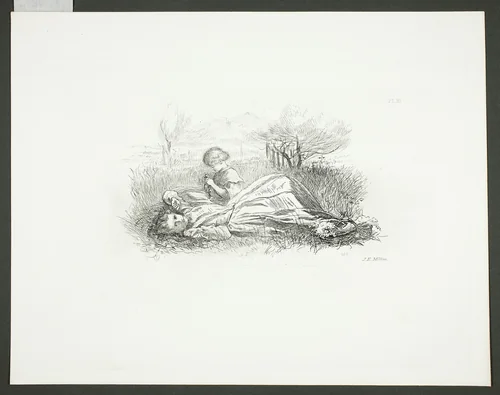
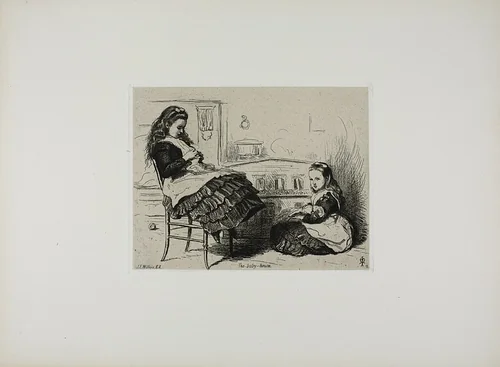
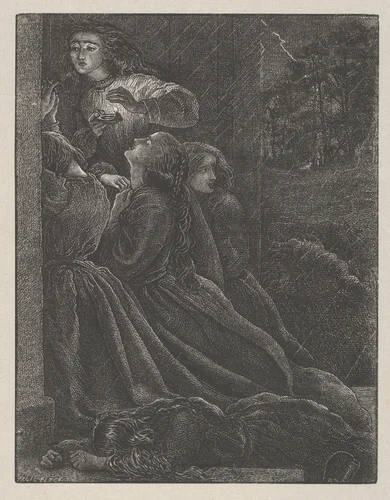
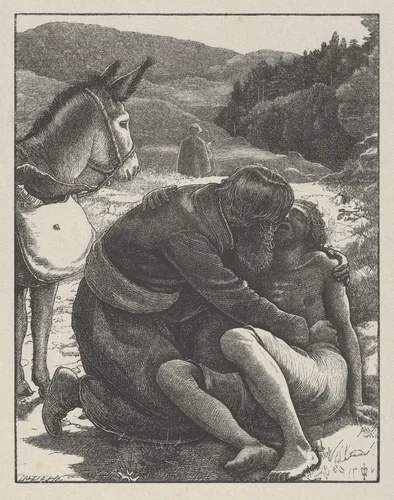
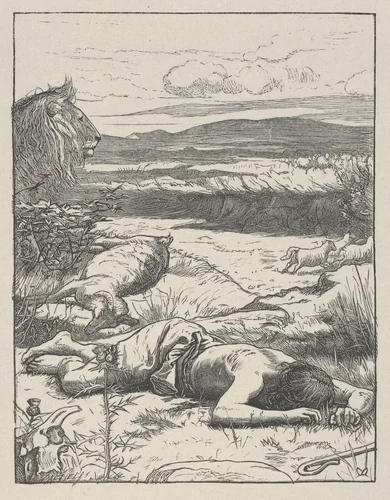
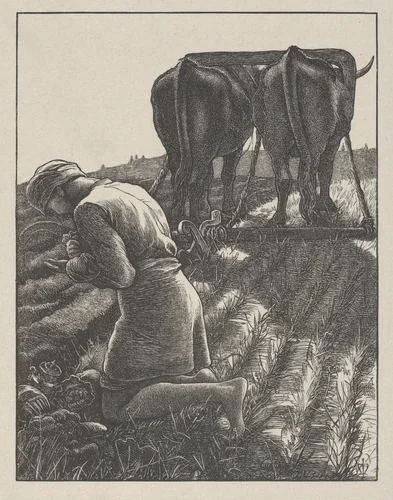
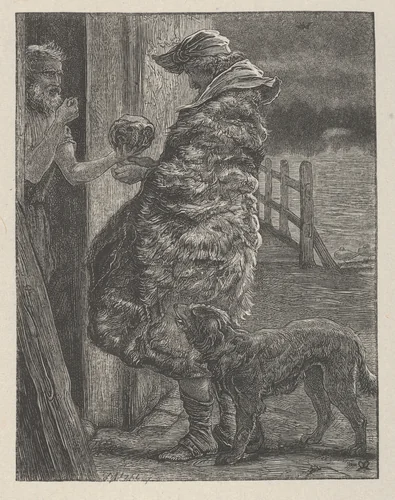
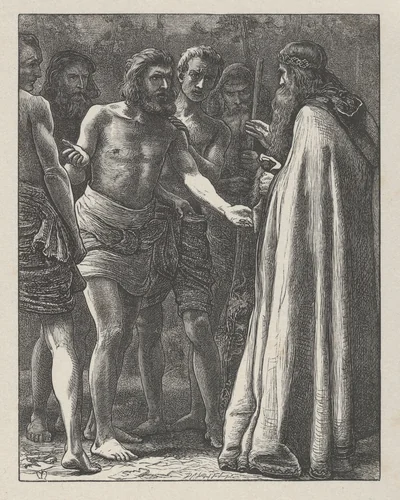
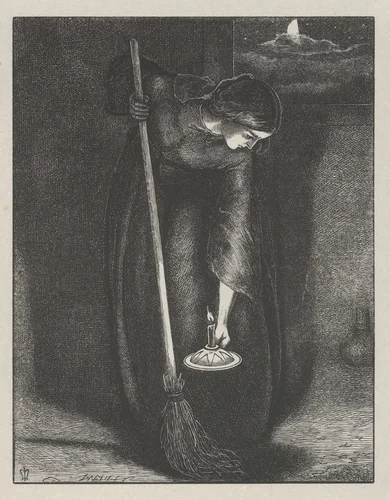
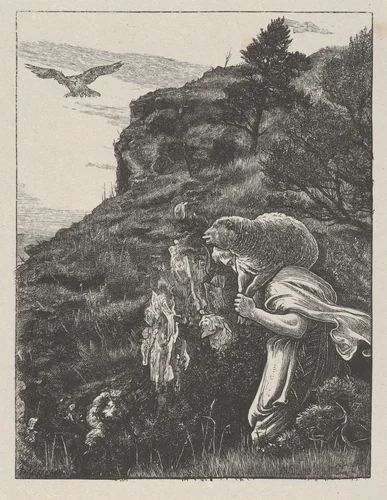
Millais was not solely defined by his large canvases; he was also a prolific draftsman and illustrator. Preparatory drawings, such as Study of a Pottery Jug [recto], confirm his foundational training in academic precision, though he consistently applied the PRB’s sharp detail to traditional subject matter, lending it a distinctly modern edge. Furthermore, his serious engagement with intimate narrative is evident in works like Lovers under a Tree and Lovers in Woods. His technical output extended across ten prints and five drawings during his most active early period. Today, iconic John Everett Millais paintings and studies, including Saint Agnes of Intercession and Aeneas Shown the Body of Pallas from Virgil's "Aeneid", are preserved in major institutions globally, including the Metropolitan Museum of Art and the Cleveland Museum of Art. Much of this iconic body of work is now in the public domain, offering access to museum-quality high-quality prints for scholars and enthusiasts alike.
Source: Wikipedia · CC BY-SA 4.0
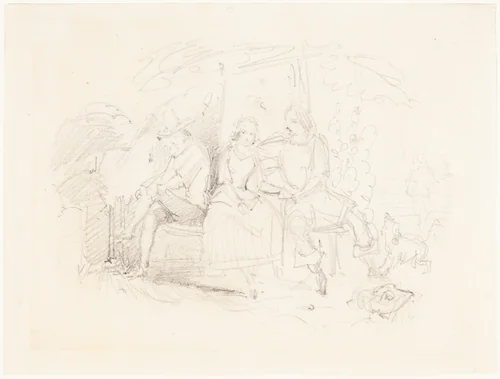
![Study of a Pottery Jug [recto] by John Everett Millais, drawing, 1842](https://img.artbee.org/a094f19e-8c2f-45ac-894f-ec12d470ca10/small.webp)