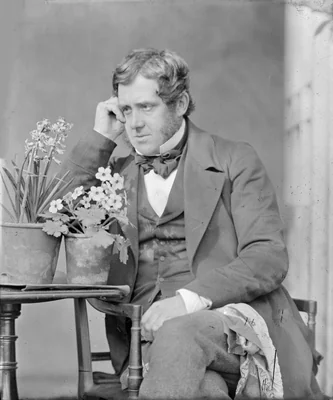
John Dillwyn Llewelyn
John Dillwyn Llewelyn (1810-1882) occupies a unique and significant place in the history of visual arts, distinguished equally as a Welsh botanist and a pioneering figure in early photography. Operating during the medium's volatile infancy, primarily between 1847 and 1853, Llewelyn leveraged his scientific precision to create some of the most enduring calotypes and salted paper prints of the mid-nineteenth century.
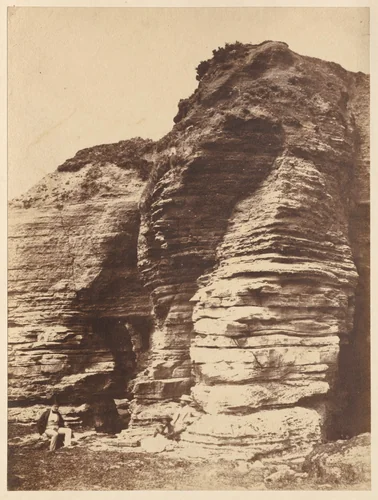
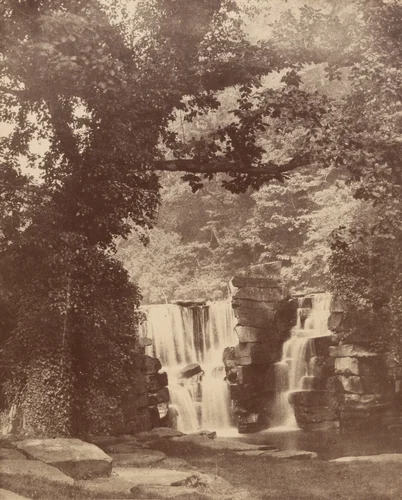
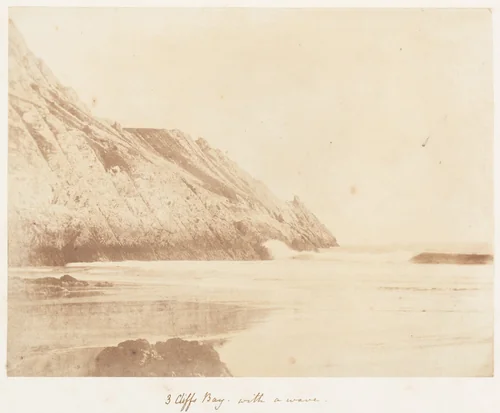
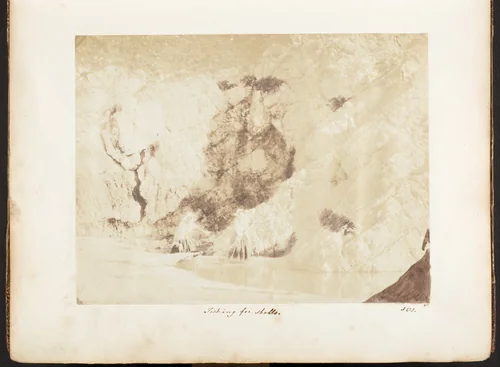
His background in botany provided him with an unparalleled eye for texture, light, and composition, particularly evident in his treatment of landscape. Unlike some contemporaries who focused purely on documentation, Llewelyn infused his scenes with atmosphere and a quiet Romantic sensibility. Works such as Rocks at Livermead near Torquay (England) and The Upper Falls, Penllergare Valley Woods reveal a sophisticated understanding of how light interacts with natural forms, transforming geological study into expressive art. These photographs demonstrate a deliberate artistic choice, prioritizing tonal depth and dramatic contrast over mere factual recording. His iconic view 3 Cliffs Bay with a Wave beautifully captures the fleeting dynamic energy of the sea, demonstrating technical mastery over early processes that often struggled to fix motion.
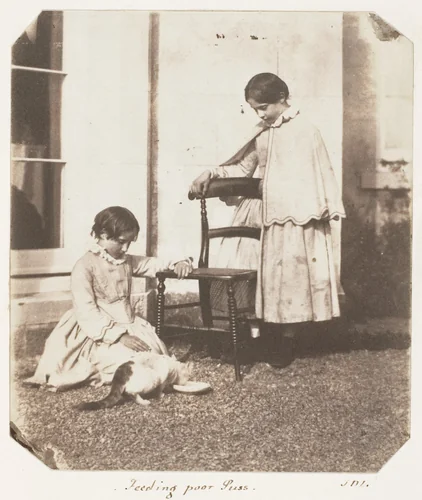
Llewelyn's camera was not solely focused on the expansive landscape of his native Wales. He also meticulously documented domestic life, bridging the scientific and the personal. A particularly telling example is the portrait [Thereza Dillwyn Llewelyn with Her Microscope]. This image, capturing his daughter at a scientific instrument, offers a rare glimpse into the intellectual life of a Victorian family, illustrating how photography served both scientific inquiry and intimate portraiture within the household. This dual interest highlights Llewelyn's unique contribution: an artist whose aesthetic was fundamentally rooted in precise, scientific observation.
Though his active photographic period was brief, Llewelyn’s output was highly influential, contributing critically to the refinement of early photographic processes. Today, his limited yet powerful oeuvre is held in major institutional collections worldwide, including the Metropolitan Museum of Art, the National Gallery of Art, and the Cleveland Museum of Art, ensuring their status as museum-quality artifacts. Given the age and historical significance of his work, many of these John Dillwyn Llewelyn prints are now in the public domain, ensuring the continued availability and relevance of this key pioneer for study.
Source: Wikipedia · CC BY-SA 4.0
![[Thereza Dillwyn Llewelyn with Her Microscope] by John Dillwyn Llewelyn, photograph, 1852-1856](https://img.artbee.org/9db35f7b-6f09-40fe-b481-5c81581b4d0d/small.webp)
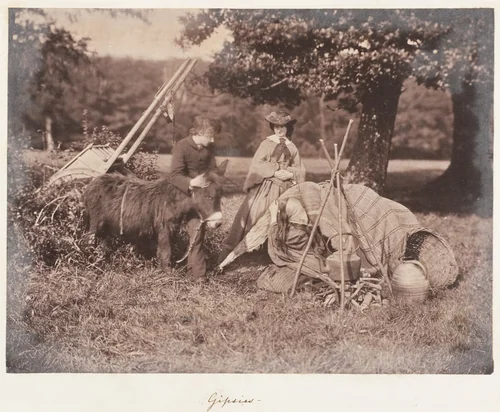
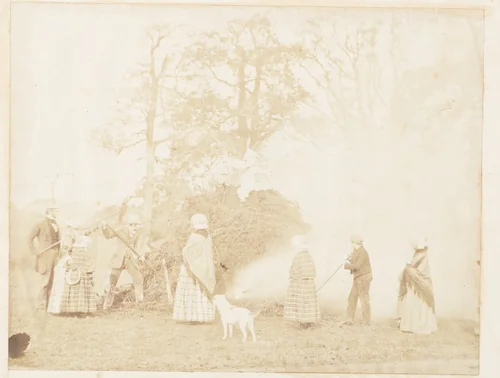
![Gipsies; Lewitha; Upper Lake; [Untitled] by John Dillwyn Llewelyn, photograph, 1853-1856](https://img.artbee.org/973f98cb-d43d-4dc1-be6b-5bf0deb65742/small.webp)
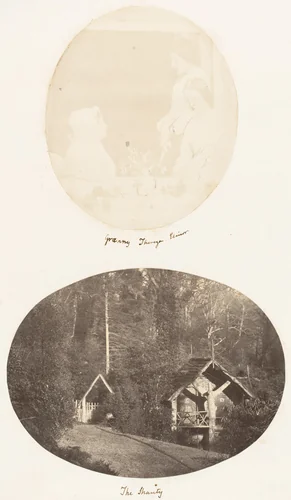
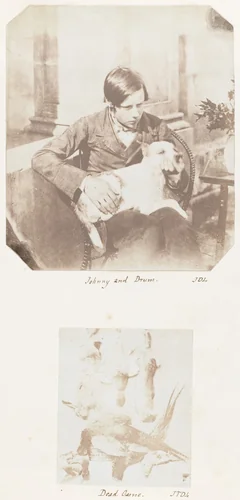
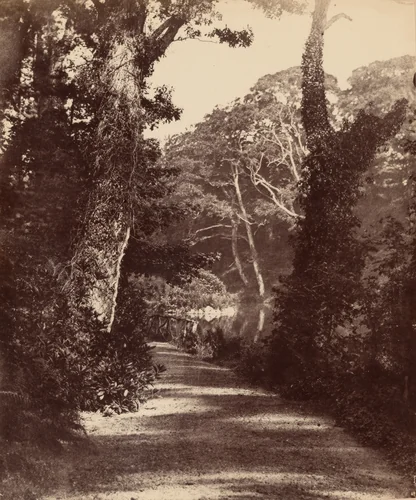
![Lanelay; [Untitled] by John Dillwyn Llewelyn, photograph, 1853-1856](https://img.artbee.org/e7f88302-6a95-4143-873a-8ef44621d57a/small.webp)