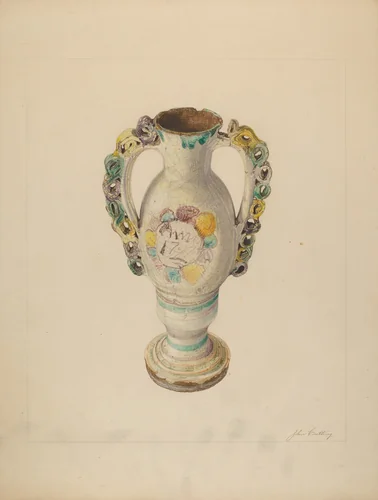
John Cutting
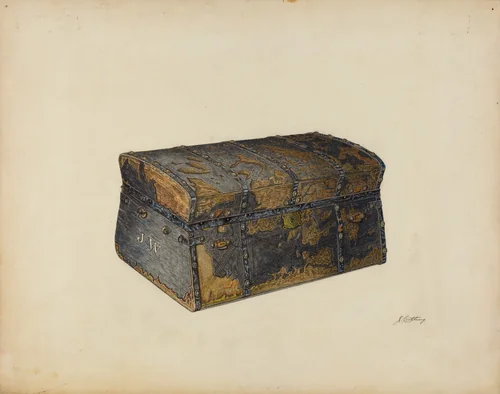
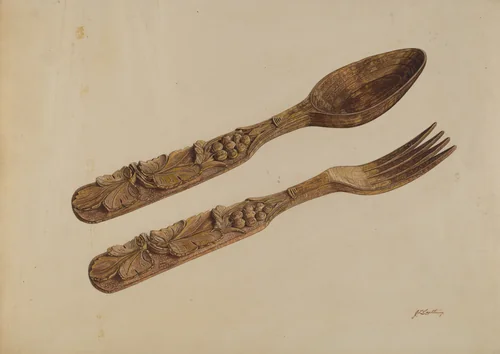
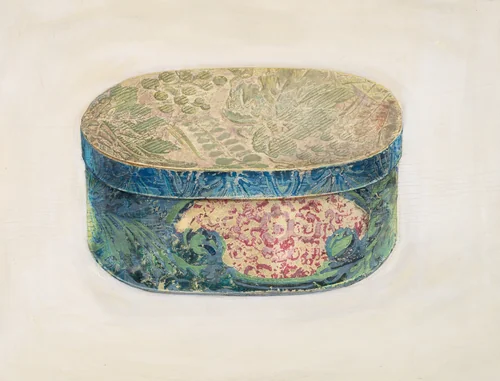
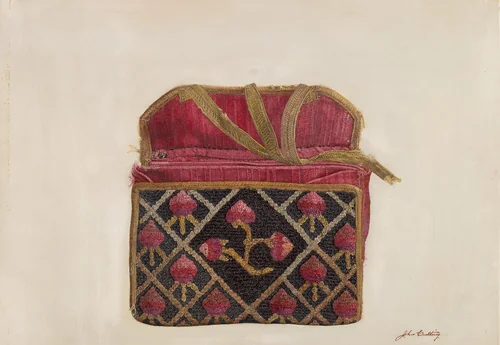
John Cutting is principally recognized for his concise, yet highly influential, contribution to the Index of American Design (IAD), a monumental federal arts initiative launched under the Works Progress Administration (WPA) during the Great Depression. Active between 1935 and 1937, Cutting was among the select group of artists tasked with creating a detailed visual archive of American decorative arts, craft traditions, and material culture that existed prior to 1900.
The Index was inherently a project of preservation through documentation, and Cutting’s specialization lay in the precise rendering of functional objects. His works, including the documentation of a Copper Kettle, a complex rendering of a Bicycle, and the essential beauty captured in the Maple Mixing Bowl, exemplify the IAD's mandate. Utilizing techniques such as watercolor and gouache, Cutting transformed these commonplace domestic items into subjects of rigorous, museum-quality visual study. His approach emphasized exactitude in form, texture, and scale, ensuring that the historical details of these rapidly disappearing artifacts were meticulously recorded.
The lasting impact of Cutting’s work is secured by the fact that the 15 designs attributed to him are now held within the comprehensive IAD collection at the National Gallery of Art. This collection served not only as a historical reservoir but fundamentally shaped modern American art and design theory by foregrounding the aesthetic integrity inherent in folk art.
It is perhaps an understated observation of his career that Cutting, unlike contemporaries focused on grand expression, achieved his prominence through intense fidelity to the utilitarian. His artistic legacy rests entirely upon objects of necessity—bowls, implements, and tools—rendered with an almost scientific precision. Through this process, he ensured that the functional beauty of early American life was cataloged and maintained. Today, the detailed documentation produced by artists like John Cutting remains a foundational resource for scholars and the wider public. While original works are preserved in the NGA archives, many of these historical records are now accessible as downloadable artwork, providing the basis for high-quality prints and continued research into American domestic history.
Source: Wikipedia · CC BY-SA 4.0