John Copley
John Copley (1875–1950) occupies a significant, if sometimes understated, position within the history of early 20th-century British printmaking. An artist dedicated almost exclusively to graphic media, Copley rigorously explored the potential of lithography and etching, establishing a distinct visual language during his most active period between 1909 and 1928. It is important to distinguish him from his famous American predecessor, John Singleton Copley, as this British artist focused not on grand portraiture, but on intimate studies of modern life and the dynamics of performance.
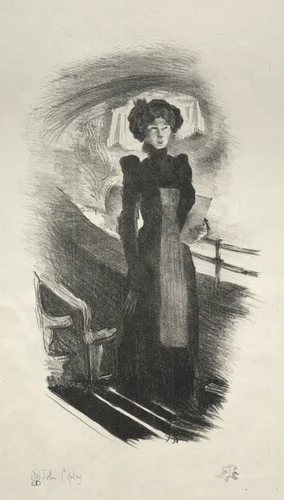
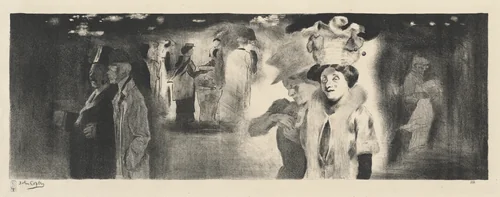
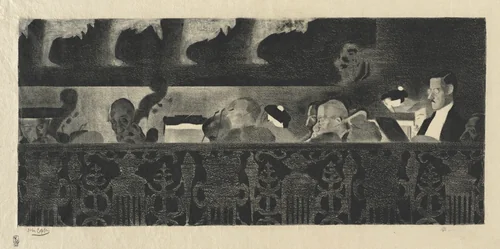
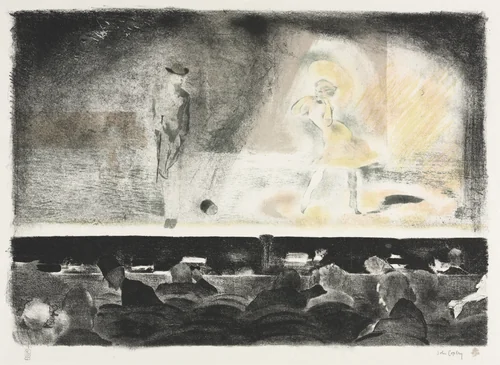
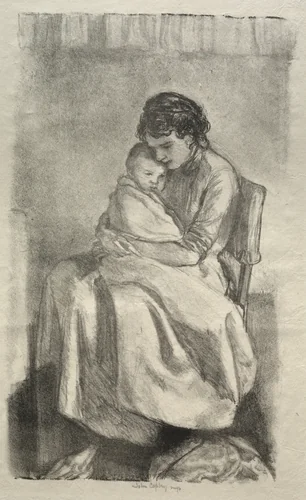
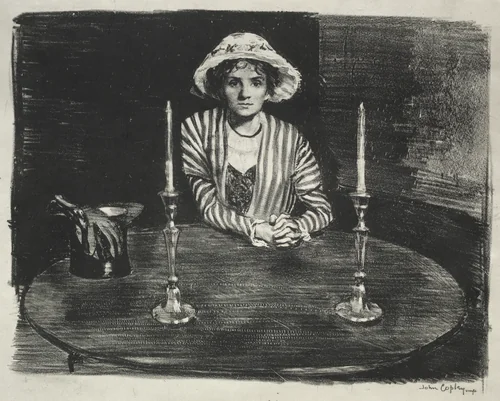
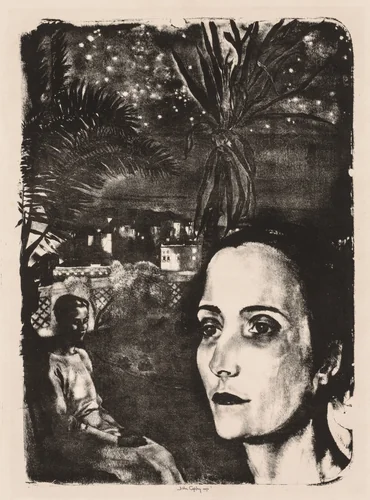
Copley’s artistic achievement rests on his acute observational skills and his ability to translate subtle changes in light and shadow into compelling tonal contrasts. His compositions frequently pull the viewer into the close, atmospheric environments of theaters, concert halls, and private gatherings. His subject matter concentrates heavily on the emotional truth found in gesture and posture, whether capturing musicians absorbed in their craft or actors in moments of intense preparation. Key works such as A Night Scene, Musicians, and the carefully structured Two Actors exemplify his mastery of line and depth, transforming casual observation into profound visual documentation.
Interestingly, Copley sometimes treated the audience with the same meticulous attention usually reserved for the performers themselves. Works like The Programme Seller highlight the intricate social geography of public events, suggesting that the dynamics of spectatorship held as much fascination for him as the dramatic action unfolding on stage. Even in formal, reflective pieces like Study No. 15: Vespers, Copley conveys a compelling sense of momentary stillness and quiet ritual. His technical proficiency ensured that these studies remain high-quality prints of enduring artistic value.
Though his output was concise, Copley’s contributions to modern graphic art are recognized internationally. His work is preserved in major institutional collections, including the Cleveland Museum of Art, ensuring his legacy as a precise and thoughtful chronicler of his era. Today, as many of his vital images have entered the public domain, these museum-quality prints are widely accessible, allowing scholars and enthusiasts alike to engage directly with his refined vision through downloadable artwork.
Source: Wikipedia · CC BY-SA 4.0