John Cage
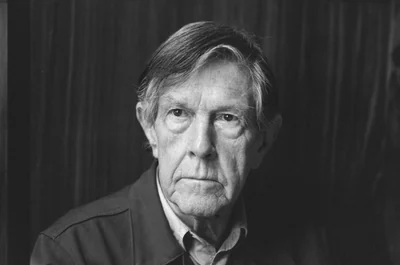
John Milton Cage Jr. (1912-1992) stands as one of the most influential American composers and music theorists of the 20th century. A foundational leader of the post-war avant-garde, Cage fundamentally reshaped the definition of music, sound, and silence. His career was marked by a relentless pursuit of innovation, moving beyond traditional Western compositional structures to explore chance operations and acoustic experiments.
Cage is best recognized as a pioneer of indeterminacy in music, introducing chance (or alea) as a compositional device that removed the composer’s absolute control, granting autonomy to the performer and the environment. This conceptual framework extended into his groundbreaking work in electroacoustic music and his creative, non-standard approaches to traditional instruments, famously exemplified by the prepared piano. His theories challenged listeners to redefine ambient noise as intentional structure, a concept that permanently altered the trajectory of modern sound art.
Beyond sound, Cage was instrumental in the development of modern American dance, largely through his pivotal professional and personal association with choreographer Merce Cunningham. Their lifelong collaboration yielded compositions specifically designed to complement Cunningham’s pioneering dance movements, securing Cage's central role in the interdisciplinary arts.
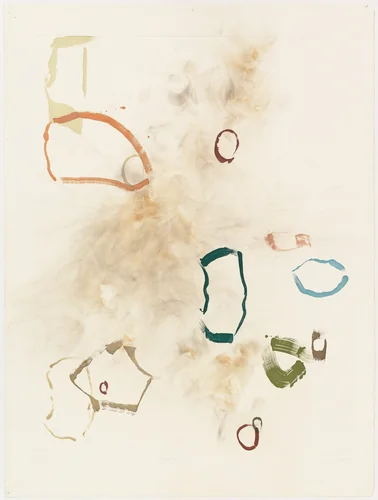
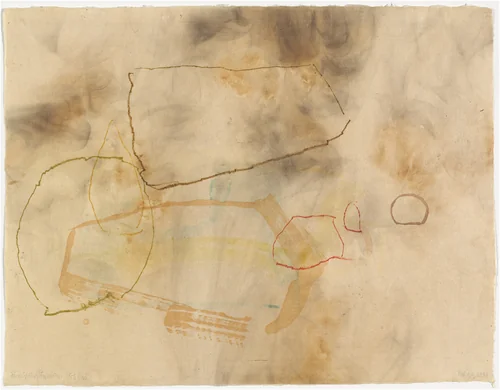
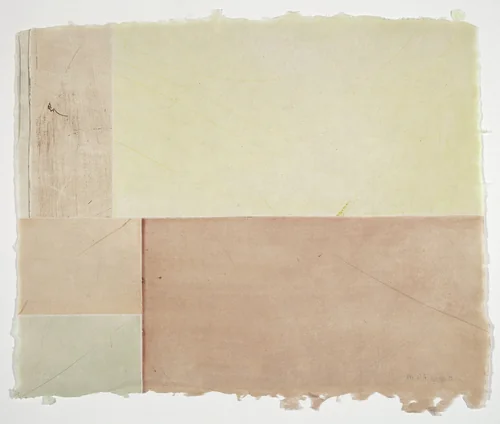
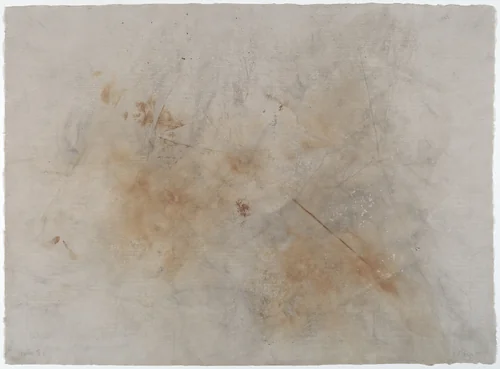
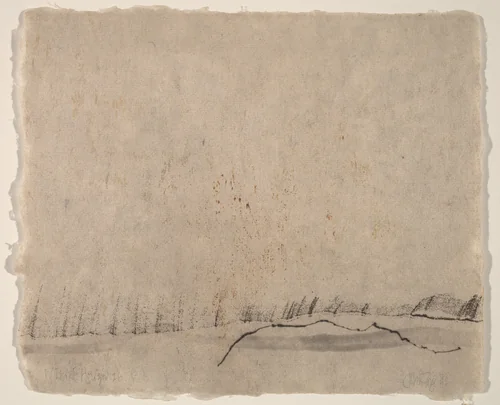
While celebrated primarily as a musician, Cage maintained a serious, though often overlooked, visual art practice, spanning eight portfolios and seven original drawings between 1978 and 1992. He incorporated his conceptual approaches into graphic scoring, resulting in works like Atlas Eclipticalis (Mixer Manipulation) and studies such as the Solo for Flute (Concert for Piano and Orchestra): Sketch. These John Cage prints and drawings often blur the boundary between musical notation and pure abstraction.
Lauded by critics as one of the great minds of his era, Cage’s influence transcends auditory boundaries, impacting performance art, poetry, and visual media globally. His dedication to conceptual exploration continues to inspire contemporary artists. Many of his historical visual and graphic works are held in major institutions, including the National Gallery of Art, with select studies now falling into the public domain, making high-quality prints accessible for scholarly and public appreciation.
Source: Wikipedia · CC BY-SA 4.0
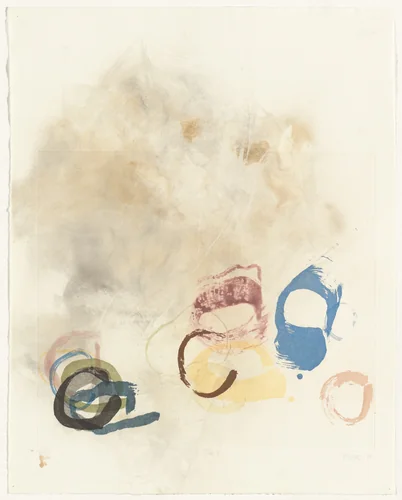
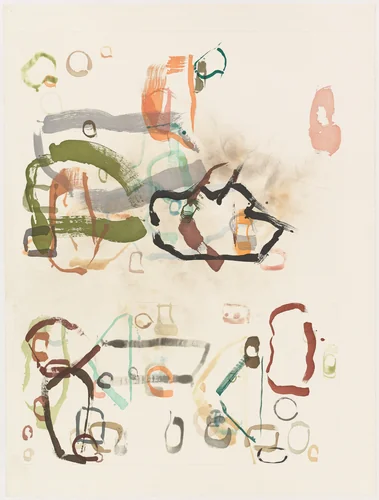
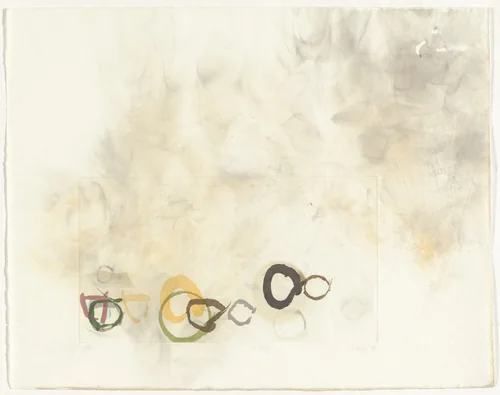
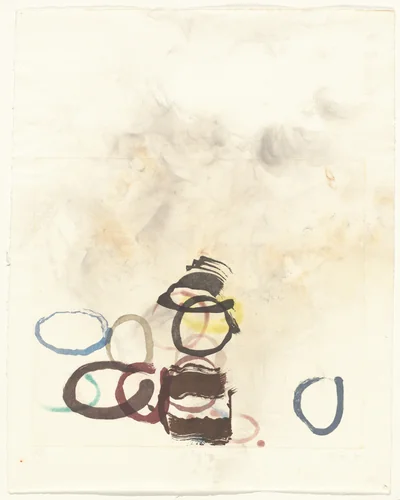
![Global Village 1-36 [bottom] by John Cage, print, 1989](https://img.artbee.org/b212df78-5d2c-424e-98ee-71f00db5c03c/small.webp)
![Global Village 1-36 [bottom] by John Cage, print, 1989](https://img.artbee.org/58262c9d-ffb9-4483-bf96-cee50180b06e/small.webp)
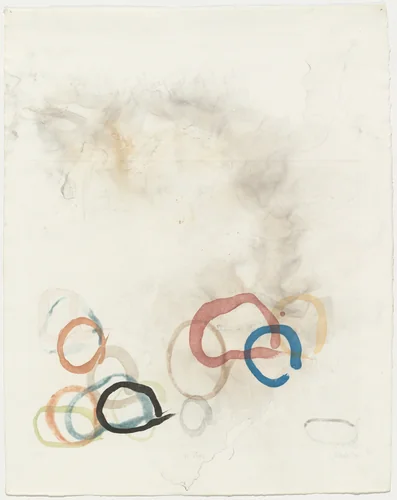
![Global Village 1-36 [top] by John Cage, print, 1989](https://img.artbee.org/19a430e1-18e3-484c-807a-0c96d0c7c848/small.webp)
![Global Village 37-48 [bottom] by John Cage, print, 1989](https://img.artbee.org/93b8d170-c0bc-48d6-9347-42b23d3549d7/small.webp)
![Global Village 37-48 [top] by John Cage, print, 1989](https://img.artbee.org/53f325de-7a7f-4f46-ac24-da2bf01be2ea/small.webp)