John Beasley Greene
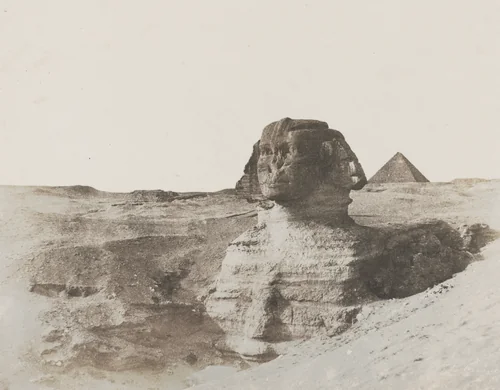
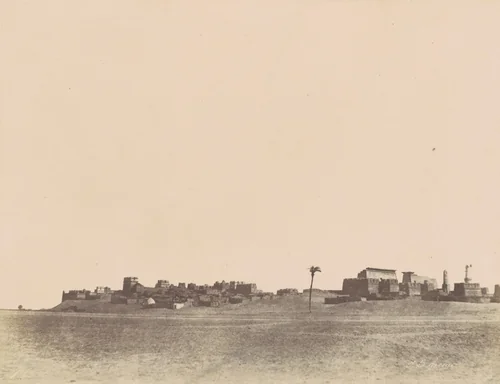
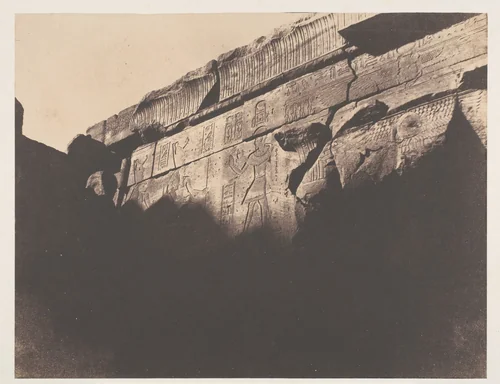
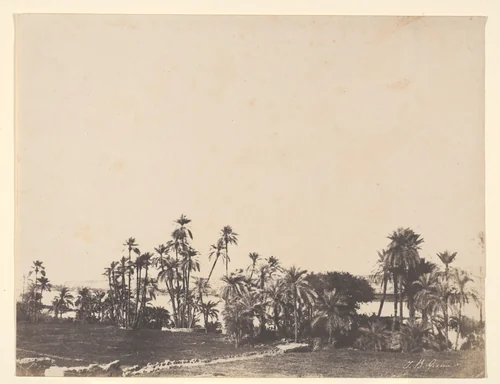
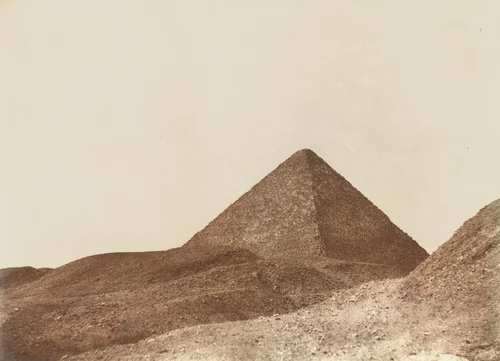
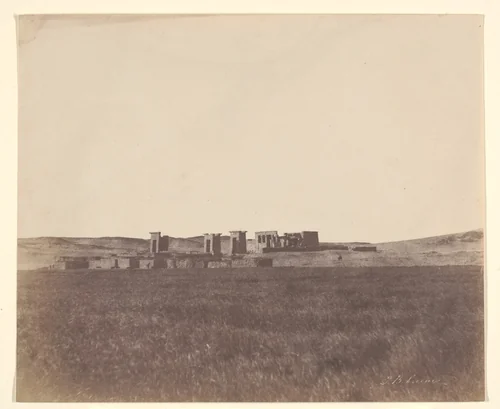
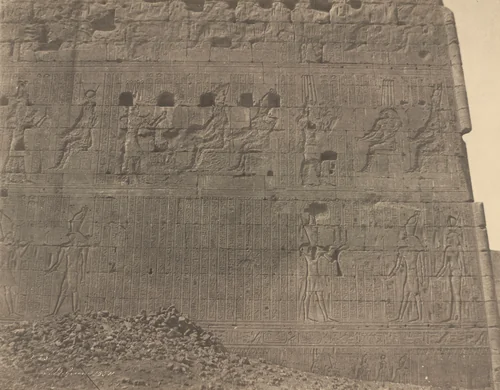
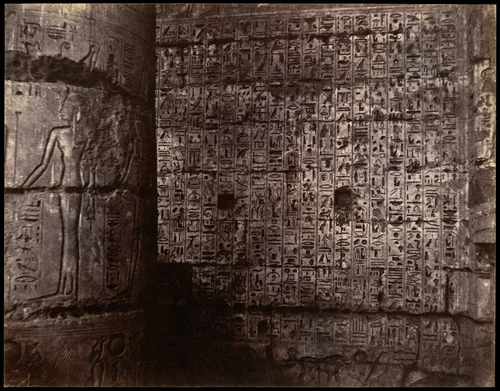
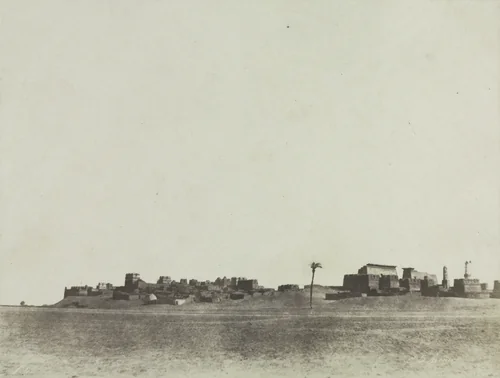
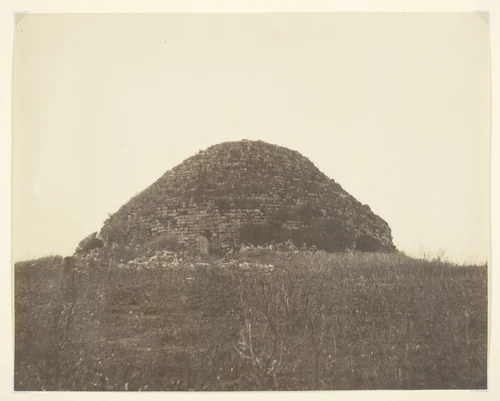
John Beasley Greene (1832-1853) occupies a unique and significant position at the inception of photographic documentation. A French-born American Egyptologist, Greene was active for a mere five years (1848-1853), yet his precise and evocative output fundamentally shaped the visual record of mid-19th century Egyptian exploration. Working primarily in the early 1850s, his images, such as the evocative The Sphinx and the precise architectural studies like Karnak, Temple du Sud, represent some of the earliest high-quality archaeological documentary photography produced directly in the field.
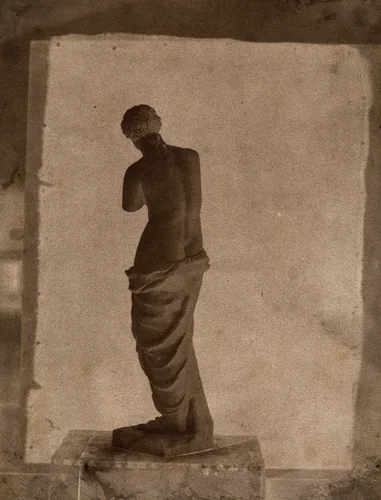
Greene operated during the crucial transition from the Daguerreotype to the reproducible paper negative processes, capitalizing on the Calotype’s ability to capture the immense scale of ancient monuments. While his primary focus was topographical record-keeping essential to his Egyptological studies, his photographic technique transcended simple documentation. His compositions are characterized by their reductive geometry and stark sense of desolation, features that lend a remarkably modern aesthetic to his historical subjects. This unique vision is also apparent in his rare non-archaeological studies, such as Untitled (Still life with a statuette of the Venus de Milo), which suggests an aesthetic sensibility keen on balancing academic rigor with artistic form.
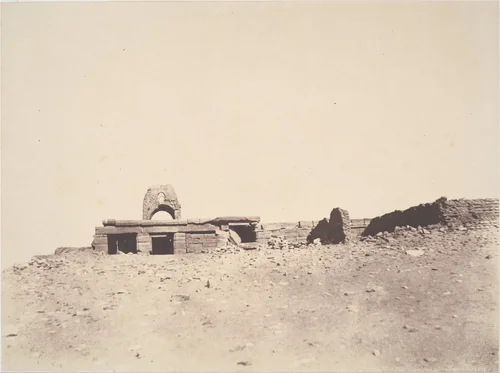
The brevity of Greene’s career—he died tragically at the age of twenty-four—resulted in his pioneering achievements being almost immediately overshadowed by later generations of photographers and travelers. For over a century, the corpus of his work, including images from sites like Amada, Temple and Dakkeh, remained largely inaccessible to scholarship. This historical silence was finally broken in 1981 with the publication of the first major study dedicated to his oeuvre.
Today, John Beasley Greene prints are recognized for their critical historical value and their enduring aesthetic importance and are held in major institutions including the Metropolitan Museum of Art and the Art Institute of Chicago. The public domain availability of many of these images ensures that his museum-quality records of early Egyptology are fully integrated into the history of photography and freely accessible to contemporary scholars and viewers.
Source: Wikipedia · CC BY-SA 4.0
![[Antiquities in the Museum at Cherchell, Algeria] by John Beasley Greene, photograph, 1853-1854](https://img.artbee.org/7b8340d4-c5e6-4c46-b6f5-01ef37ec8a42/small.webp)
![[Bank of the Rhumel, near Constantine, Algeria] by John Beasley Greene, photograph, 1853-1858](https://img.artbee.org/c7679d07-d174-49cc-aa2a-aa8ccfc80a6f/small.webp)
![[Boat in Harbor, Algeria] by John Beasley Greene, photograph, 1853-1854](https://img.artbee.org/d6b65e4b-422d-4f66-a50b-c3eb9522b41c/small.webp)
![[Constantine, Algeria] by John Beasley Greene, photograph, 1853-1854](https://img.artbee.org/3f558d7f-91a6-43b2-a1d5-2449301b6739/small.webp)
![[Excavations near the Sphinx] by John Beasley Greene, photograph, 1853](https://img.artbee.org/a06a3c6d-4318-4b94-a9db-151f3361b588/small.webp)
![[Island of Philae] by John Beasley Greene, photograph, 1853-1854](https://img.artbee.org/7f26c6b4-65f3-4e11-b451-1aa6866c5a90/small.webp)
![[The Nile in front of the Theban Hills] by John Beasley Greene, photograph, 1853-1854](https://img.artbee.org/c4e40632-d4f9-44c5-bced-ad2bf6bb562a/small.webp)
![Untitled [Roman sculptures, Cherchell Museum] by John Beasley Greene, photograph, 1856](https://img.artbee.org/d5ac7219-c4f2-43fd-bb0a-1a8c48a90cc1/small.webp)