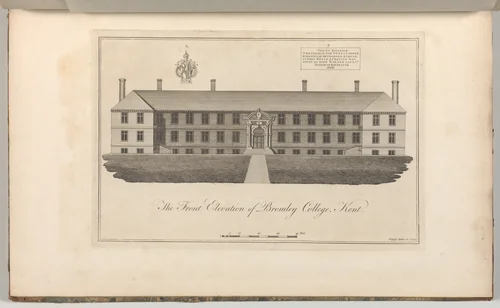
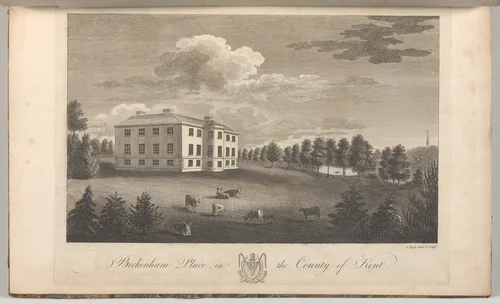
John Bayly
John Bayly stands as a representative, if briefly active, exponent of late 18th-century British topographical illustration. Working predominantly within the years 1777 and 1778, his legacy is intrinsically tied to Edward Hasted’s monumental The History and Topographical Survey of the County of Kent, a project emblematic of the Enlightenment’s ambition to document and classify the national historical landscape.
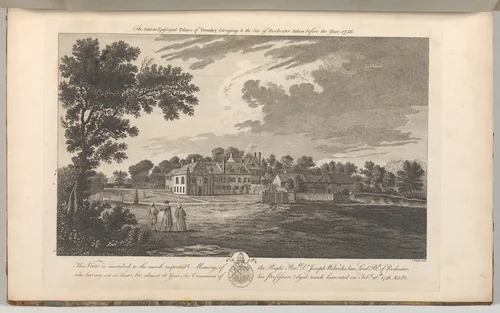
Bayly’s primary contribution was to furnish crucial visual infrastructure for Hasted’s text, transforming dry textual records of manorial holdings and ecclesiastical history into tangible, spatial realities. His technique, characterized by meticulous architectural accuracy and precise delineation, placed him squarely within the tradition of documentary engraving necessary for serious scholarly publications.
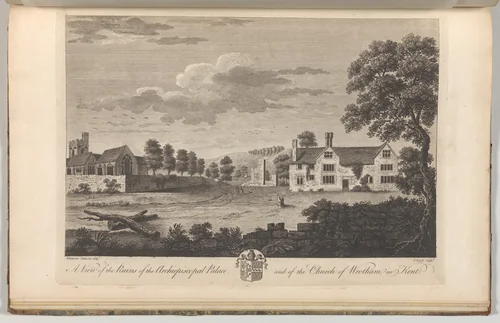
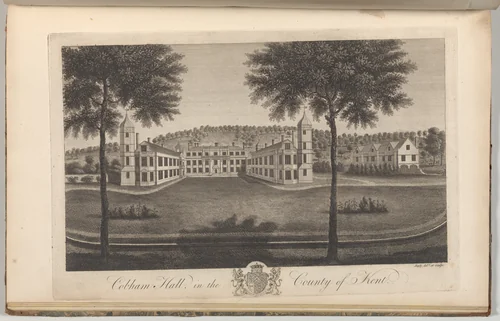
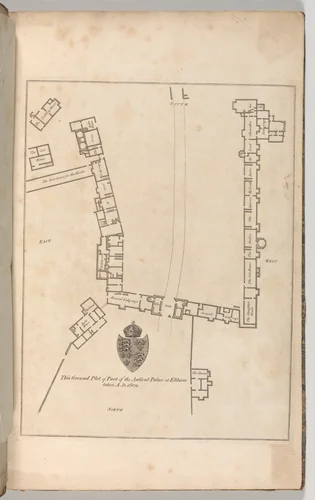
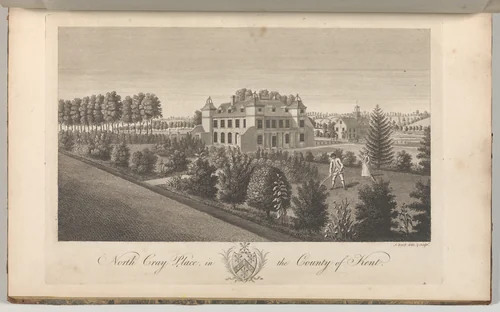
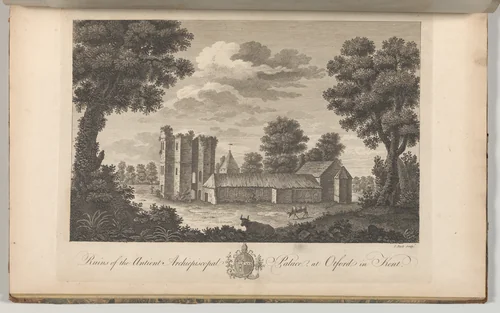
His prints served several functions, ranging from grand architectural portraits to essential historical plans. Works such as Cobham Hall in the County of Kent and North Cray Place, in the County of Kent capture the formal symmetry and landscaped setting of elite residences, while the powerful rendering of A View of the Ruins of the Archiepiscopal Palace and of the Church of Wrotham in Kent satisfies the era’s fascination with the picturesque decay of medieval structures. Equally vital were the purely utilitarian plates, including the Ground plan of Ancient Palace at Eltham, which provided scholars with critical data for reconstruction and analysis. These are detailed visual records that retain remarkable fidelity centuries later, often sought after as museum-quality documents.
The extreme concentration of Bayly’s known output, totaling around ten plates published across the early volumes of Hasted’s survey, has long left historians speculating on the draftsman’s trajectory; his active period seems to vanish as quickly as it appeared. Yet, the quality and consistent technical control displayed in these commissioned works confirm him as a highly proficient artisan of the period. This brief but rigorous output ensured his work was accessioned into major collections, notably the Metropolitan Museum of Art, where his prints are preserved as essential records of pre-industrial Kent.
Today, Bayly’s precision allows for unparalleled insight into the architecture of the late Georgian period. Given their age and historical nature, these detailed John Bayly prints are frequently found in the public domain, offering historians and enthusiasts alike the opportunity to access high-quality prints and downloadable artwork that faithfully capture the historical topography he so expertly documented.