John Adams Whipple
John Adams Whipple (1822-1901) stands as a foundational figure in the history of American visual culture, linking essential chemical innovation directly to the technical advancements of early photography. Active primarily between 1840 and 1855, Whipple was both inventor and practitioner, notably becoming the first individual in the United States to successfully manufacture the chemicals required for the demanding daguerreotype process. This critical industrial contribution ensured the domestic viability of the medium and accelerated its adoption throughout the mid-19th century.
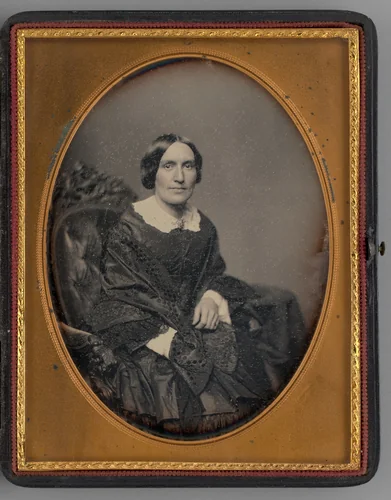
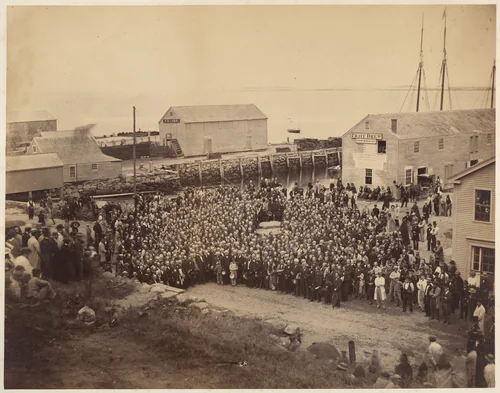
His artistic output, recognized today in the permanent collections of the Museum of Modern Art and the Metropolitan Museum of Art, displays a mastery of the demanding daguerreotype format. While portraiture formed the core of his commercial work, as seen in the striking study, [Hypnotism], and the compelling group image, [Rev. Mr. Frederick T. Gray and Deacons of Old Bullfinch Street Church], his compositions are marked by technical clarity and sophisticated use of available light. These works remain museum-quality touchstones for understanding the transition from painted miniature to photographic realism.
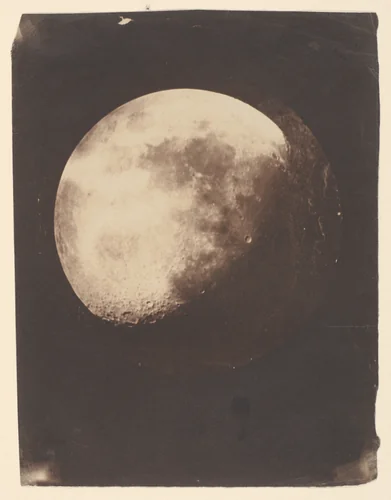
Whipple’s most radical contribution, however, lay in expanding the camera’s reach beyond the earth. He was a trailblazer in astronomical and night photography, successfully securing images of the moon that garnered significant prizes for their detail and scale. Pushing the boundaries of exposure time and chemical sensitivity, he achieved a historical first: the photographic rendering of stars other than the sun. Among these celestial captures were Vega and the Mizar-Alcor system, objects whose very complexity confounded 19th-century interpretation. The latter, for instance, was considered a double star until advanced analysis in 2009 revealed it to be a stellar sextuple system, confirming that Whipple’s instrument recorded more information than contemporary science could process.
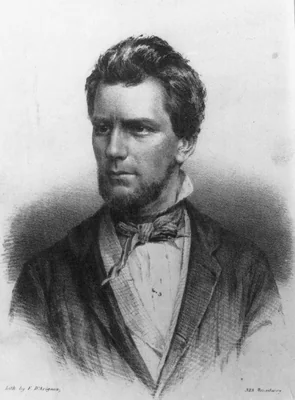
Whipple’s groundbreaking dual career established him as a key innovator during the medium's infancy. Today, his photographic legacy, including high-quality prints and studies like the [Self-Portrait with Artist's Brother], is widely accessed through digital archives in the public domain, ensuring the continued study of his scientific and artistic achievements.
Source: Wikipedia · CC BY-SA 4.0