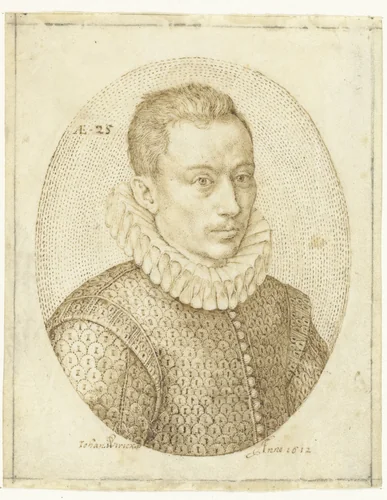
Johannes Wierix
Johannes Wierix (active 1514-1612) stands among the most technically proficient Flemish artists of the late sixteenth century. Operating within the dynamic publishing hub of Antwerp, he functioned simultaneously as an accomplished draughtsman, engraver, and publisher, contributing significantly to the dissemination of visual culture across Northern Europe. Wierix’s primary legacy rests upon his mastery of the burin, establishing him as a crucial figure in the history of reproductive and original printmaking.
Wierix was known for his exceptional technical versatility. While he executed numerous high-quality prints based on his own intricate designs, he equally adapted and reproduced works by both local and international contemporaries. This practice showcases not only his technical adaptability but also his central role in the commercial network that connected Renaissance visual ideas throughout the continent. Beyond standard paper prints, Wierix extended his meticulous skills to specialized surfaces; his sophisticated ability to produce engravings on silver and ivory demonstrates a level of refined craftsmanship rarely matched by his peers. It is perhaps this dedication to exacting detail, regardless of the medium or scale, that secured his lasting reputation for precision.
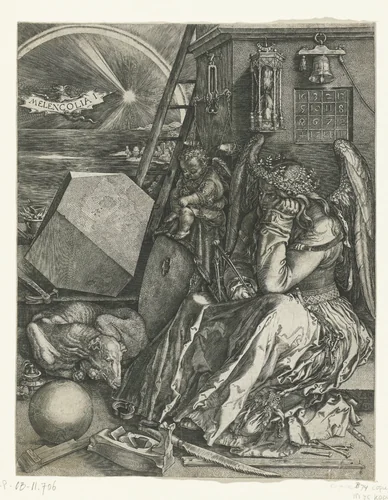
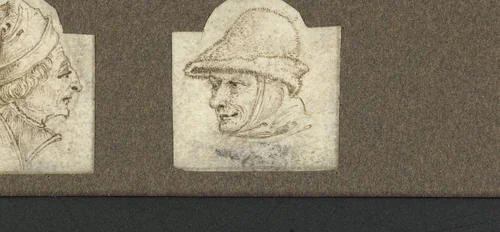
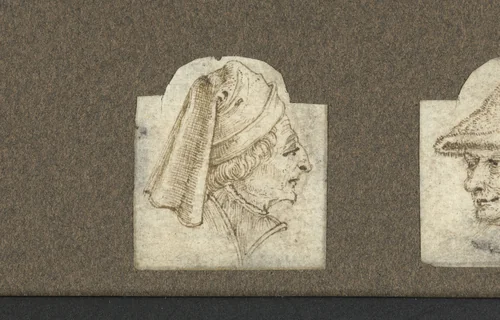
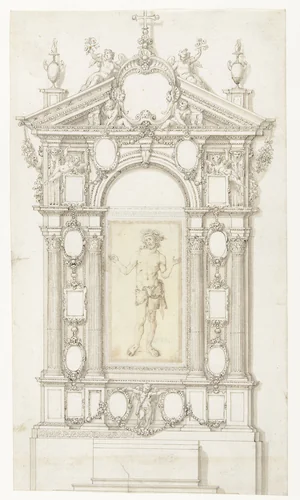
Wierix’s surviving output, represented in collections like the Rijksmuseum, reveals a consistent focus on devotional subjects and penetrating portraiture. Works such as the print Christus als Man van Smarten exemplify his religious intensity, while drawings like Hoofd van een man met een stoffen hoed and Hoofd van een man met een vilten hoed illustrate his observational rigor in rendering human character. His command of physiognomy suggests a deep interest in psychological states, evidenced perhaps most clearly in the allegorical print Melancholie.
Many of these museum-quality works, once held exclusively in specialized European collections, are today increasingly available as downloadable artwork for scholars and enthusiasts globally. Although his active period spanned a transition into the early Baroque, Wierix maintained a crisp, detailed aesthetic characteristic of Northern Mannerist engraving. His foundational contributions, whether self-designed or adapted from others, form an essential chapter in the history of Flemish graphic arts, often accessible under public domain guidelines for study and appreciation worldwide.
Source: Wikipedia · CC BY-SA 4.0