Johannes Meyer
Johannes Meyer (active 1665-1694) holds a secure if modest place in the history of late Baroque graphic arts, primarily recognized as a prolific printmaker specializing in meticulously rendered portraiture. Active in Northern Europe, his works demonstrate the rising demand for engraved likenesses that served both scholarly documentation and civic commemoration among the professional and academic classes of the period. His recorded output, consisting of three known prints and two preparatory drawings, provides focused insight into the commercial pressures and technical skill required of an accomplished engraver during the final decades of the seventeenth century.
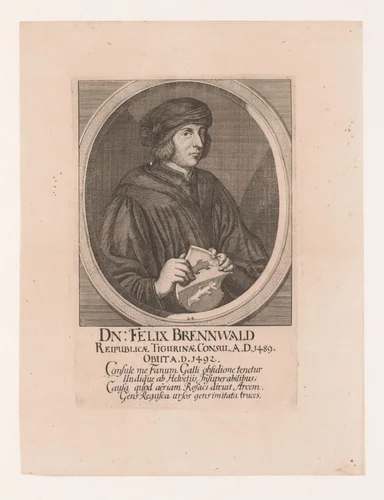
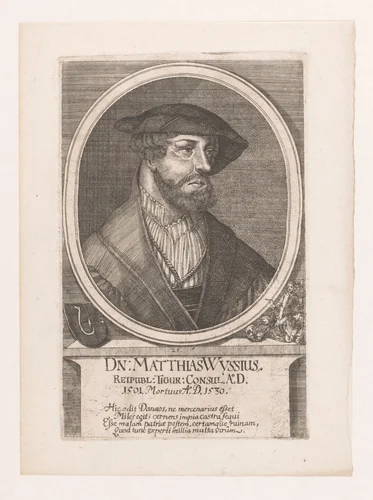
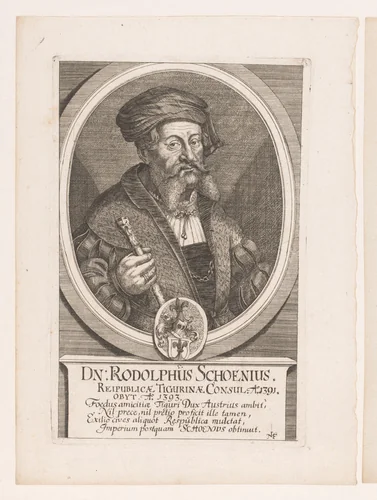
Meyer’s principal prints center upon the formal documentation of intellectual life, exemplified by the commissions Portret van Felix Brennwald, Portret van Matthias Wyssius, and Portret van Rodolphus Schoenius. These works adhere strictly to the established conventions of the learned portrait, rendering the sitters with an air of requisite solemnity and often surrounded by the symbols of their respective vocations. It is perhaps an observation on the intense formality of the era that even when captured in two dimensions, the sitters appear determined to maintain their stiffest posture.
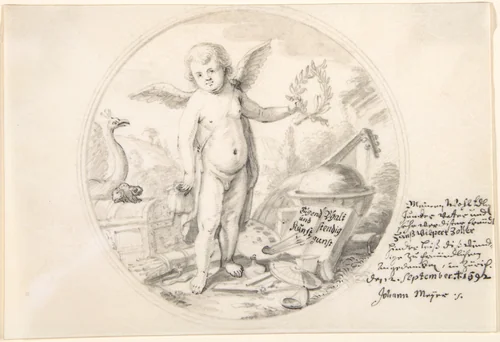
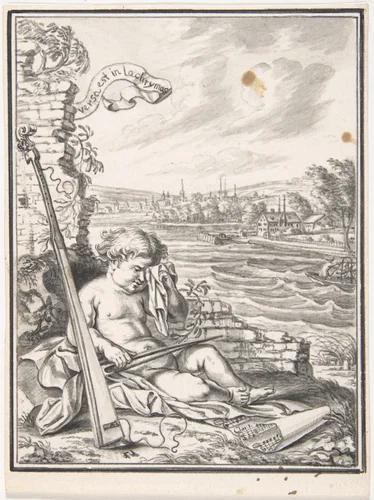
Beyond strict portraiture, Meyer’s artistic scope included preparatory work for larger publishing endeavors. The Sketch for Title Page of the Neujahrsblatt vom Musiksaal, Zurich, confirms his involvement in significant local civic and publishing projects, cementing his role as an indispensable commercial illustrator connected to the region's intellectual institutions. Similarly, the drawing Allegory of Virtue suggests an aptitude for conveying the moral and intellectual ideals central to Baroque visual culture.
The careful execution and historical importance of these works have ensured their preservation in prominent institutions, including the Rijksmuseum and the Metropolitan Museum of Art, reflecting their museum-quality status. Today, many of Meyer’s historic images are available for study as high-quality prints. Furthermore, much of his original printed material resides in the public domain, making his significant contributions to seventeenth-century graphic artistry accessible as downloadable artwork for scholars and enthusiasts globally. Johannes Meyer’s legacy rests not on revolutionary innovation, but on a steadfast commitment to documenting the learned society that supported his craft.
Source: Wikipedia · CC BY-SA 4.0