Johannes Löhr
Johannes Löhr holds a unique position within late nineteenth-century Dutch and German graphic arts, primarily due to the extreme brevity and focus of his documented career. Active solely in 1892, Löhr produced a concise but critically regarded body of work consisting of approximately eight known prints. This output, which centered on detailed studies of rural life and botanical subjects, secured immediate institutional recognition; his prints are permanently housed in the collection of the Rijksmuseum in Amsterdam.
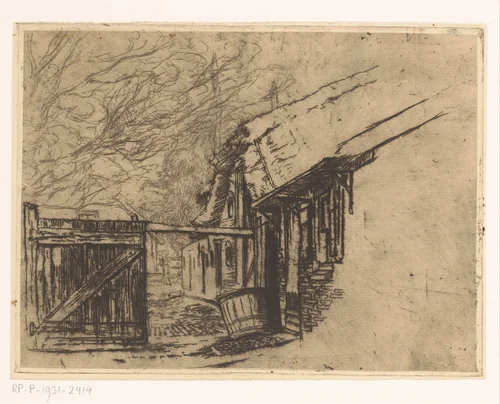
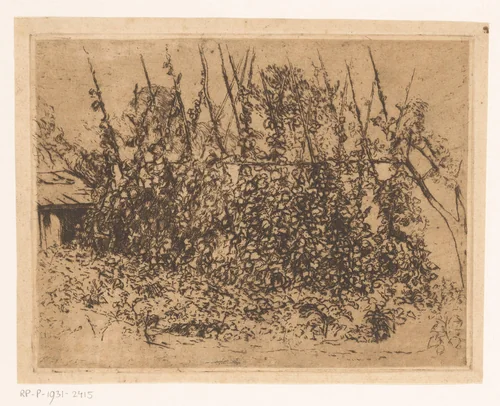
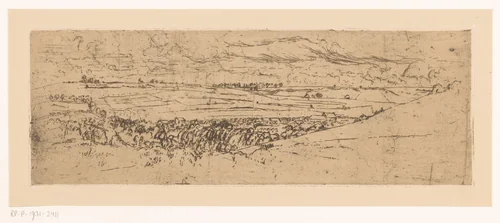
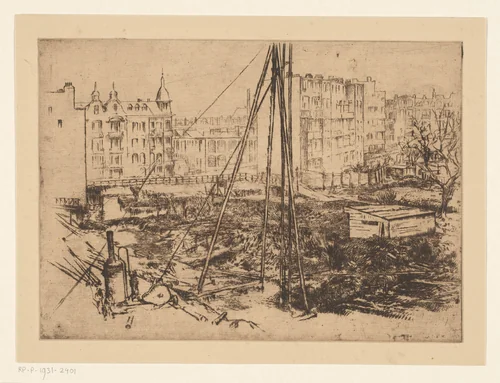
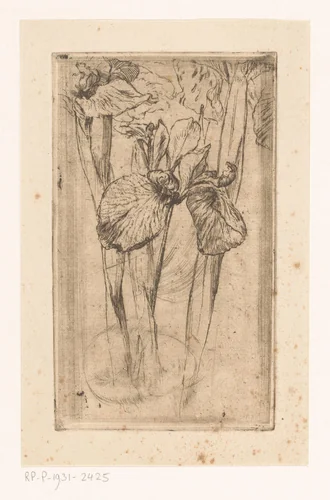
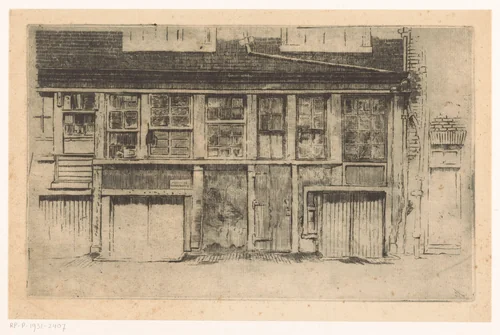
Löhr worked primarily in etching or lithography, demonstrating a sophisticated grasp of line and texture crucial for capturing the nuances of the rural environment. Pieces like Boerderij met rieten dak (Farmhouse with Thatched Roof) demonstrate his deft handling of light and shadow on vernacular architecture, creating depth through careful cross-hatching rather than broad tonal areas. His observational skill extended to meticulous botanical studies, exemplified by the popular Irissen and the structural focus of Bonenstaken (Bean Stakes). Even in compositions dealing with more complex spatial arrangements, such as Glooiend landschap met dorp (Rolling Landscape with Village) and the industrial depiction of Heiwerk (Pile Driving), Löhr maintained a commitment to naturalistic detail and atmosphere.
The definitive period of his artistic production lasted just months, a highly compressed output that remains a curious footnote in the history of graphic arts; the subsequent cessation of his artistic submissions suggests either an early retirement or an extreme redirection of focus. Indeed, the biographical record confirms that Johannes Löhr also pursued a distinct, high-profile path as a German professional football player and manager, a duality that adds a layer of quiet, historical intrigue to the study of his prints.
While his artistic career may have been fleeting, the legacy of Johannes Löhr prints endures. These carefully rendered compositions are today widely accessible in the public domain, offering contemporary viewers the opportunity to study museum-quality compositions that speak directly to the aesthetics of 1892. His complete works, often circulated as high-quality prints, offer an authoritative view of turn-of-the-century European rural aesthetics.