Johann Wolfgang Baumgartner
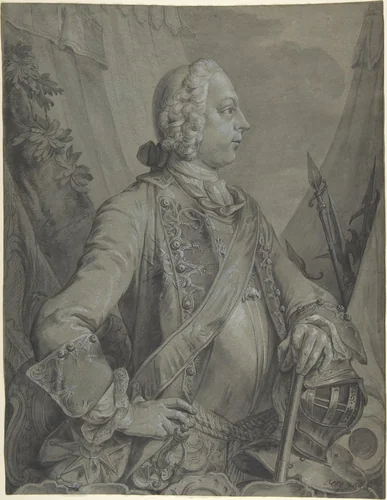
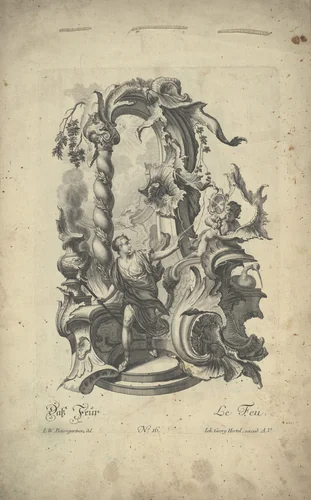
Johann Wolfgang Baumgartner (active 1720–1750) stands as a significant, if often overlooked, Austrian-German exponent of the Rococo movement. Active primarily in the middle decades of the eighteenth century, he was instrumental in popularizing the lighter, more decorative sensibilities that characterized central European art as it moved away from the gravitas of the Baroque era. While historical records confirm his status as a painter, his enduring artistic legacy rests largely upon his sophisticated graphic output, evidenced by the dozen or so meticulously executed drawings and prints that survive today.
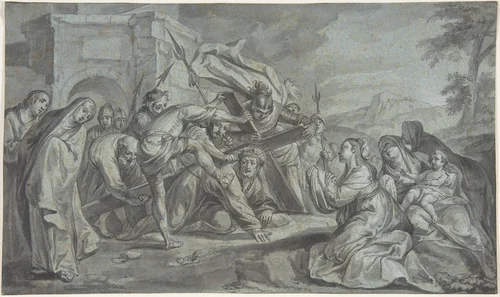
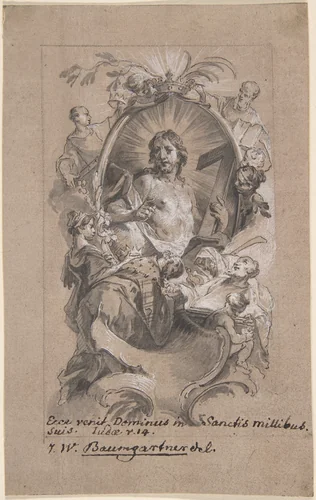
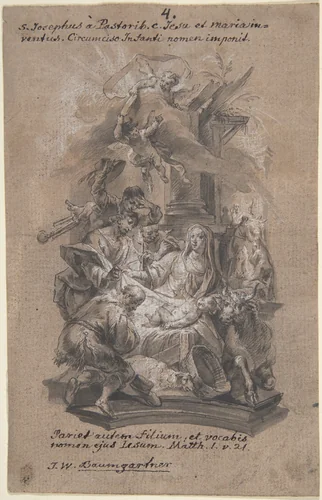
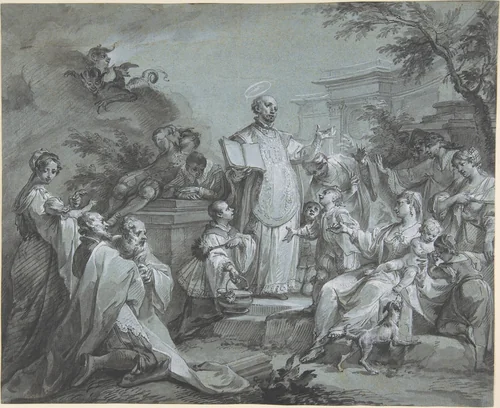
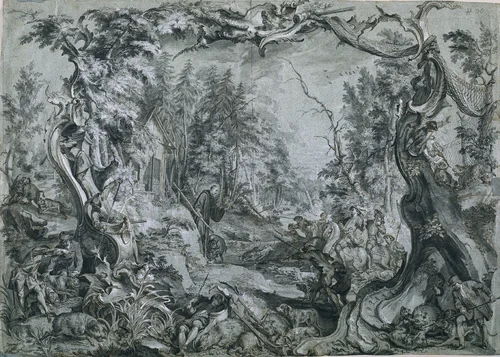
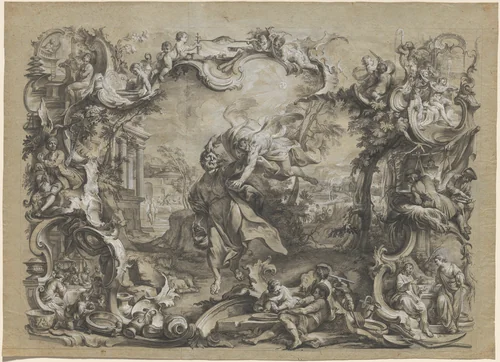
Baumgartner’s technical skill allowed him to navigate diverse demands, producing works that balanced profound religious emotion with secular decorative grace. This versatility is manifest in the contrast between his dramatic devotional subjects, such as the charged energy of Christ Carrying the Cross or the spiritual ascension depicted in Christ in Glory, and his topographical and genre scenes.
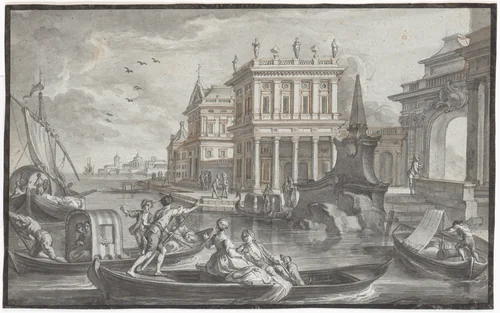
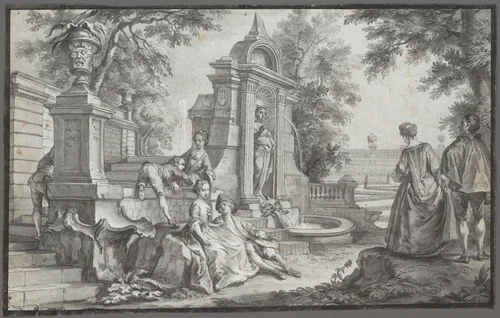
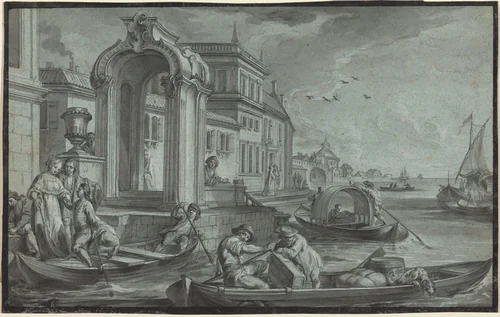
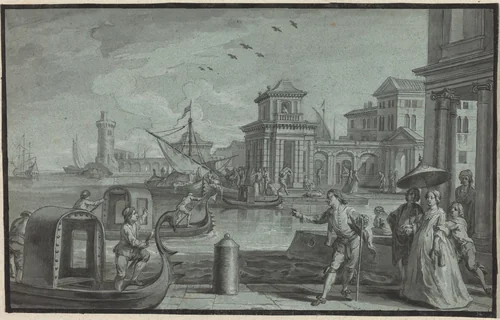
The artist demonstrated a sensitive observational power when rendering both built environments and social interactions. In works like Canal Scene with a Palazzo, he utilizes precise architectural perspective to anchor the composition, while his studies of courtly life, such as Gallant Company in a Park, possess a delightful airiness and fashionable frivolity essential to the Rococo aesthetic. Baumgartner’s sketches frequently exhibit a wonderfully immediate energy, suggesting he was as captivated by fleeting, momentary pleasures as he was by eternal theological narratives. This dedication to capturing both the sublime and the mundane ensures his continued importance to art historians.
Although his period of activity was relatively short, Baumgartner’s quality ensured his works entered permanent holdings across the globe. They affirm their lasting museum-quality status through acquisitions by major institutions, including the Metropolitan Museum of Art, the Cleveland Museum of Art, and the National Gallery of Art. Due to the diligent preservation efforts of these collections, numerous high-quality reproductions of Baumgartner’s work, including rare Johann Wolfgang Baumgartner prints, are often found within the public domain, making downloadable artwork widely available for study and appreciation.
Source: Wikipedia · CC BY-SA 4.0