Johann Wilhelm Schirmer
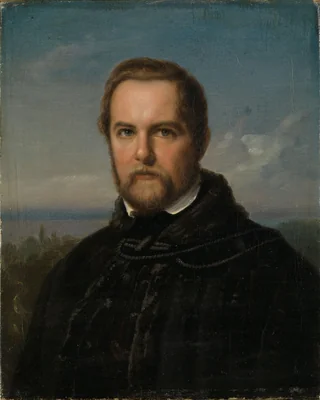
Johann Wilhelm Schirmer, born in Jülich within the Prussian Duchy of Jülich, stands as a critical, though often understated, figure in the development of 19th-century German landscape painting. Active primarily between 1807 and his death in 1841, Schirmer’s career spanned the transition from the deeply subjective, symbolic expression of Romanticism toward a more rigorous, observational approach to nature that would characterize later German schools. He was central to establishing the idea that landscape was not merely a backdrop, but the primary subject for emotional and spiritual reflection.
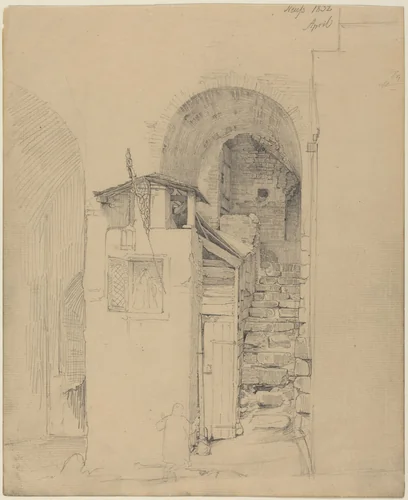
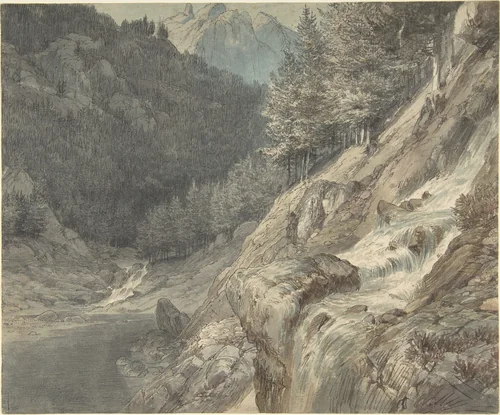
Schirmer’s technical breadth was substantial, encompassing not only oil painting (Johann Wilhelm Schirmer paintings) but also rigorous preparatory drawings and compelling printmaking techniques, including etchings. His compositions often balanced meticulous detail, visible in structural studies like Ruined Stairs at Neuss, with broad, dramatic atmospheric effects characteristic of the early nineteenth century. Works such as Mountainous Landscape with a River utilize sublime scale to emphasize the power of the natural world, a pervasive theme throughout his output.
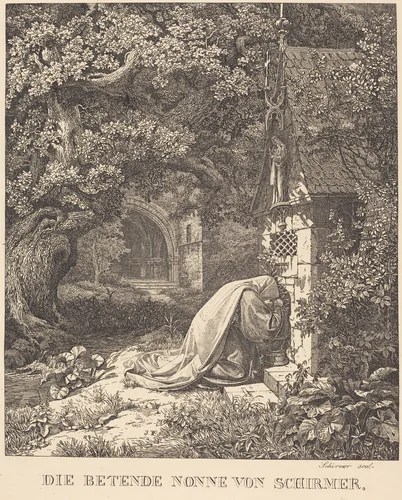
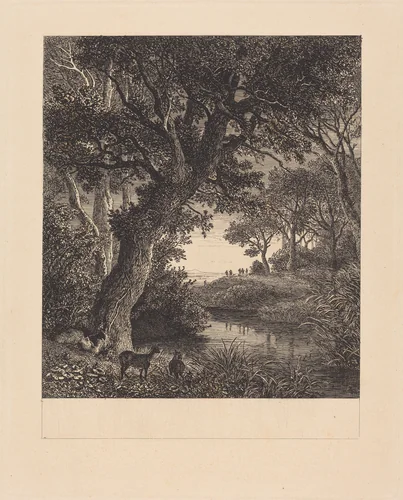
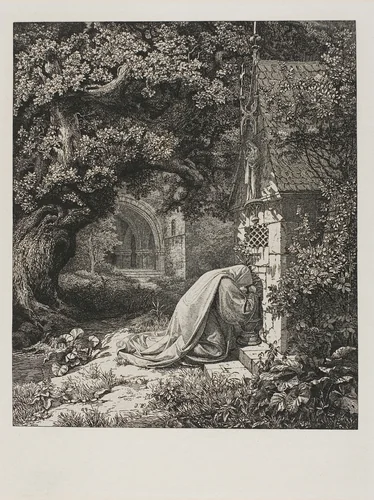
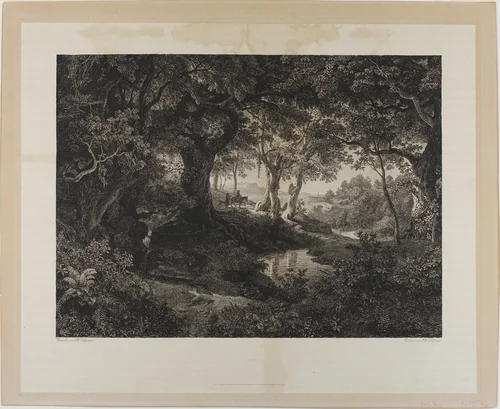
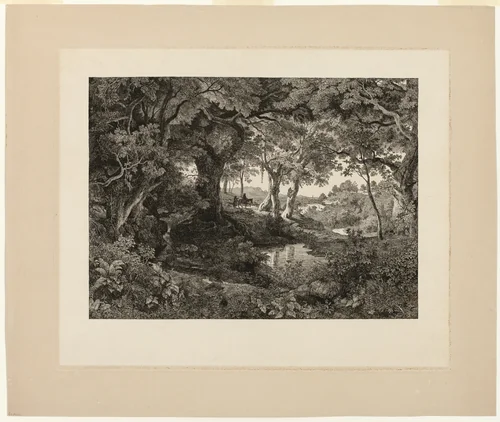
His subjects often integrated human presence, though almost always subservient to the environment itself. This is evident in pieces such as Hunters Leaving a Forest, where the figures are dwarfed by the imposing trees, and subtly in his more narrative works. It is perhaps most telling that even his devoutly contemplative subjects, like the figure situated in The Praying Nun (also known by its German title Die betende nonne), are inseparable from the surrounding structural or forested environment, suggesting that for Schirmer, spiritual contemplation was inherently ecological.
While his career was relatively brief, his influence resonated widely. Today, Schirmer's surviving output is held in prestigious North American institutions, including the Art Institute of Chicago, the National Gallery of Art, and the Metropolitan Museum of Art, confirming his lasting museum-quality relevance in the history of German draftsmanship. Furthermore, substantial portions of his catalogue are now secured in the public domain, ensuring access to his vision. Scholars and enthusiasts alike can easily source high-quality prints and downloadable artwork of his pivotal contributions to the landscape genre.
Source: Wikipedia · CC BY-SA 4.0