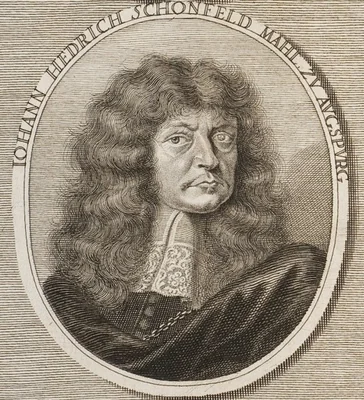
Johann Heinrich Schönfeld
Johann Heinrich Schönfeld (1609–1684) holds a distinguished position as a central figure in 17th-century German Baroque painting. Born in Augsburg, Schönfeld’s lengthy career spanned some of the most challenging periods in Central European history, requiring a mastery of style that could translate the grand visions of Italian classicism and theatricality into the local context.
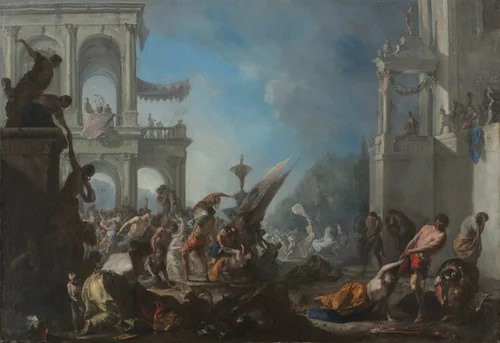
While recognized as a painter—the surviving corpus of Johann Heinrich Schönfeld paintings is relatively focused, including one work in the current database—his essential contribution to the visual culture of the era is often best understood through his graphic production. Schönfeld was active between 1626 and 1655, and during this time, he established a sophisticated approach to character study through printmaking.
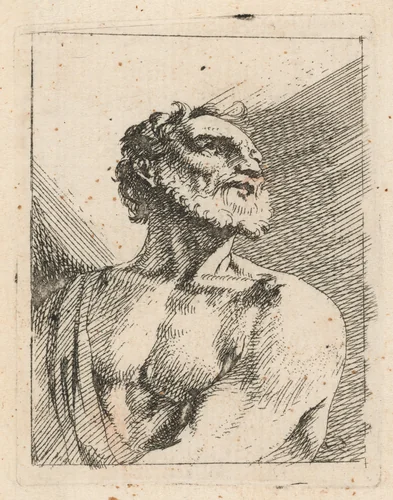
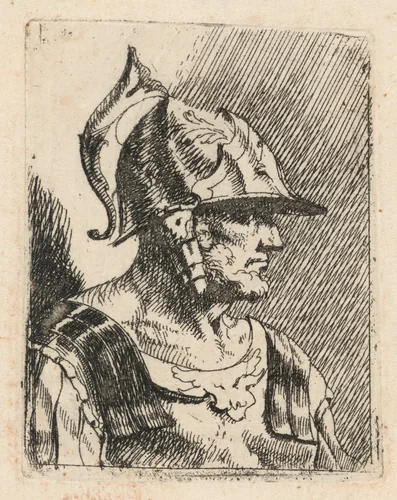
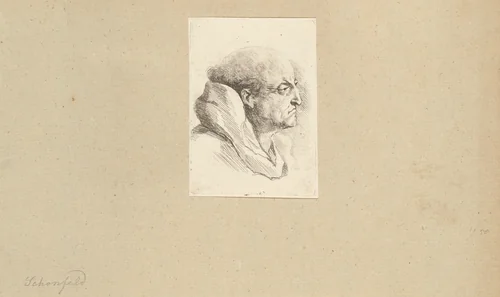
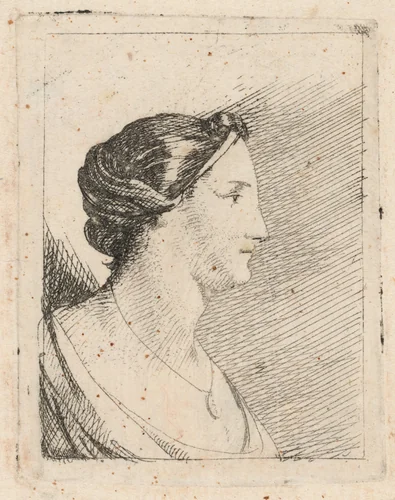
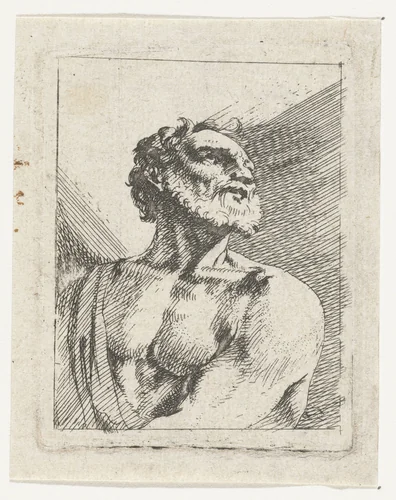
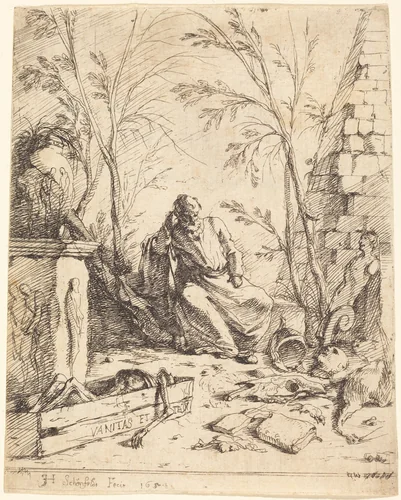
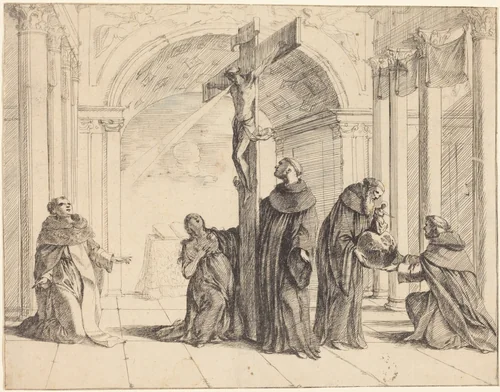
The collection of seven known prints demonstrates an acute interest in the dramatic extremes of human emotion, or affetti, a standard device in Baroque art and theater. Works such as Bust of a Bearded Warrior and Bust of a Monk are less concerned with producing exact likenesses than with establishing powerful, recognizable character types. This preference for dramatic archetype over detailed portraiture lends his work a curious universality, showing that even during times of great hardship, the artist maintained a focused, almost clinical, eye for the theatrical possibilities inherent in the human form.
Schönfeld’s technical proficiency and influence are confirmed by his inclusion in major international repositories. His works are part of the museum-quality collections of institutions including the Rijksmuseum, the National Gallery of Art, and the Cleveland Museum of Art, ensuring his legacy is maintained for scholarly study. Today, thanks to the increasing availability of historical artworks, a significant number of Johann Heinrich Schönfeld prints have entered the public domain, offering access to high-quality prints and downloadable artwork for researchers and enthusiasts worldwide. His foundational role helped shape the trajectory of South German painting for decades following his active period.
Source: Wikipedia · CC BY-SA 4.0