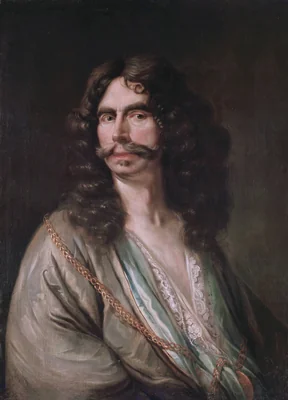
Johann Heinrich Roos
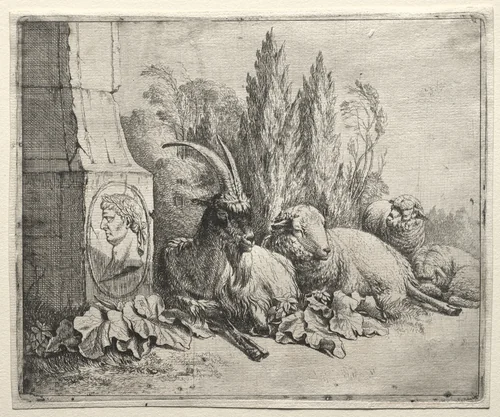
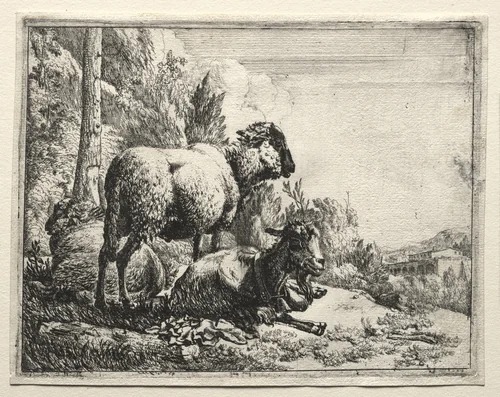
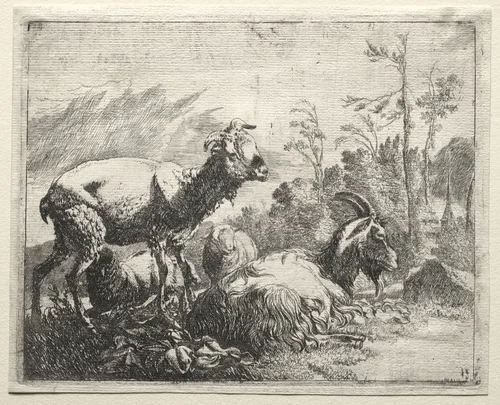
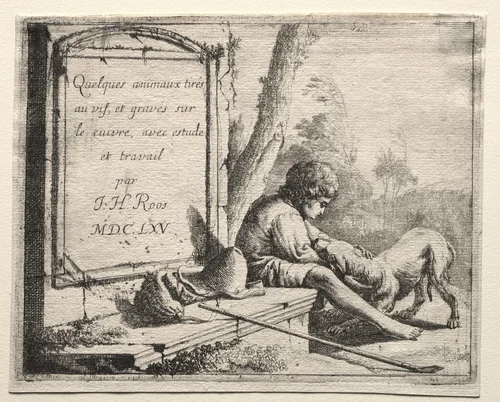
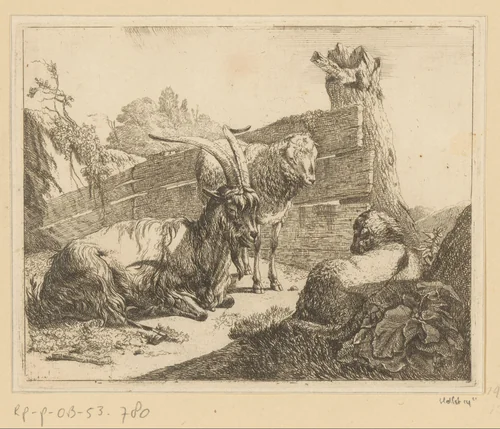
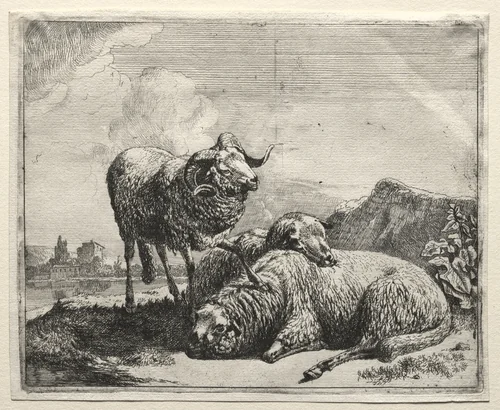
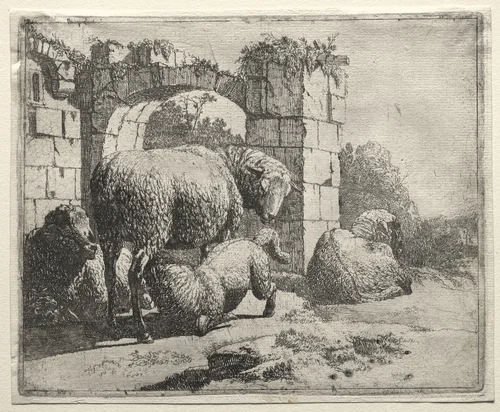
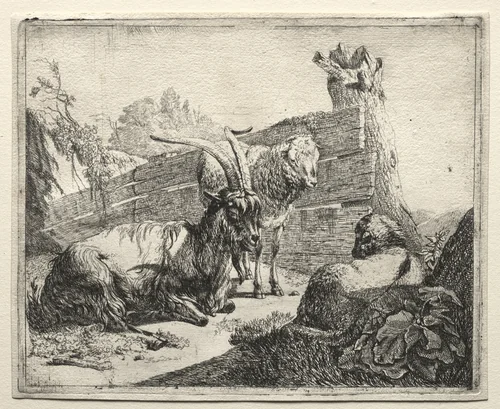
Johann Heinrich Roos established himself as a defining figure in German Baroque art, achieving distinction both as a landscape painter and as an exceptionally skilled etcher. Active primarily between 1641 and 1665, Roos focused his energies on the pastoral genre, developing a specialized visual language that fused detailed animal studies with evocative, sometimes monumental, European settings. His works offer a distinctive record of seventeenth-century rural life, a contribution recognized by major international institutions, including the Rijksmuseum, the Cleveland Museum of Art, and the Metropolitan Museum of Art.
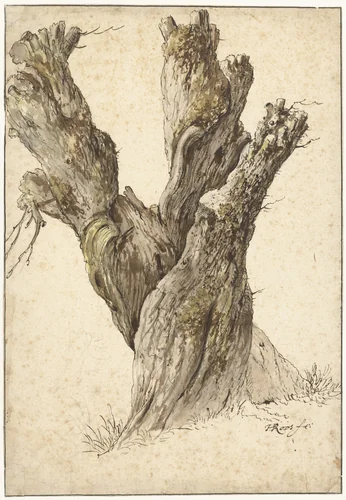
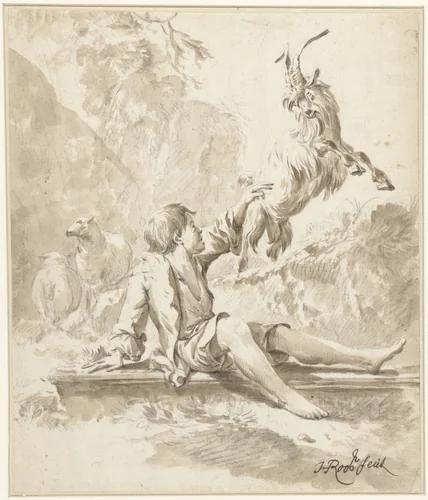
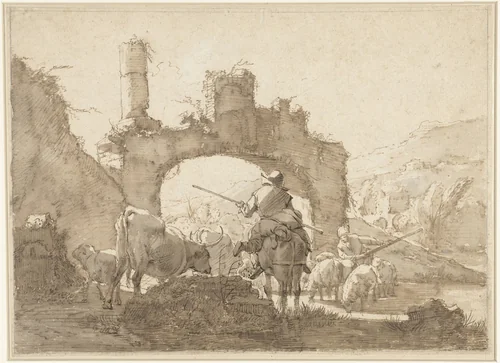
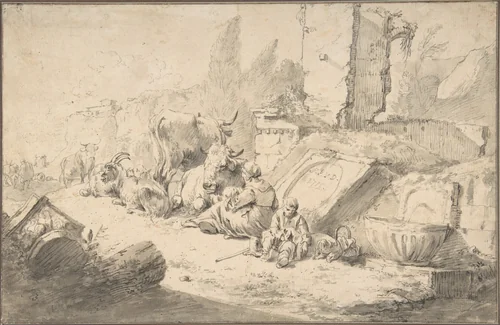
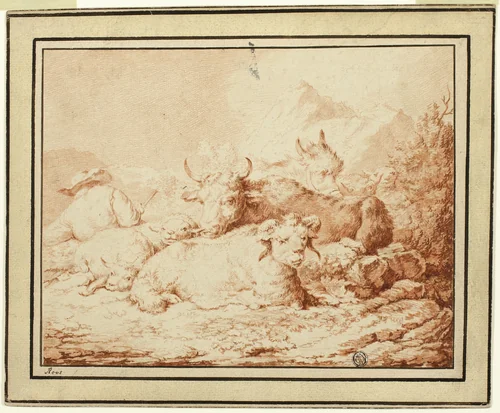
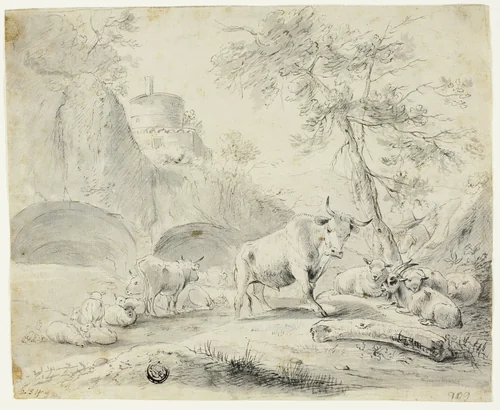
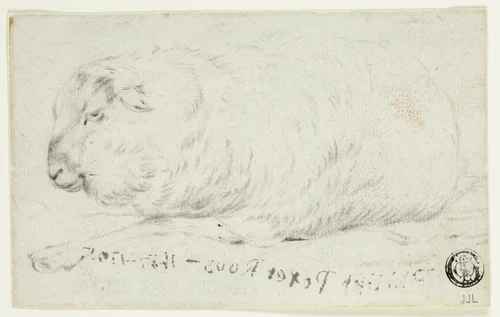
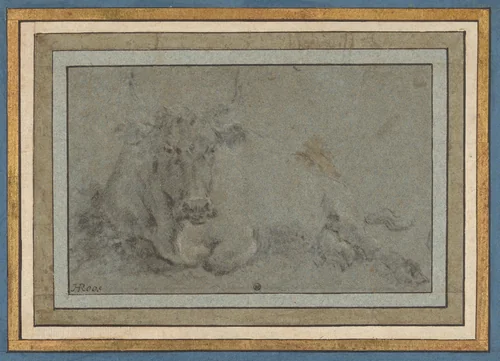
Roos mastered the compositional balance required to integrate genre elements into classical scenery. Paintings such as Pastoral Landscape with Roman Ruins exemplify this blend, positioning monumental architectural fragments as silent observers to the activities of humble herders and their livestock. He demonstrated a profound understanding of naturalism, often focusing on specific figures in quiet moments, as seen in the intimate study Herdersjongen met een bok spelend. His draftsmanship was particularly celebrated, marked by an economy of line and an intimate observational skill evident in numerous surviving drawings and preparatory studies.
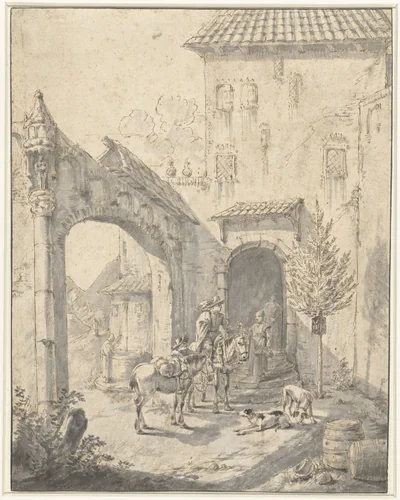
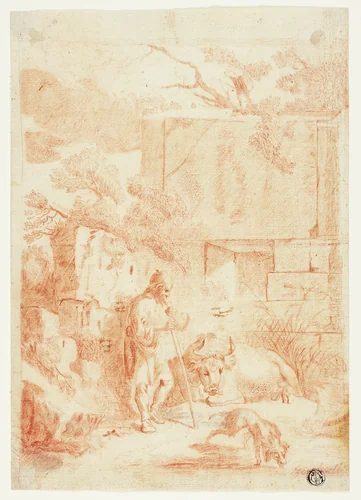
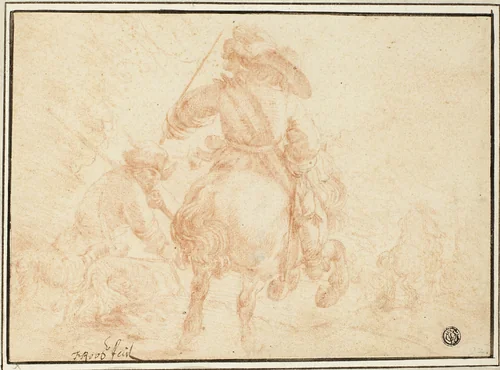
Unlike many of his contemporaries who reserved their landscapes for mythological narratives, Roos maintained a keen, almost affectionate, focus on the relationship between man and beast, giving the depiction of everyday labor an enduring dignity. This commitment to domestic scenes and roadside respite, captured beautifully in Twee ruiters pleisteren op de voorhoof van een herberg, provides his output with a quiet, observational charm.
Roos was equally significant as a graphic artist, producing delicate and influential etchings that served to disseminate his pastoral vision widely across Europe. This ensured that museum-quality examples of Johann Heinrich Roos prints remained sought after by collectors well beyond his lifetime. Happily, much of the artist's important graphical work is now available in the public domain, allowing enthusiasts access to high-quality prints and downloadable artwork that faithfully capture the nuance of his original designs.
Source: Wikipedia · CC BY-SA 4.0