Johann Heinrich Ramberg
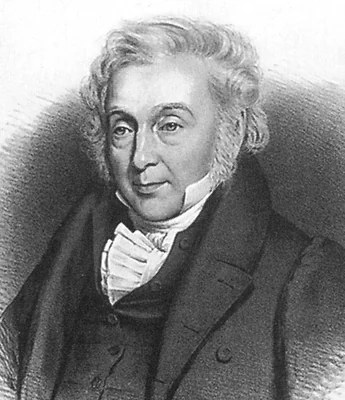
Johann Heinrich Ramberg was a significant German painter and printmaker active during the late eighteenth century. Though known for his facility across diverse media, his lasting influence is largely derived from his detailed engravings and etchings, which vividly captured the social dynamics and architectural preoccupations of the era between 1783 and 1799.
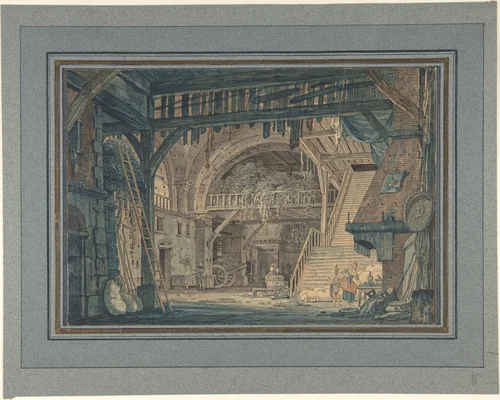
Ramberg specialized in balancing historical grandeur with nuanced genre observation. His compositions frequently demonstrate a keen interest in theatrical space and architectural decay, a skill evident even in preparatory works such as the detailed drawing Stage Set Design of an Ancient Roman Ruin being Converted into a Barn. This piece strikingly juxtaposes the imposing weight of classical ruin with the temporary utility of contemporary life, a prevalent theme in Enlightenment commentary on history and progress.
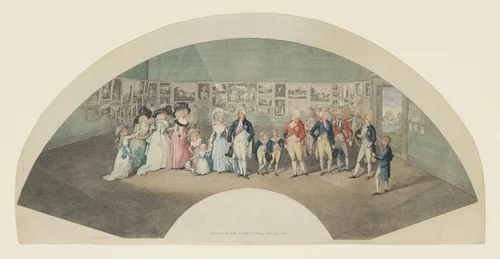
As a visual chronicler, Ramberg excelled in documenting the activities of the period’s elite. He was particularly successful in capturing the culture surrounding the display of art. His complex rendering, George III, Queen Charlotte, the Prince of Wales and others in a Picture Gallery near Windsor Castle, is less a formal portrait session and more a high-fidelity visual inventory of the monarchy interacting with the nascent museum setting. The work serves as a fascinating record of who looked at what, and who watched them doing it.
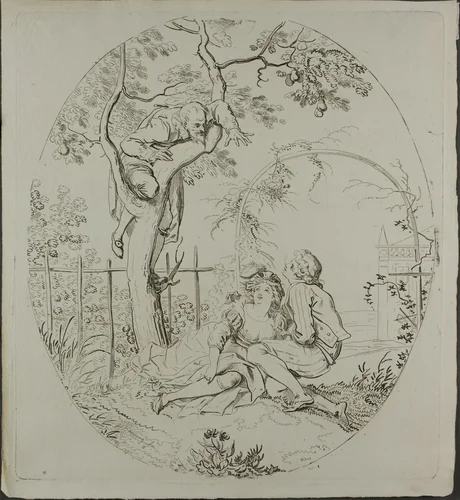
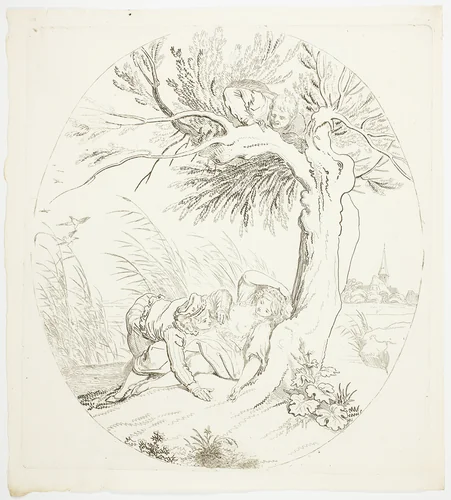
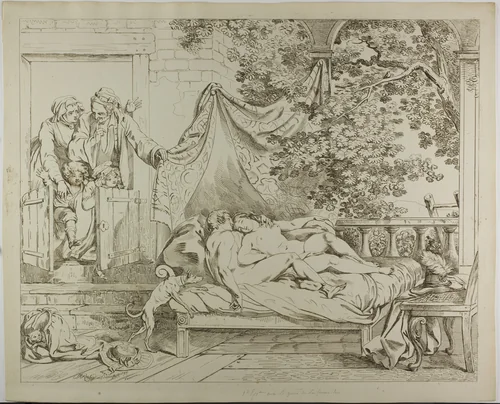
Ramberg’s prolific output extended into the realm of playful genre scenes. Works like Bearded Man Spying on Lovers Under an Arbor and Unobserved Man Spying on Reclining Lovers reveal a sophisticated, sometimes witty, interest in clandestine observation and social indiscretion. These widely circulated, high-quality prints were technically sophisticated, employing precise line and stipple engraving to achieve rich textural effects that ensured his contemporary reputation.
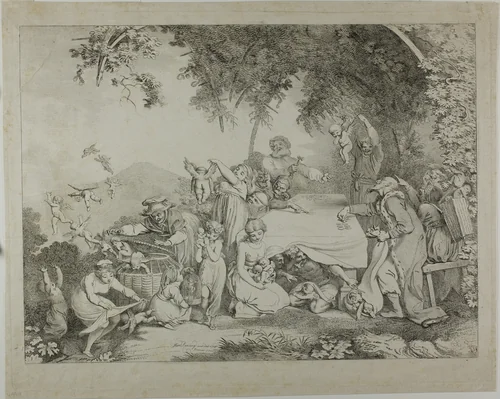
Ramberg’s legacy is therefore dual: he is remembered both as a sensitive historical painter and as a key figure whose widely disseminated graphics provided an unparalleled glimpse into late eighteenth-century European life. Pieces like the mythological Auction of the Cupids are maintained in major North American institutions, including the Metropolitan Museum of Art and the Art Institute of Chicago. The detailed nature of Johann Heinrich Ramberg prints makes them enduring subjects for study, and the availability of some of his artwork as downloadable artwork in the public domain ensures continued access to this transitional period of German art history.
Source: Wikipedia · CC BY-SA 4.0