Johann Hahn
Johann Georg von Hahn (active 1871) occupies a rare dualistic position in 19th-century intellectual and visual history. Though primarily known during his lifetime as an accomplished German diplomat, philologist, and specialist in Albanian history, language, and culture while working extensively within the bounds of the Austrian Empire, his legacy is notably expanded by a small but compelling corpus of early photography. These fourteen known plates, now recognized for their artistic merit and secured in prominent international collections such as the Museum of Modern Art, attest to an acute visual sensitivity that complemented his highly specialized academic pursuits.
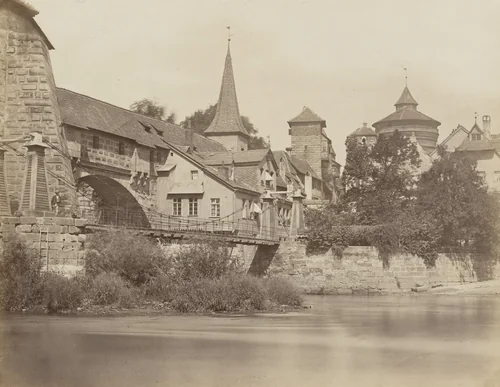
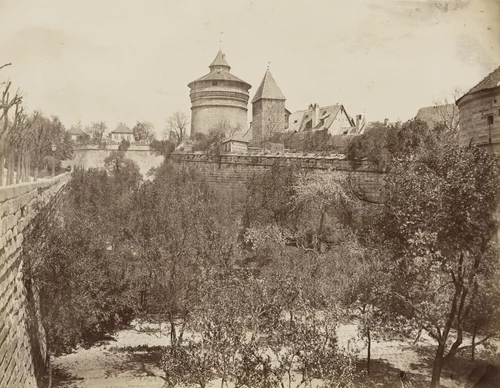
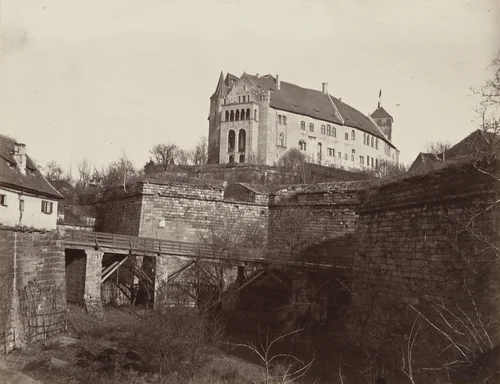
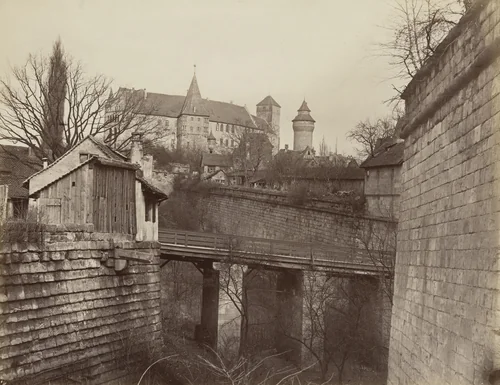
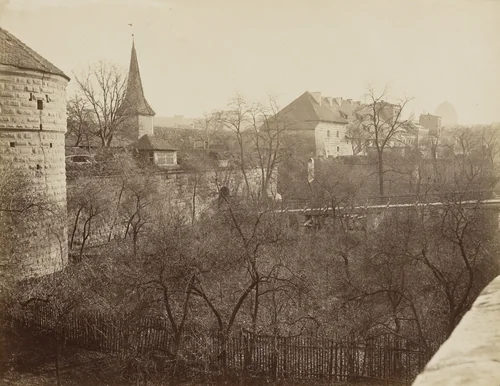
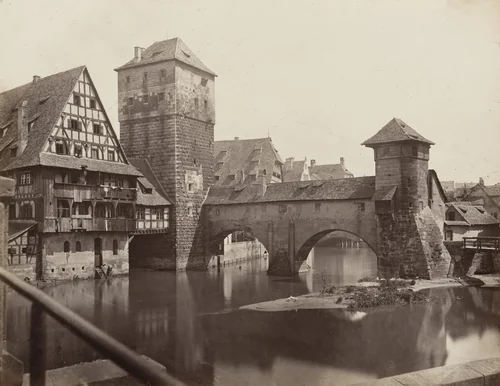
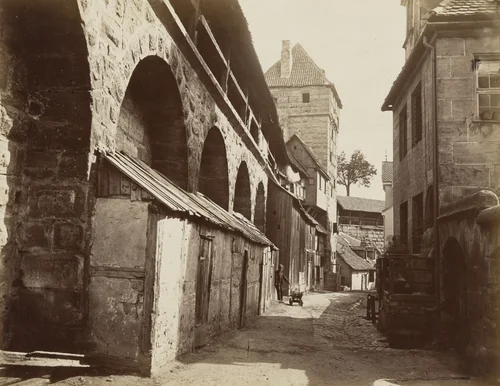
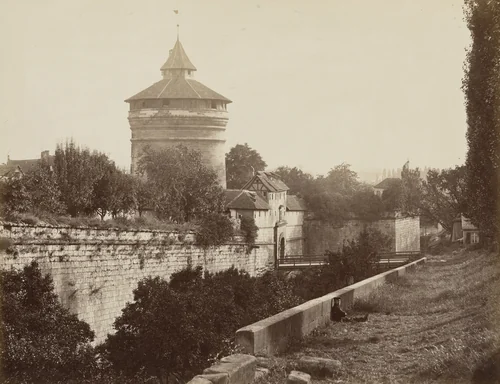
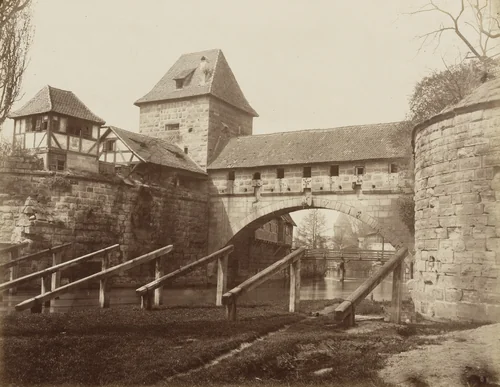
Hahn operated at a pivotal moment when photography was transitioning from a novelty technology to a serious documentary medium. His surviving images, titled in German and focused on architectural and urban topography, provide precise, rigorous views of cities and structures, likely stemming from observations made near his native regions or during official diplomatic duties. Works such as At the mouth of the Pegnitz River and the highly detailed Blick den Stadtgraben Entlang Nach Dem Neuen-Tor move beyond mere topographical record. They reveal a profound formal appreciation for composition and the systematic interplay of light and shadow across historical masonry.
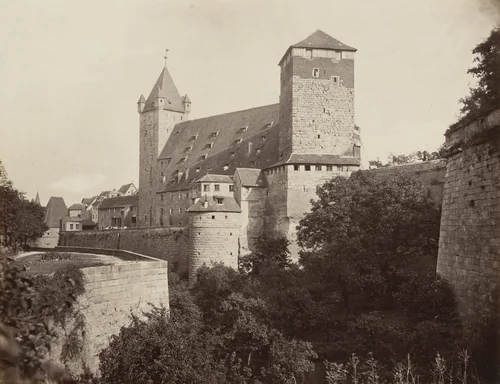
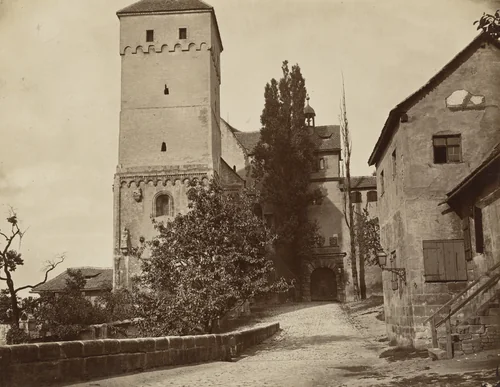
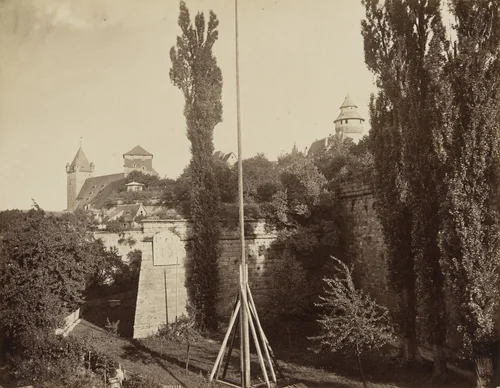
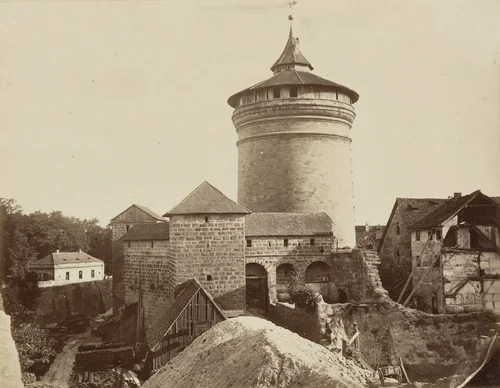
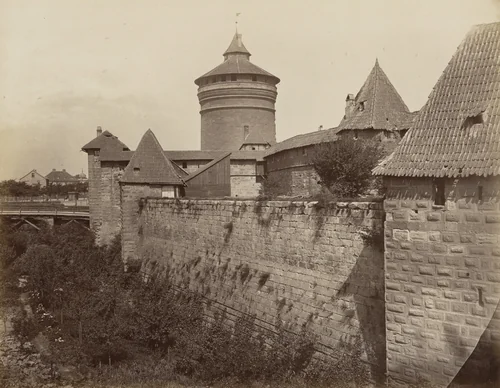
It is perhaps telling that a scholar devoted to deciphering linguistic structure and conducting rigorous historical research chose a medium prized, at the time, for its objectivity. His compositions, including the striking view of Die Burg Von S.W. and the sequential studies reflected in titles like Der Fünfeckige Turm Mit Der Kaiserstallung Und Dem Lug Ins Land, reflect the analytic and systematic approach required by his main career. They are exercises in clarity and structural balance.
Though the works themselves are rare, their enduring significance ensures that digital archives now make high-quality prints and downloadable artwork broadly available. Hahn’s output offers museum-quality insight into how the most discerning intellectuals of the period leveraged emerging technology to catalogue their world, creating a distinctive body of royalty-free material that informs both art historical study and urban documentation today.