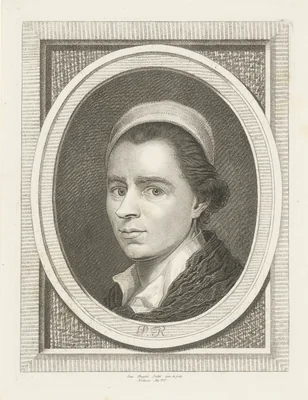
Johann Gottlieb Prestel
Johann Gottlieb Prestel (flourished 1759-1782) was a pivotal German draftsman and printmaker widely recognized as a master of copperplate engraving. His relatively concise active period belied a significant output focused on both original compositions and meticulous reproductive works, establishing him within the shifting aesthetic traditions of the late eighteenth century.
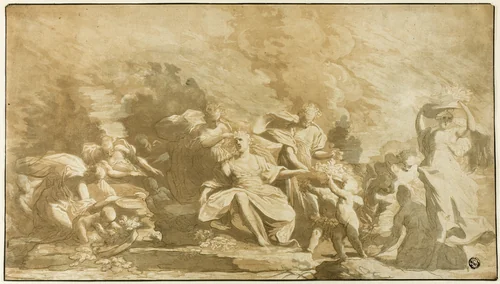
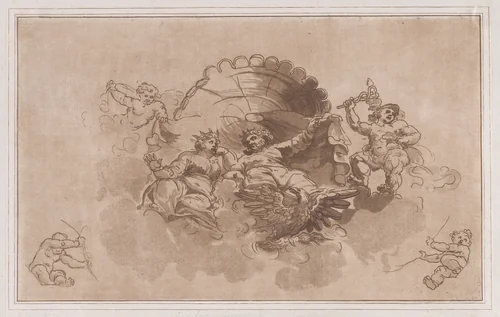
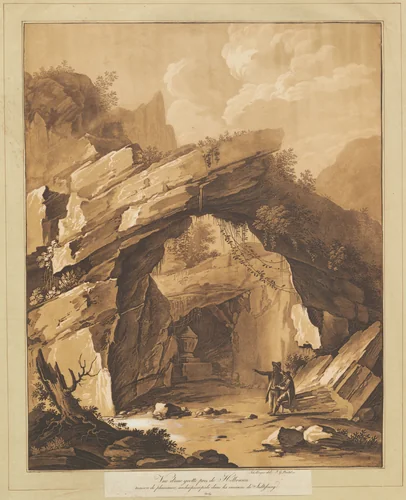
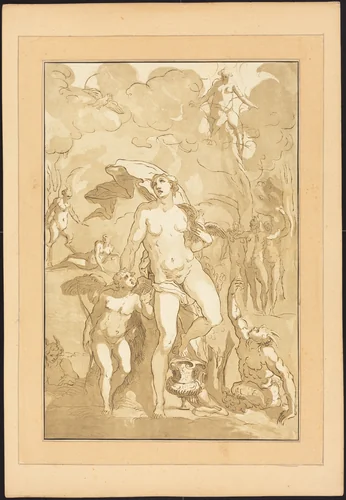
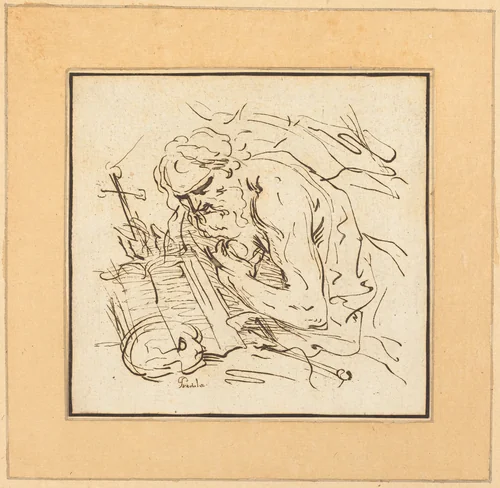
Prestel’s artistic legacy is thoroughly documented through his four surviving portfolios, two original drawings, and a number of widely circulated high-quality prints. While adept at drawing and painting, his reputation rested heavily on his precise command of the copperplate medium, which allowed for the delicate rendering of light and texture vital to the Rococo sensibility. His thematic range was notably robust, moving effortlessly between classical myth, evidenced by compositions such as Jupiter and Juno in the clouds and the allegorical The Kingdom of Flora, and detailed topographical studies like the meticulous View of the Grotto by Heilbrunn, near Salzburg. He successfully translated the grandeur of paintings into a format accessible to a wider audience, positioning him as a crucial figure in the dissemination of visual culture across Europe.
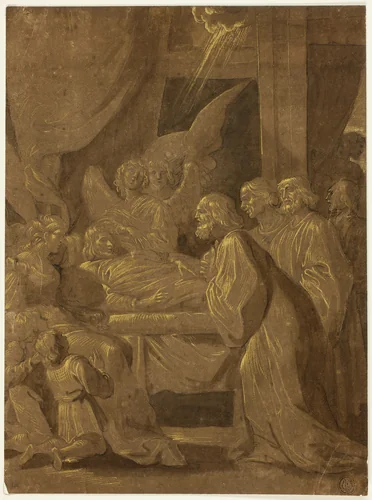
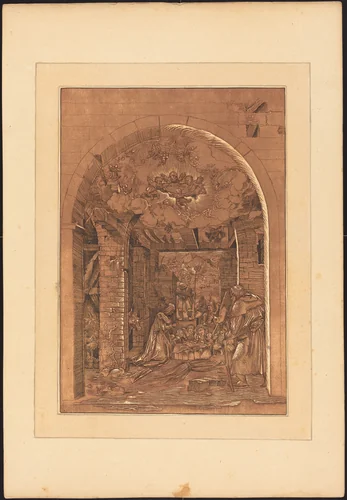
Though his career was brief, Prestel’s technical innovation ensured that his compositions successfully bridged the gap between exclusive oil painting and widespread accessibility. The refinement of his technique, particularly evident in religious works such as the Healing of the Paralytic, contributed to the enduring interest in Johann Gottlieb Prestel prints. It is worth noting that while some historical records sometimes conflate the artist with the alternate moniker, Johann Amadeus Prestel, the technical brilliance of the work remains undisputed.
Today, the continued valuation of Prestel’s works is demonstrated by their inclusion in major international institutions, including the National Gallery of Art, the Art Institute of Chicago, and the Metropolitan Museum of Art. The archival stability and inherent quality of his draftsmanship mean that many of his compositions, now frequently in the public domain, continue to be sought after as museum-quality subjects for downloadable artwork.
Source: Wikipedia · CC BY-SA 4.0