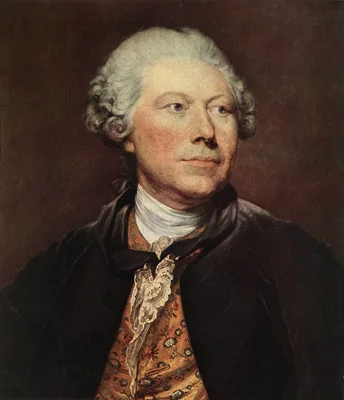
Johann Georg Wille
Johann Georg Wille (1715-1808), also known professionally as Jean Georges Wille, was one of the most consequential copper engravers operating in 18th-century Paris. Though born in Germany, Wille integrated seamlessly into the French artistic establishment, spending the vast majority of his exceptionally long career mastering and disseminating the graphic arts. His technical brilliance defined the visual documentation and cultural exchange of the era, primarily through his meticulous ability to translate painted compositions into reproducible, high-quality prints.
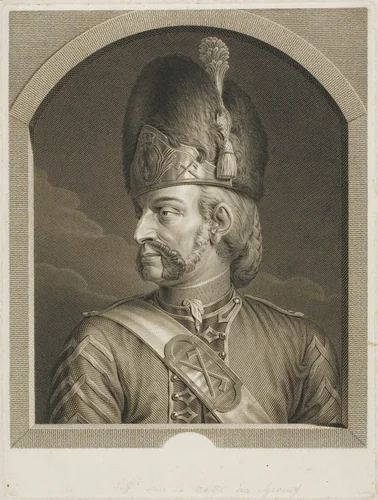
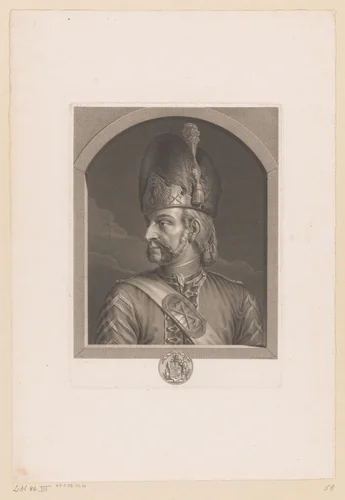
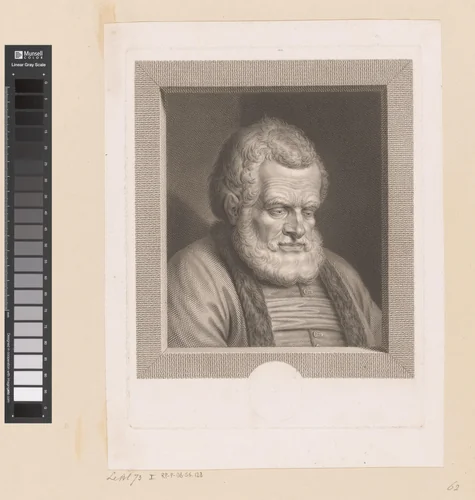
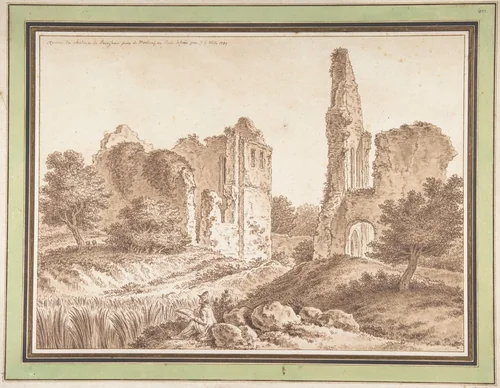
Wille’s output focused intensely on portraiture and evocative genre scenes. His specialty was capturing the subtle textures and psychological depth required for official and intellectual likenesses, effectively circulating the images of Europe’s elite. A core achievement of his oeuvre includes the authoritative rendition of Portrait of Frederick II of Prussia, derived from Antoine Pesne’s original, which ensured the monarch’s recognizable image permeated courts and collecting cabinets across the continent. This mastery of transfer extended to numerous other subjects, including detailed individual studies such as Portrait of Elizabeth de Gouy and Portret van Claude Nicolas Le Cat. Even in genre pieces, such as the carefully composed Hengelaar bij stenen brug, Wille’s dedication to precision remained paramount.
His historical significance is compounded by his successful parallel career as an art dealer. This dual role granted him a privileged perspective, positioning him not merely as a technician of reproductive art, but as a vital nexus point connecting artists, powerful patrons, and the rapidly growing international collector base. It is perhaps unsurprising that an engraver so adept at reproducing the work of others would also possess a keen commercial eye, facilitating the movement of art across geopolitical boundaries during a highly dynamic period.
Wille’s extensive corpus of work, which includes the compelling Portret van Hieronymus von Erlach, remains an invaluable resource for understanding 18th-century iconography and artistic circulation. Today, these detailed compositions reside in major global institutions, including the Rijksmuseum and the Metropolitan Museum of Art. Many of these historically significant Johann Georg Wille prints are now digitized, making them available as downloadable artwork for scholars and enthusiasts, ensuring the enduring technical refinement of his museum-quality engravings remains accessible centuries later.
Source: Wikipedia · CC BY-SA 4.0