Johann Franz Ermels
Johann Franz Ermels (1630-1694) was a German painter and engraver who defined his career by mastering the Italianate landscape tradition while remaining rooted in the artistic centers of his native country. Though born in Reilkirch, his professional life was centered entirely in Nuremberg, where he established himself following his studies with Holtzman. Ermels’s early efforts included large-scale religious works, such as The Resurrection, painted for the Church of St. Sebald in Nuremberg, yet his lasting historical significance rests squarely upon his specialization in secular environments.
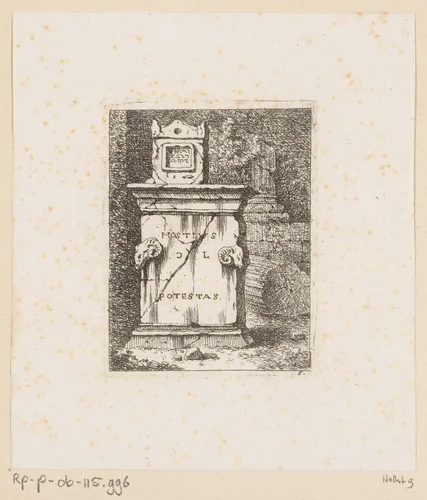
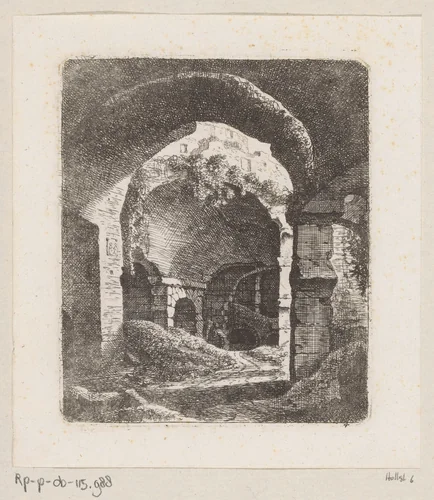
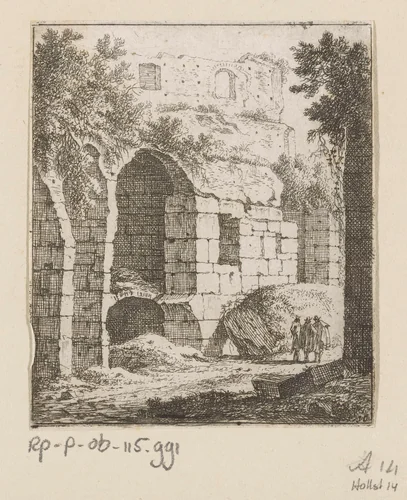
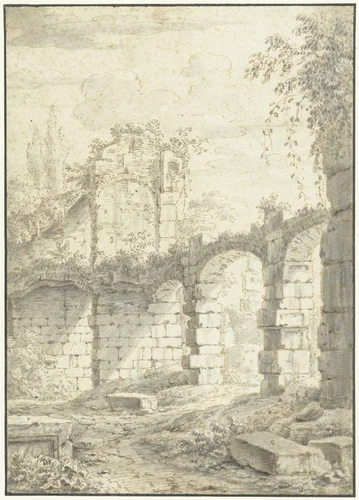
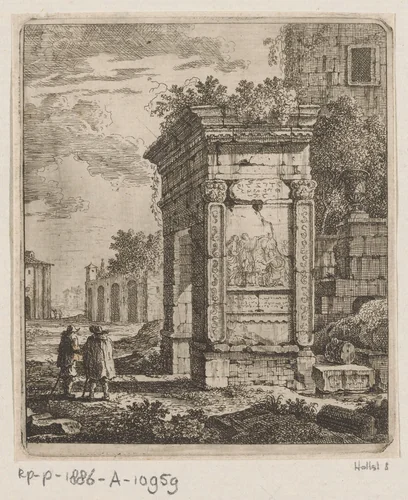
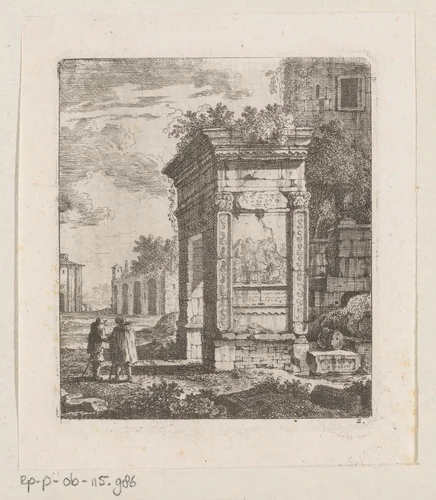
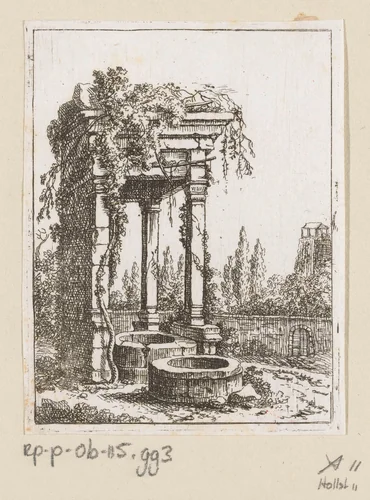
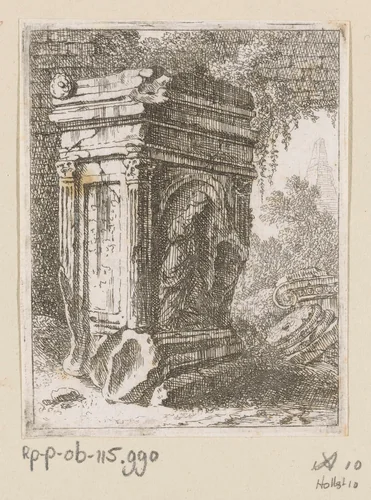
His distinctive style marks him as a dedicated follower of the Dutch Italianate school, exhibiting a close and successful imitation of the techniques popularized by Jan Both. This adherence is apparent in his sensitivity to atmospheric lighting and the architectural structure of his compositions. Ermels skillfully rendered picturesque decay, producing detailed views of classical remnants that became highly sought-after. His prints and drawings often focused on specific sites of antiquity, including detailed observations such as Gezicht op de ruïnes van het Colosseum and studies of other Romeinse ruïnes, demonstrating a sophisticated understanding of the veduta tradition. It remains an intriguing observation that a painter so dedicated to capturing the sun-drenched ruins of the Italian campagna was content to reside his entire working life within the confines of northern Germany.
Ermels’s canvases are held in prestigious collections internationally, including the Städel Gallery in Frankfort and the Vienna Gallery, where his landscapes occasionally feature collaborative figures painted by contemporaries like J. H. Roos. Beyond painting, he cultivated a strong reputation as an engraver. His relatively small output of etchings, often interpretations of landscapes after Breenbergh and Anthony Waterloo, were executed with notable spirit and taste, serving to disseminate the popular Italianate aesthetic across the region. These high-quality prints and drawings, created during the latter half of the seventeenth century, cemented his role as a key transmitter of this style. Today, many Johann Franz Ermels prints and paintings are available as downloadable artwork through public domain resources, confirming his continuing relevance in the study of German Baroque landscape art. He died in Nuremberg at the age of 52.
Source: Wikipedia · CC BY-SA 4.0