Johan Hendrik Weissenbruch
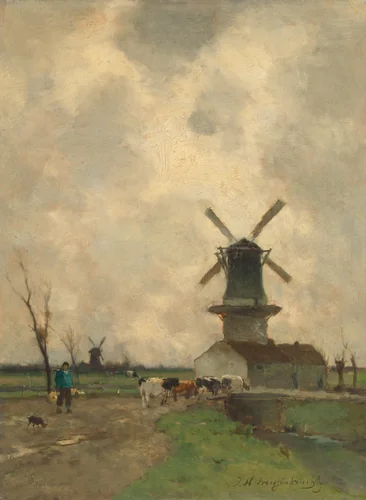
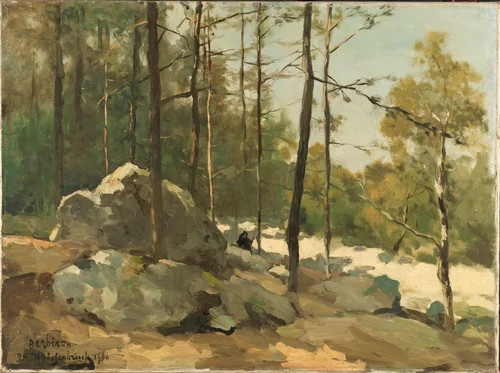
Johan Hendrik Weissenbruch (1824-1903), frequently known as Hendrik Johannes Weissenbruch, stands as one of the seminal figures of the Hague School. Active across six decades, his work provided the crucial Dutch parallel to French Impressionism, focusing intensely on rendering the atmospheric, often subdued light and expansive skies characteristic of the Netherlands. He began his artistic training in the established academic tradition, yet quickly evolved, prioritizing direct observation and the rapid capture of transient meteorological effects.
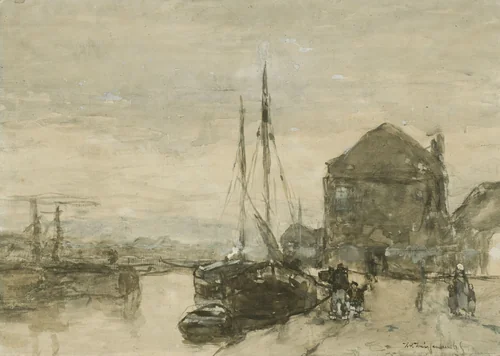
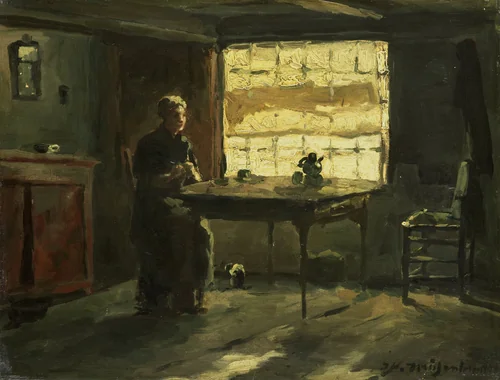
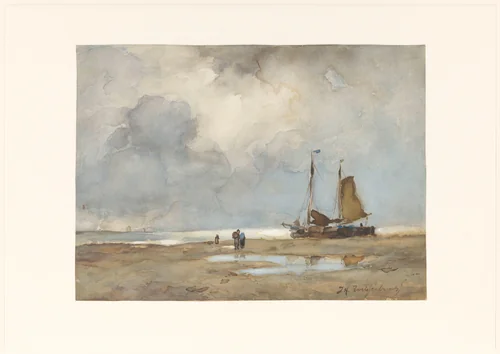
Weissenbruch’s enduring reputation rests particularly on his mastery of the watercolour medium. He pushed the boundaries of this often-underestimated form, utilizing its translucency and speed to achieve a fluidity and depth rarely seen previously. While his finished oil canvases, such as the evocative View on the Beach and the rustic Boereninterieur, demonstrate a profound understanding of composition, it was in watercolour that he often achieved his greatest technical liberation.
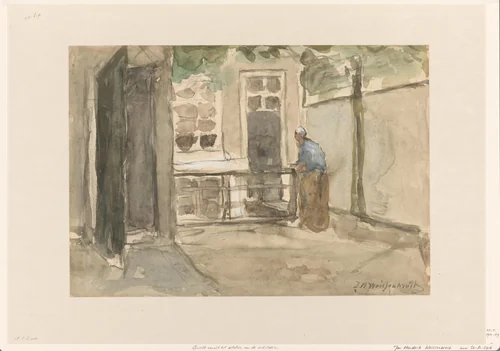
His subject matter was typically localized and intimate. Unlike some contemporaries who sought dramatic coastal vistas, Weissenbruch turned his attention to the subtle documentation of architecture and light within the urban fabric. Works like Gezicht op de Turfmarkt met de Eendjespoort in Haarlem offer meticulous documentation of city life, while the detailed Gezicht op een binnenplaats vanuit het atelier van de kunstenaar in de Kazernestraat te Den Haag reveals the artist’s careful study of light filtering through domestic and studio environments. This patient dedication to observation earned him a near-reverential status among younger artists, who often referred to him affectionately as ‘De Oude’ (The Old One).
A substantial portion of his output, including early drawings and finished Johan Hendrik Weissenbruch paintings, is held in major institutions like the Rijksmuseum. The enduring appeal of his unique atmospheric capture ensures his continued relevance. Today, as part of global efforts to preserve cultural heritage, many of his most important pieces are available as high-quality prints, allowing modern viewers direct access to the restrained brilliance of this Hague School master.
Source: Wikipedia · CC BY-SA 4.0