Johan Conrad Greive
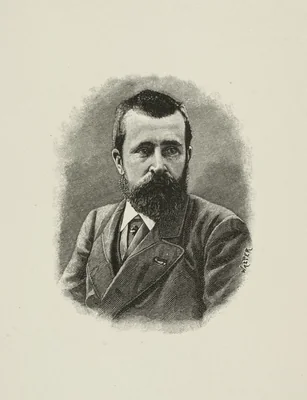
Johan Conrad Greive (1837–1891) stands as a notable figure in 19th-century Dutch art, recognized primarily for his meticulous graphic documentation of Amsterdam's shifting urban fabric. Although generally identified as a painter, Greive’s lasting contribution rests heavily upon the focused body of prints he executed during a concentrated period of activity between 1847 and 1860. These works serve as precise historical records, capturing the essential character of the city just prior to the sweeping architectural and infrastructural modernizations of the late century.
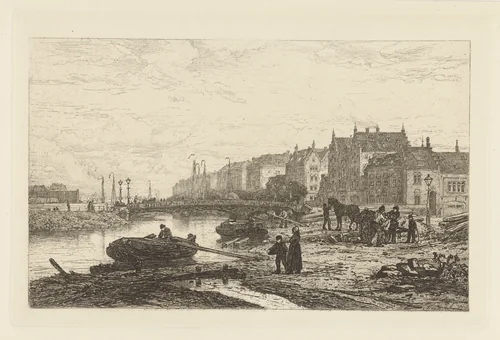
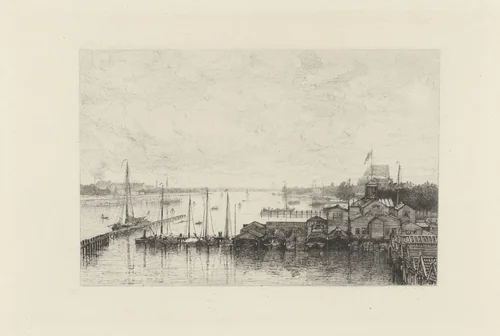
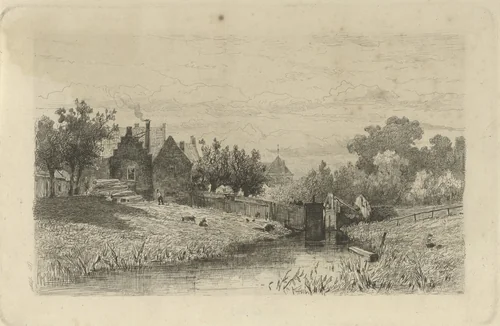
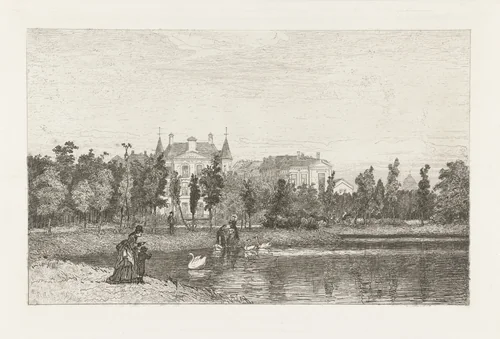
Greive specialized in capturing the physical infrastructure and quotidian flow of the Dutch capital. Unlike artists seeking purely atmospheric effects, Greive’s approach yielded sharp, accurate topographical studies, often emphasizing the critical interplay of water, commerce, and architecture. This meticulous observation is evident in etchings such as Gezicht op de Stadhouderskade and the specialized view Gezicht op de gebouwen van de roeivereniging de Hoop, which captures specific civic institutions with remarkable clarity. His compositions frequently balanced grand profiles with intimate, functional moments, shifting easily from the complex logistics documented in Gezicht op een sluis to the subtle social observation inherent in Zwanen voeren in het Vondelpark.
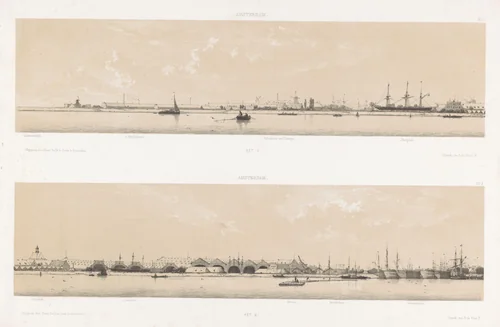
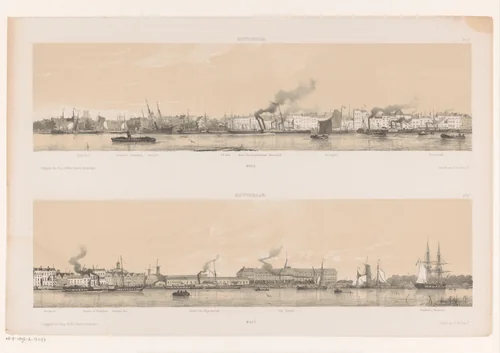
Greive’s dedication to clarity suggests an almost documentary intent. His fidelity to brickwork, rigging, and public spaces allows modern viewers to trace the city's architectural genealogy with exceptional accuracy. His comprehensive view, Profiel van Amsterdam, synthesized these detailed studies into a definitive visual record of the city’s skyline during the mid-century.
The significance of Greive’s output is affirmed by the inclusion of six known prints in the prestigious collections of the Rijksmuseum. This limited, high-quality output demonstrates that artistic impact is not always measured by sheer volume. As the work of artists from this period moves into the public domain, specialized images like those depicting the building of De Hoop rowing association are becoming increasingly accessible. Researchers and collectors can find downloadable artwork and high-quality prints, ensuring that these museum-quality historical observations of 19th-century life remain a critical resource. Johan Conrad Greive prints continue to provide a crucial, clear-eyed snapshot of a city on the cusp of transformation.
Source: Wikipedia · CC BY-SA 4.0