Joel Meyerowitz
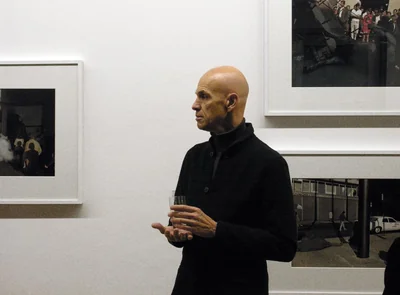
Joel Meyerowitz (b. 1938) holds a foundational position in the history of American photography, recognized for his crucial role in establishing color as a vehicle for serious artistic expression. He is a master practitioner across the fields of street, portrait, and landscape photography, whose active period, particularly between 1964 and 1981, helped to redefine the medium’s aesthetic and critical boundaries.
Meyerowitz began working almost exclusively in color in 1962, a systematic choice made during an era when fine art photography was still rigorously defined by the black-and-white tradition. At the time, widespread institutional resistance viewed color imagery as inherently commercial or purely illustrative. Meyerowitz was an early, articulate advocate who demonstrated that color could convey profound emotional, spatial, and psychological complexity, arguing for the intellectual rigor of the chromatic image. His work became a central component in shifting the critical consensus toward accepting color as the equal of its monochrome predecessor.
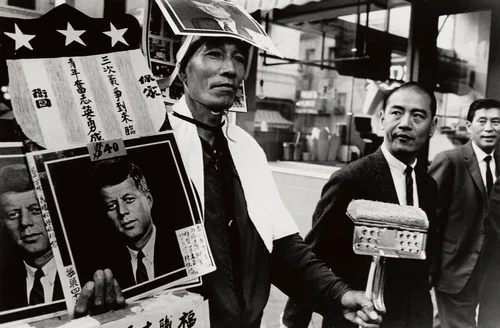
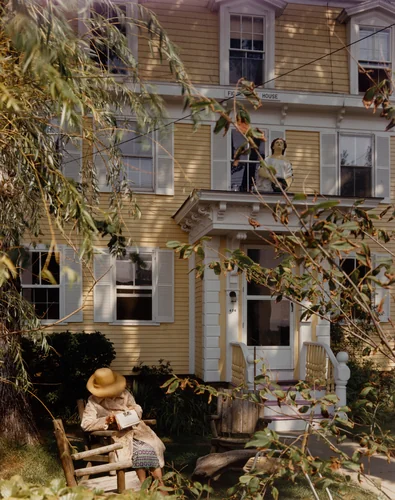
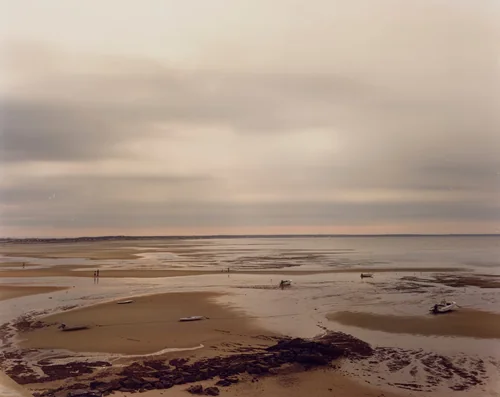
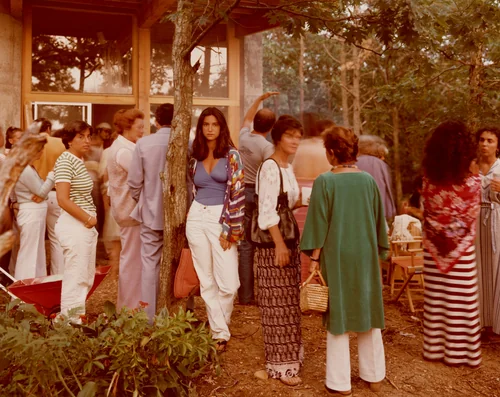
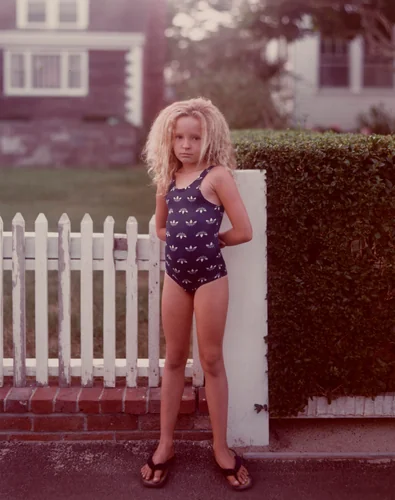
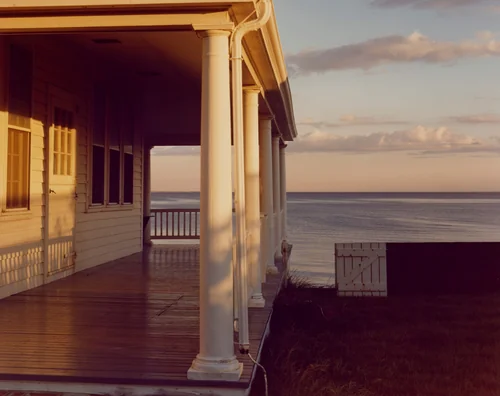
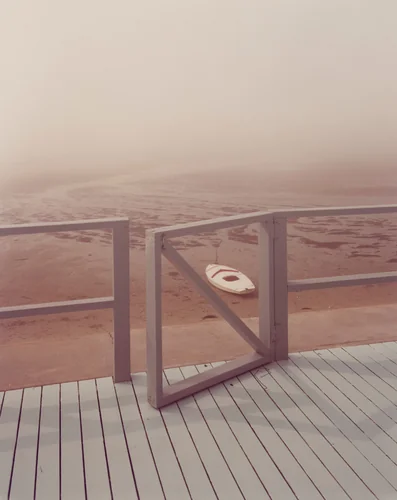
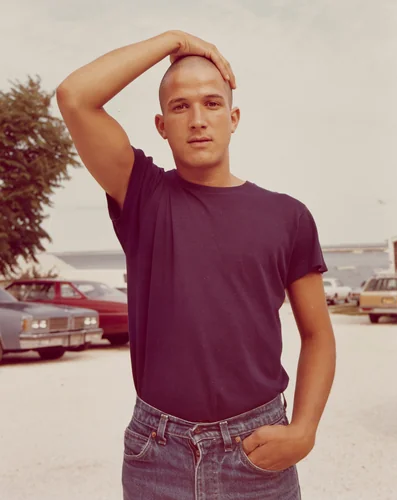
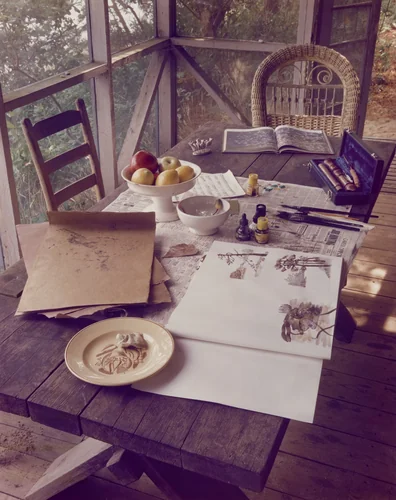
His early output often captures the dynamic, often witty energy of the street, typified by the observational precision seen in San Francisco, California. Later, his practice expanded to embrace more meditative, large-format landscape studies, particularly those capturing the distinct light and atmosphere of the East Coast, as exemplified by the ethereal Bay/Sky, Provincetown, Massachusetts. Whether documenting intimate character studies, such as Maianne, Provincetown, Massachusetts, or complex social gatherings like Cocktail Party, Wellfleet, Massachusetts, these high-quality prints reveal the specificity of American life in the mid-to-late twentieth century.
Beyond his production, Meyerowitz ensured the dissemination of his revolutionary approach through pedagogy, teaching photography at the prestigious Cooper Union in New York City during the early 1970s. His early career output, now included in major institutional holdings such as the National Gallery of Art, confirms his status as an essential contemporary master. It is perhaps telling that even when documenting a seemingly casual scene, his camera misses nothing, revealing both the staged pleasantries and the underlying psychological tensions of the moment. Many of his significant works remain available through platforms providing downloadable artwork and museum-quality resources.
Source: Wikipedia · CC BY-SA 4.0