Jervis McEntee
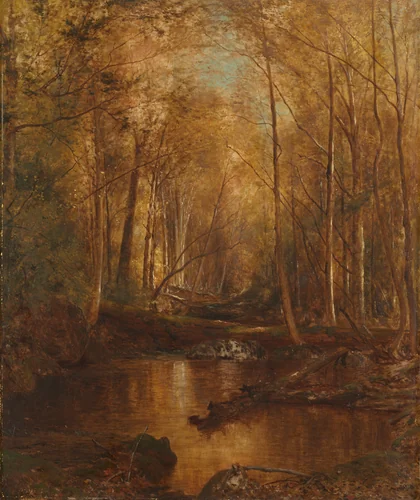
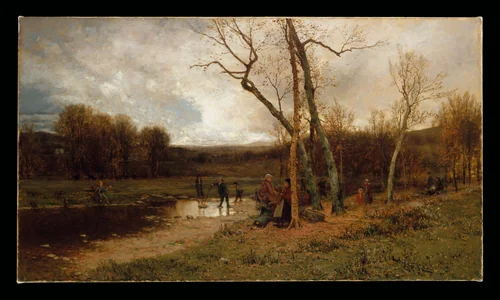
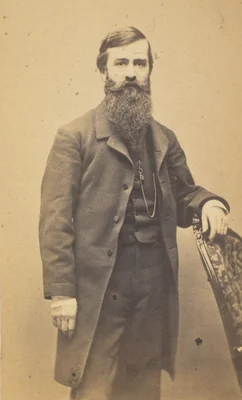
Jervis McEntee (1828-1891) was a crucial, though often understated, figure in the second generation of the Hudson River School. Active primarily between 1848 and 1869, McEntee developed a distinctive approach to American landscape painting, characterized by a sensitive and frequently melancholic atmospheric quality that often contrasted with the grandiloquent sublimity favored by his contemporaries. His enduring artistic legacy is preserved in major institutions, including the National Gallery of Art, the Metropolitan Museum of Art, and the Art Institute of Chicago.
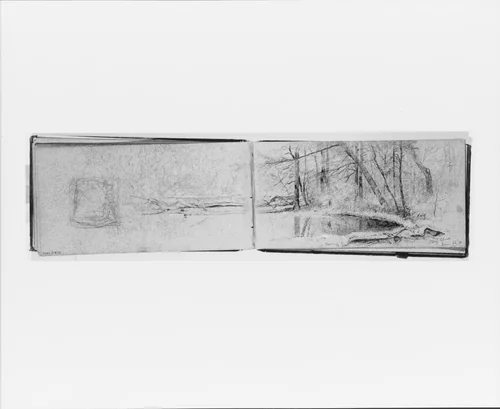
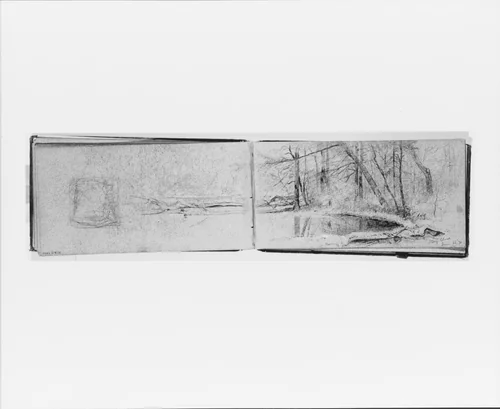
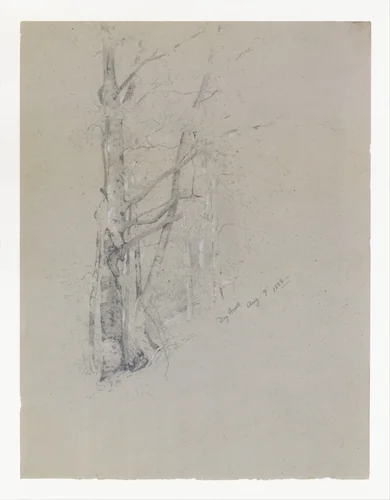
McEntee’s works demonstrate a dedicated study of climate and light. While his painting Mount Desert Island, Maine showcases the rugged scale of the American wilderness, pieces such as Mist on the Mountains or Kauterskill Clove reveal his penchant for somber skies and the transient effects of weather. He was an industrious traveler, documenting both domestic scenes and the classical landscapes of Europe, evidenced by his detailed sketchbook entries like Panorama of Roman Campagna, Nov. 12, 1868 and the foundational drawing Cloud Study; Lake [Maggiore?] and Village. His commitment to rigorous fieldwork ensured his paintings, drawings, and preliminary studies remain compelling documents of 19th-century observational technique.
Beyond the canvas, McEntee served as an important hub within the American art community. He maintained close personal relationships and traveled extensively with several of the movement’s most influential artists, granting him a unique position as both participant and observer. Perhaps his most fascinating legacy, however, resides not in his visual art but in his written record. McEntee’s extensive unpublished journals, spanning the years 1872 to 1890, provide an unparalleled, day-to-day account of life as a professional painter in New York during and immediately following the Gilded Age. While his paintings captured the sublime, his journals captured the deeply human, often frustrating, reality of the artist’s striving for recognition.
These records, alongside the surviving Jervis McEntee paintings, continue to enrich our understanding of 19th-century American aesthetics. Thankfully, due to institutional dedication, many of his works are considered part of the public domain. This accessibility allows researchers and enthusiasts alike to study his technique, ensuring the nuanced vision captured in his high-quality prints remains readily available for contemporary appreciation.
Source: Wikipedia · CC BY-SA 4.0
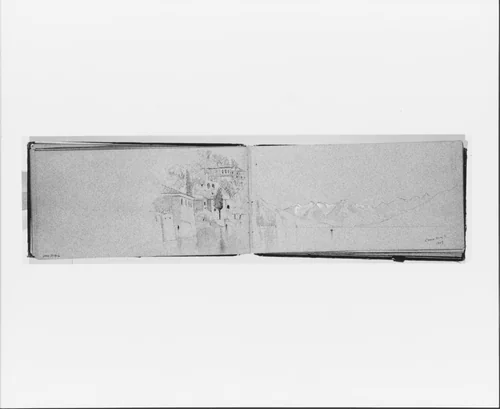
![Village, Mountains, and Lake [Maggiore?] (recto, from sketchbook) by Jervis McEntee, artwork, 1869](https://img.artbee.org/b20a5903-3db8-48b3-b7b6-1fb54e93d49d/small.webp)