Jerome Myers
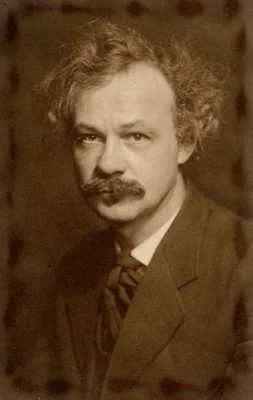
Jerome Myers (1867-1940) holds a distinctive and significant place in the history of American art, recognized primarily as an associate of the Ashcan School. Active throughout the late nineteenth and early twentieth centuries, Myers dedicated his focus to chronicling the dense, often overlooked, urban population of New York City. His compact but impactful body of work, which includes four known drawings and two prints, is represented in preeminent institutions, including the National Gallery of Art, affirming his status as a key urban realist.
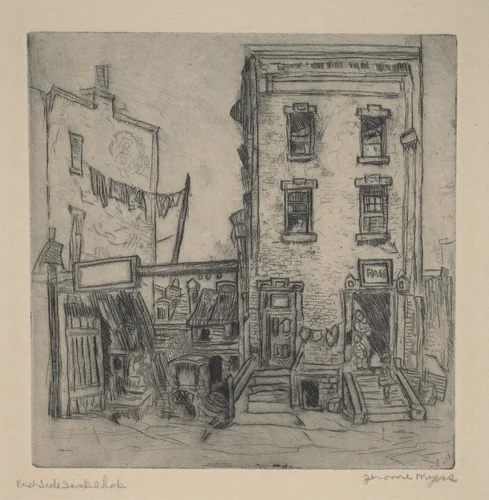
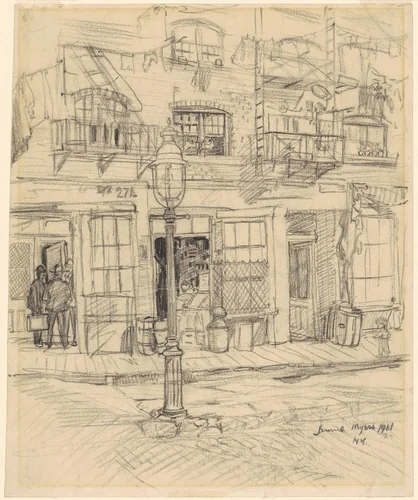
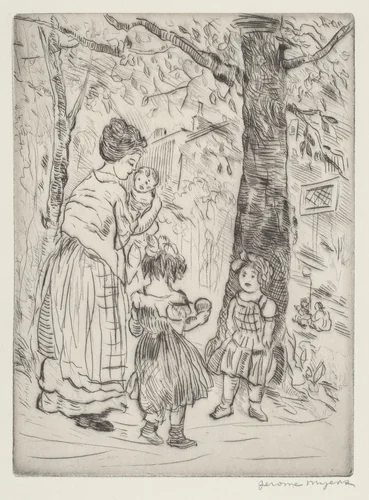
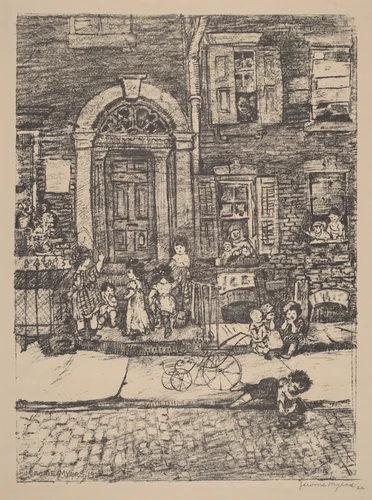
Unlike some contemporaries who favored journalistic spectacle, Myers distinguished himself through his remarkably sympathetic depictions of the everyday life found in the city’s immigrant communities. He worked primarily on the Lower East Side, where his observational acuity brought profound dignity to the laborers, street vendors, and children he encountered. Myers mastered the atmospheric nuance of the street, evidenced in works such as East Side Junk Shop and his compelling New York Street Scene. His method utilized drawing and printmaking to capture fleeting moments, giving his output a sense of immediacy and emotional authenticity rarely matched during the period.
Myers’ historical footprint extends beyond his quiet achievements in genre painting. In 1913, he was one of the central organizers of the International Exhibition of Modern Art, popularly known as the Armory Show. While history often focuses on the European avant-garde that the show introduced, it was the dedicated logistical work of artists like Myers that established the vital platform for modernism’s arrival in America. His simultaneous roles as chronicler of the local working class and facilitator of radical international art give him a unique, somewhat complex standing in early twentieth-century modernism.
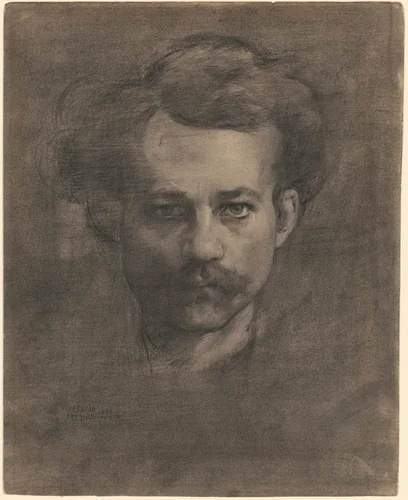
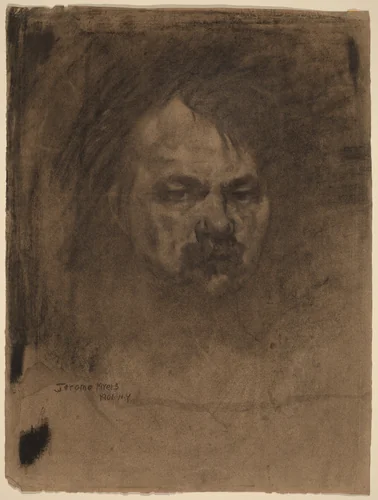
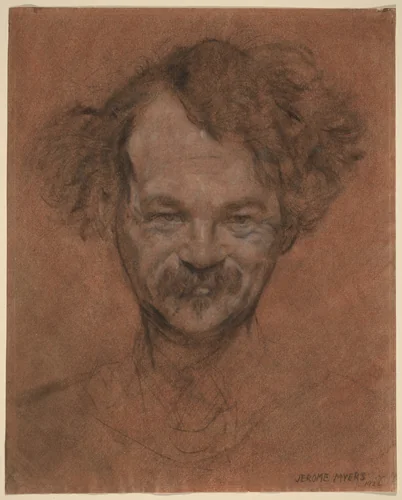
Today, Myers’ focus on enduring human themes ensures his continued relevance. His concise body of work, which also includes various studies like his Self-Portrait, remains highly valued by collectors and researchers. Because much of his production is now in the public domain, the emotional honesty and technical skill of Jerome Myers prints can be widely accessed and studied. These high-quality prints provide an irreplaceable, intimate glimpse into the social fabric of the industrializing American metropolis.
Source: Wikipedia · CC BY-SA 4.0