Jerome Hoxie
Jerome Hoxie was an artist active during a highly concentrated period in the mid-1930s, specifically documented between 1935 and 1937. During this time, Hoxie contributed significantly to the Index of American Design, a major federal arts initiative dedicated to creating a pictorial survey of the history of American decorative and folk arts from the colonial period onward.
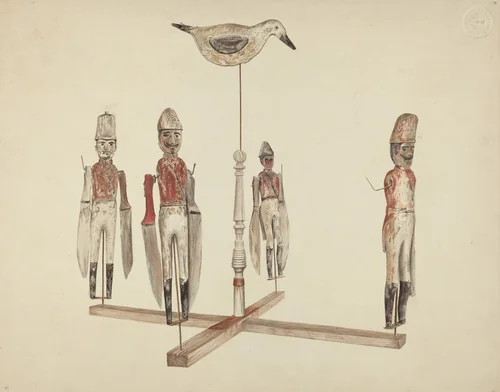
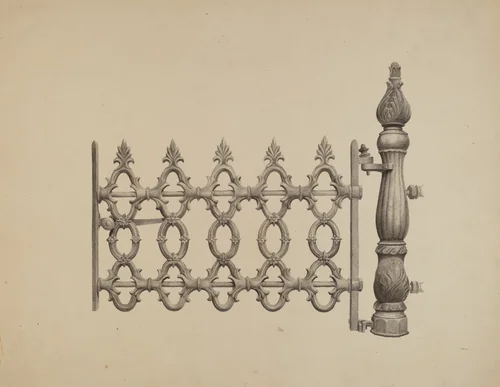
Hoxie’s output consisted of factual renderings and detailed documentation focused on American material culture. Fifteen works attributed to the artist are currently represented in museum collections, confirming the historical significance of these records. These designs, which document historical objects and architectural details, include precise studies such as Eagle, Stencilled Floor, and the architectural rendering Gate and Gatepost.
The documentation produced by Hoxie is held in the permanent collection of the National Gallery of Art. Other specific documented renderings include the Gate and the Butter Crock. As historical records of Depression-era cultural preservation, many of the designs attributed to Jerome Hoxie are now in the public domain, enabling researchers and institutions to utilize downloadable artwork and access high-quality prints derived from the original documentation.