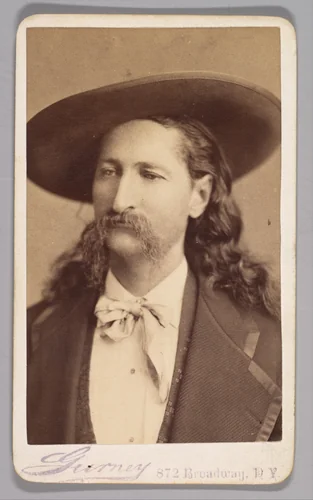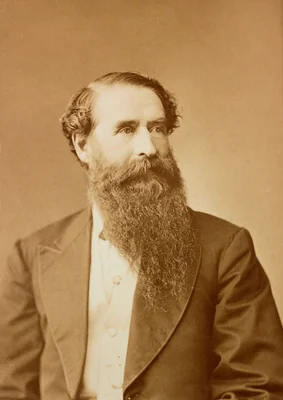
Jeremiah Gurney
Jeremiah Gurney (active 1850-1871) was a preeminent American photographer whose prolific studio work in New York City helped define the golden age of the daguerreotype. His technical mastery of this demanding medium secured his place in the history of early American portraiture, with examples of his precise plates held today in prestigious collections, including the Metropolitan Museum of Art, the National Gallery of Art, and the Art Institute of Chicago.
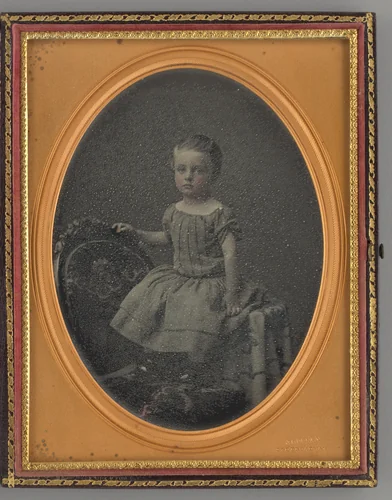
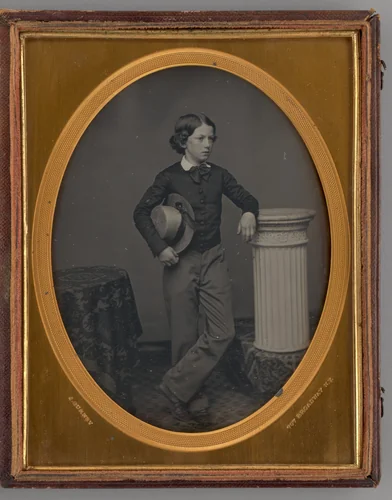
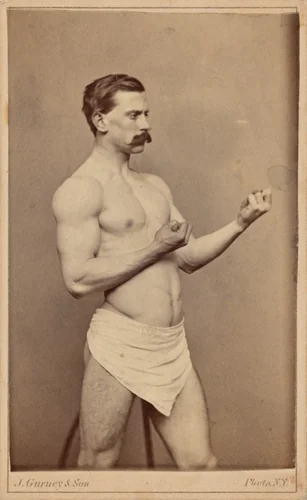
Operating at the height of the medium’s popularity, Gurney specialized in capturing the burgeoning American middle and upper classes. The daguerreotype, a unique, mirror-like image fixed permanently onto a silver-plated copper sheet, required both chemical precision and rapid compositional judgment. Gurney excelled at translating the gravity and status of his subjects onto these delicate surfaces. His work moved beyond mere documentation; the luminous clarity achieved in portraits like Portrait of a Woman demonstrates a sophisticated manipulation of light and shadow essential to the medium’s success.
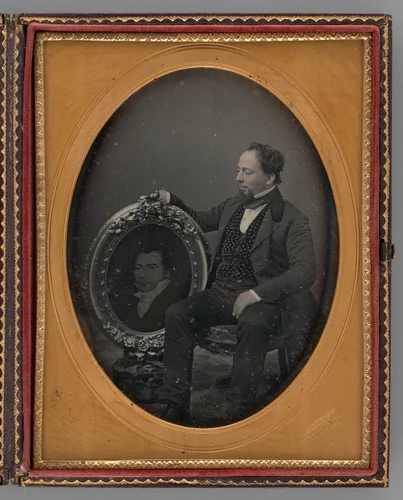
Gurney’s portraits offer a compelling glimpse into mid-19th-century social structure. Works such as Portrait of a Family or the dual study, Pair of Portraits of Man and Woman (Husband and Wife?), function simultaneously as personal heirlooms and significant anthropological documents. It is often observed that sitters from this period rarely smiled, reflecting the long exposure times required and perhaps a cultural seriousness about the act of creating a permanent, lasting record. This formality lends a quiet authority to even his more casual compositions, such as the endearing group image, Two Girls in Identical Dresses.
Gurney’s prolific output during his two decades of operation contributes vital visual evidence to the narrative of American urban life. As the technology evolved beyond the challenging, one-off nature of the daguerreotype, the historical and artistic importance of these early photographic works only grew. Today, collectors and researchers value these meticulously rendered documents as museum-quality photographic artifacts. Many of Gurney's surviving plates and prints are now in the public domain, ensuring that these foundational works remain widely accessible. Consequently, modern viewers can access high-quality prints and downloadable artwork of the original Gurney prints, continuing the legacy of this influential photographer.
Source: Wikipedia · CC BY-SA 4.0
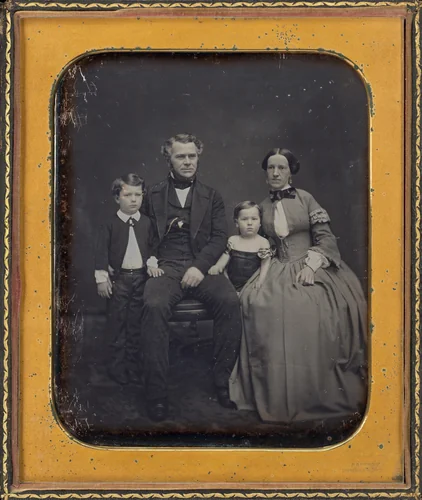
![[Pair of Portraits of Man and Woman (Husband and Wife?)] by Jeremiah Gurney, photograph, 1852-1860](https://img.artbee.org/c23bc88e-22b4-4e95-9bc9-7e501b789642/small.webp)
![[Two Girls in Identical Dresses] by Jeremiah Gurney, photograph, 1852-1863](https://img.artbee.org/90b83721-9913-4e45-89c1-30d42458ba48/small.webp)
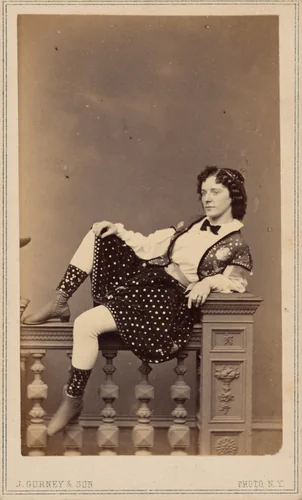
![[Mezzotint portrait of a Girl in Profile, from The St. Memin Collection of Portraits] by Jeremiah Gurney, photograph, 1862](https://img.artbee.org/bf314c18-3389-4a22-915e-c4558a8ca947/small.webp)
![[Mezzotint portrait of a Young Man in Profile, from The St. Memin Collection of Portraits] by Jeremiah Gurney, photograph, 1862](https://img.artbee.org/baff4143-c325-4384-8d51-1a5d6ef4b826/small.webp)
![[The British Soprano Euphrosyne Parepa-Rosa (1836-1874)] by Jeremiah Gurney, photograph, 1870-1879](https://img.artbee.org/1899ac34-2a16-4da4-910a-c44abd239036/small.webp)
![[Vokes Family, New York] by Jeremiah Gurney, photograph, 1870](https://img.artbee.org/add73702-ccb0-4b6d-8e1c-3ec3abb1ab15/small.webp)