Jean-Urbain Guérin
Jean-Urbain Guérin (active 1789-1805) holds a distinguished position among the most celebrated practitioners of the French miniature portrait tradition at the pivotal turn of the nineteenth century. A highly skilled draughtsman, Guérin worked almost exclusively in the intimate format of watercolor on ivory, a technically demanding medium that reached its zenith of popularity during the volatile period spanning the French Revolution and the subsequent Imperial reigns. Alongside contemporaries Jean-Baptiste Isabey and Jacques Augustin, Guérin defined the aesthetic standards for this specialized art form.
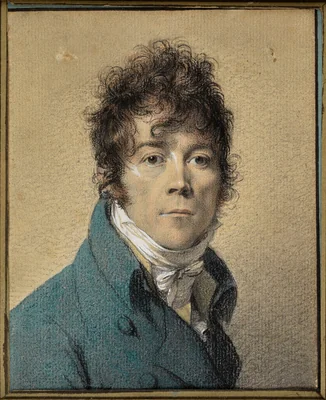
Guérin’s career coincided precisely with the final, elegant transition from Rococo sensibility into the crisp linearity and psychological focus of the Neoclassical style, demanding immense versatility from artists who needed to capture the shifting fashions and political alignments of the ruling elite. His output, though focused across a relatively brief sixteen-year period, demonstrates remarkable precision and psychological acuity. He specialized in rendering intricate facial details and textural accuracy within areas barely larger than a few inches, securing commissions from high-ranking officials and sophisticated society patrons.
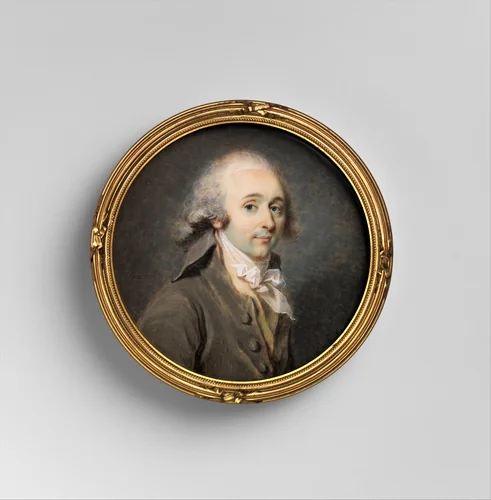
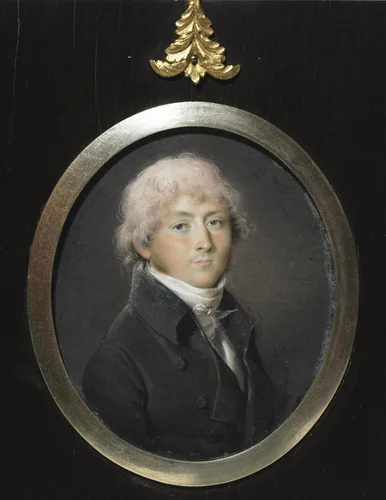
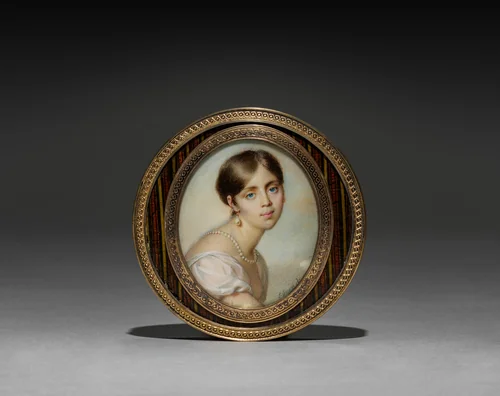
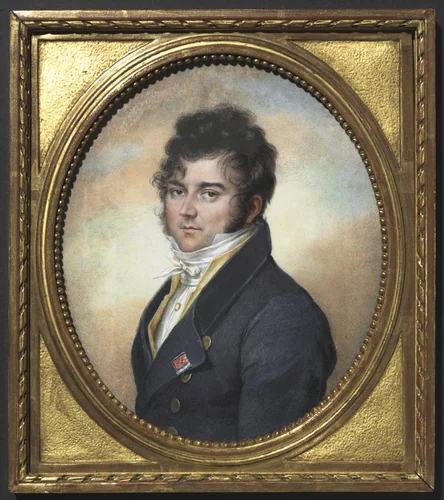
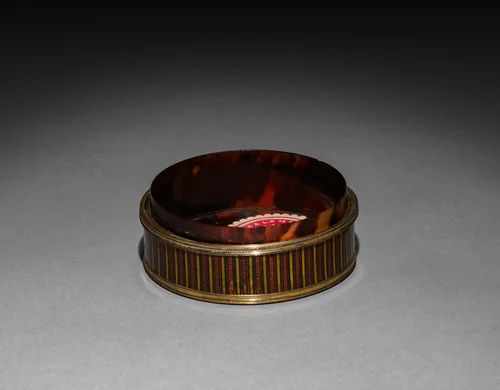
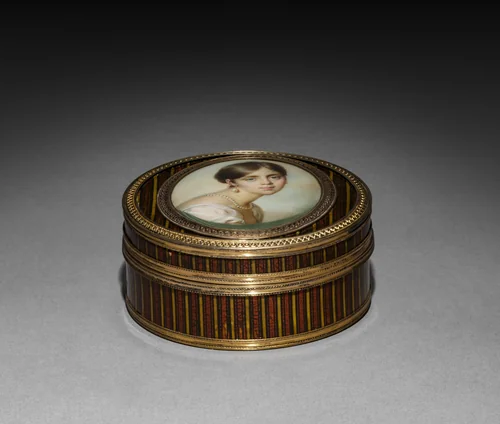
Works such as Alexandre Théodore Victor (1760–1829), Comte de Lameth and his various unnamed portraits of men and women illustrate his talent for detailed character study. Furthermore, Guérin’s art was often destined for presentation items, rather than merely wall display, as evidenced by studies for functional luxury items like Cover for a Snuff Box with a Portrait of a Young Woman. The resulting objects, frequently encased in elaborate gilded frames, serve as museum-quality relics of late eighteenth-century courtly exchange.
Guérin’s primary contribution lies in his success in elevating the miniature beyond a simple keepsake. He managed to imbue these small works with the expressive weight typically reserved for large-scale oil paintings. His surviving pieces, housed in major institutions including the Metropolitan Museum of Art and the Cleveland Museum of Art, continue to illuminate the complex social fabric of the period. Today, many fine examples of Jean-Urbain Guérin paintings and related studies are now held in the public domain, making high-quality prints and downloadable artwork available for scholarly and aesthetic appreciation. It remains an intriguing historical footnote that during an era marked by grand, sweeping political upheaval, the most enduring visual documentation often rests in these intensely personal, small-scale portraits.
Source: Wikipedia · CC BY-SA 4.0