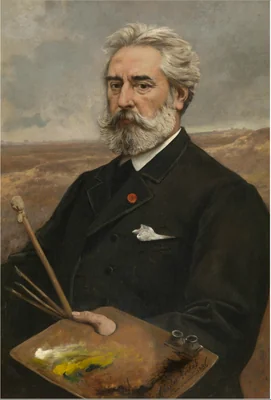
Jean Pierre François Lamorinière
Jean Pierre François Lamorinière (1825-1903) was a pivotal Belgian landscape painter whose career defines a crucial transition in nineteenth-century visual culture. Active primarily in Antwerp, his methodical artistic practice acted as a crucial bridge, moving Belgian landscape painting away from the expressive, subjective tendencies of late Romanticism toward the exacting objectivity of Realism. His commitment to nature established him as a key figure in the modernization of the genre, where emotional resonance was tempered by topographical fidelity.
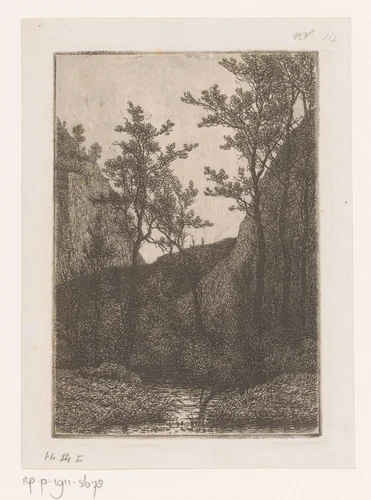
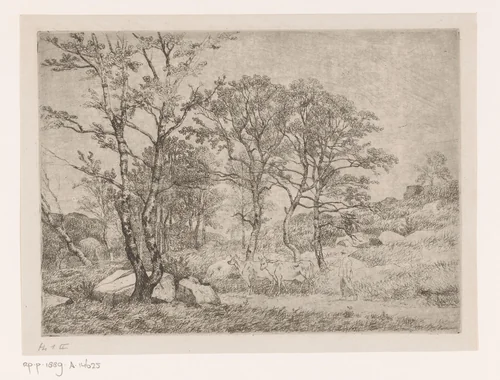
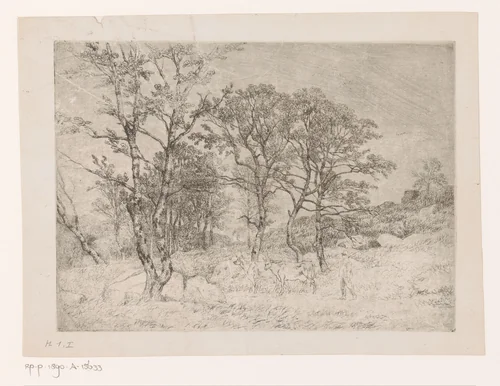
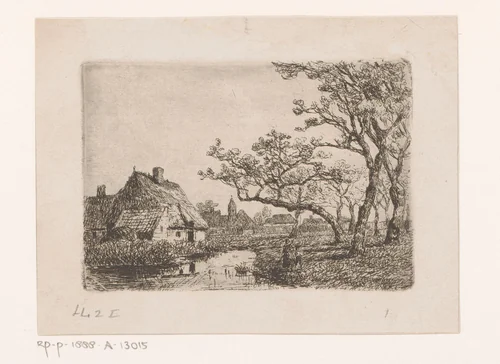
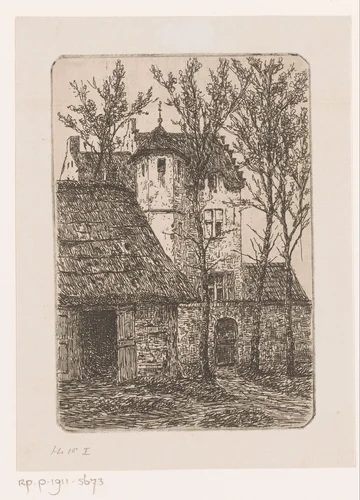
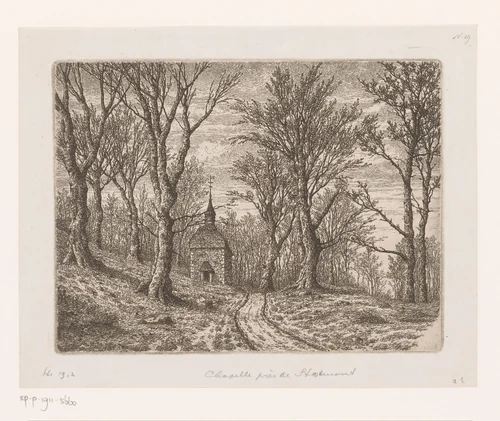
Lamorinière was committed to capturing the specific, palpable reality of his subjects, distinguishing himself from his predecessors who often idealized or aggregated different landscapes. He was particularly attentive to the subtle variations of light and atmosphere across recognizable Belgian and French settings. His highly detailed corpus includes such atmospheric renderings as the Berglandschap bij Hastière and the intimately observed Gezicht in het bos van Fontainebleau met twee koeien. These works reveal a profound interest in natural architecture and structural geometry, whether depicting the dense, specific growth of the French forests or the carefully documented dilapidation observed in Gezicht op een oude kasteelhoeve bij Antwerpen. Lamorinière’s dedication to locale was so profound that even when depicting rural life, the structural integrity of his trees and buildings seems as important as the inhabitants themselves.
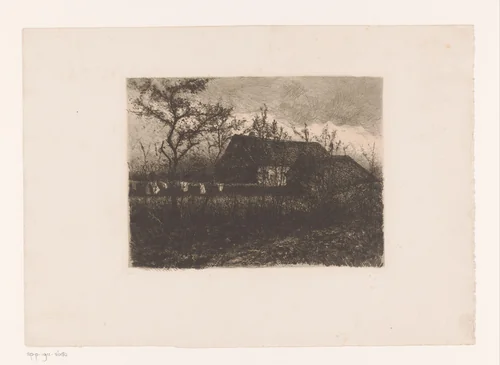
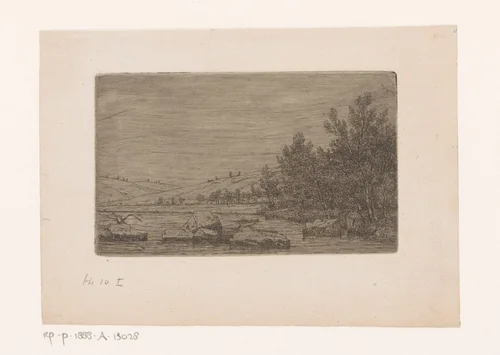
Although he is recognized primarily for his paintings, Lamorinière was also active as a printmaker, evidenced by eight known Jean Pierre François Lamorinière prints dating to 1838, confirming an early dedication to reproducible media. His commitment to authentic representation ensured his works were swiftly integrated into major institutional collections; the Rijksmuseum, for instance, holds several examples of his precise draftsmanship and compositions.
Today, the legacy of Jean Pierre François Lamorinière paintings is preserved, and a significant portion of his output has entered the public domain. This accessibility allows researchers and enthusiasts worldwide to access high-quality prints and downloadable artwork derived from his originals, ensuring his enduring contribution to 19th-century realism remains widely studied and appreciated.
Source: Wikipedia · CC BY-SA 4.0