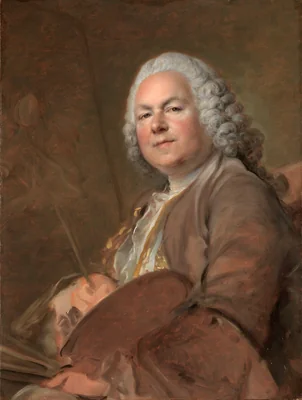
Jean-Marc Nattier
Jean-Marc Nattier (1685-1766) ranks among the preeminent French portraitists of the Rococo period, successfully translating the demands of aristocratic patronage into a sophisticated, technically brilliant visual language. Born into a distinguished artistic family in Paris, he was the son of painter Marc Nattier and miniaturist Marie Courtois, grounding his early development in the exacting standards of the studio tradition. Active from the turn of the eighteenth century until 1756, Nattier’s career trajectory became inextricably linked to the highest spheres of French society, securing him a place as the painter of choice for the court of King Louis XV.
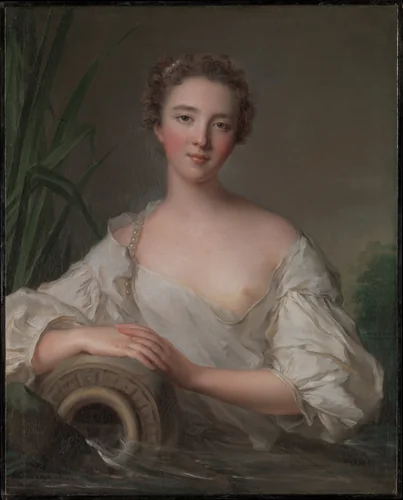
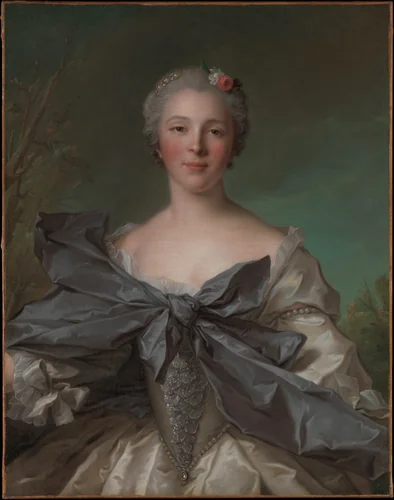
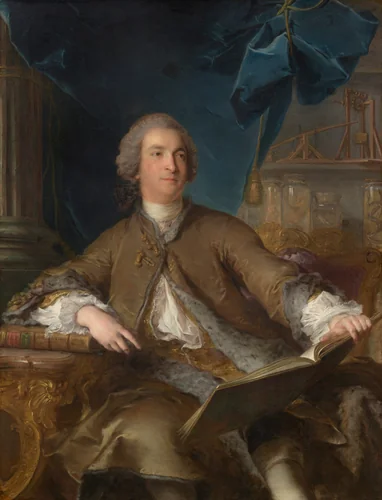
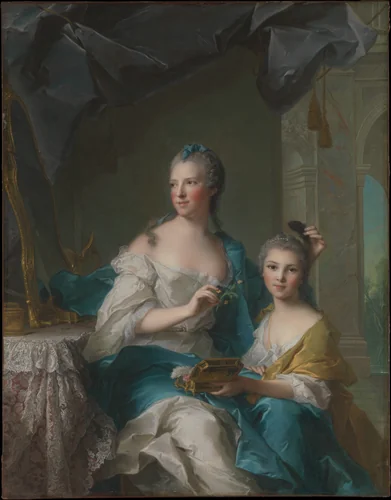
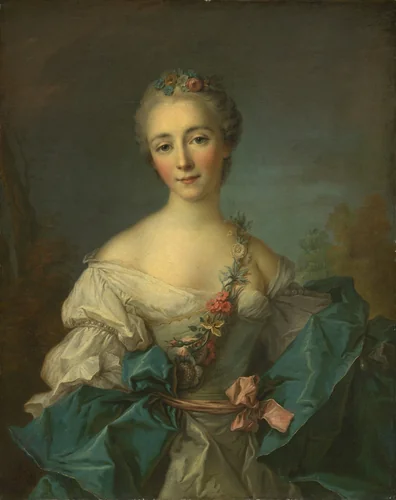
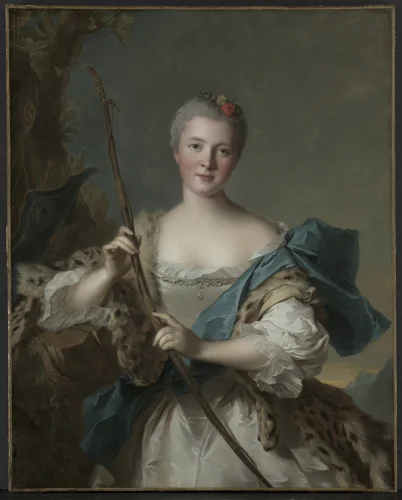
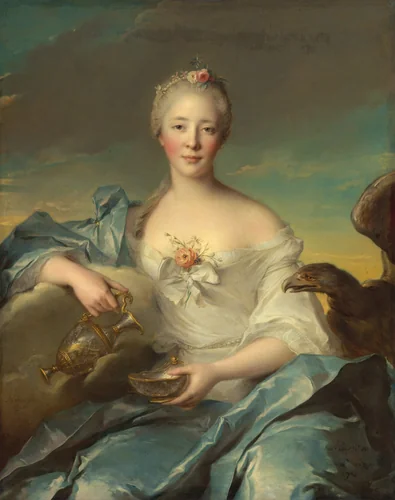
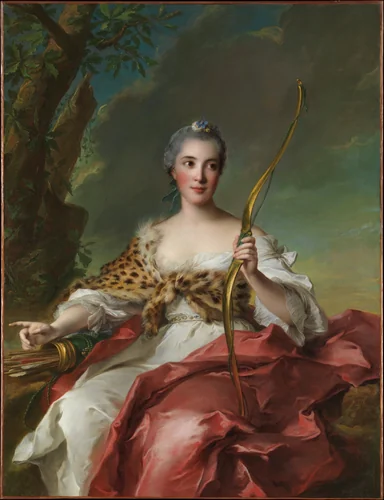
Nattier fundamentally specialized in the portrait historié, an innovative approach where the sitter was formally dressed not merely in contemporary attire, but in the guise of a mythological figure, classical deity, or allegorical personification. This practice, while common in courtly circles, reached its zenith in Nattier’s hands. He became celebrated for his elegant depictions of the leading ladies of Versailles, immortalizing Duchesses and Marquises as muses, vestal virgins, or nymphs. Works such as The Spring (La Source) exemplify this blend of idealized fantasy and specific observation, granting his wealthy patrons both the flattery of divine comparison and the necessary visual validation required by court life. It is an interesting facet of his approach that, even while rendering his subjects as goddesses, Nattier often meticulously retained the contemporary hairstyles and sumptuous silks dictated by Parisian fashion, grounding the mythological within the realities of his era.
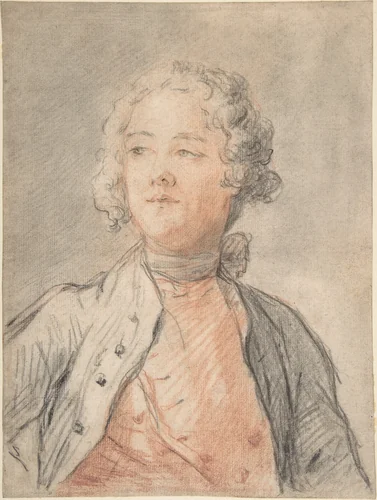
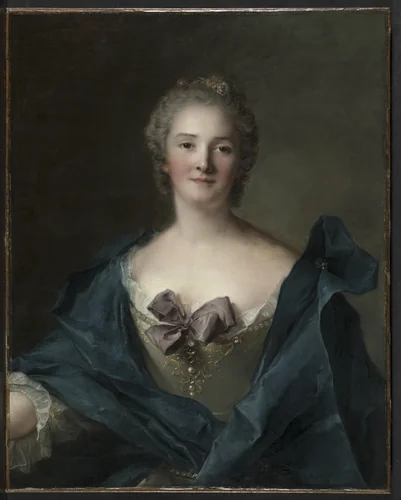
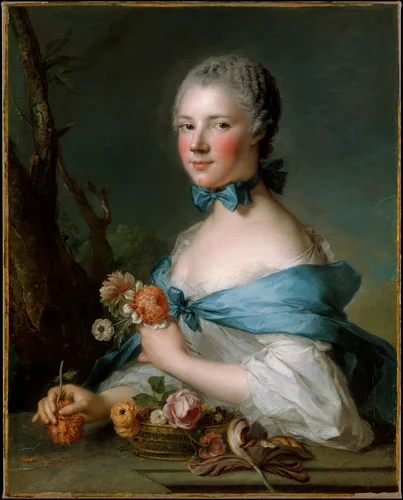
His output was extensive and precise, encompassing both grand full-lengths and intimate half-length studies, including his early Self-Portrait and formal commissions like Marie Françoise de La Cropte de St. Abre, Marquise d'Argence. Today, Nattier's masterful Jean-Marc Nattier paintings are essential components of major collections worldwide, including the National Gallery of Art, the Metropolitan Museum of Art, and the Cleveland Museum of Art. Because many of these classic Rococo compositions now reside within the public domain, art enthusiasts can access high-quality prints, ensuring that Nattier’s refined, celebratory vision of eighteenth-century France remains widely accessible as downloadable artwork for both study and enjoyment.
Source: Wikipedia · CC BY-SA 4.0