Jean Lurçat
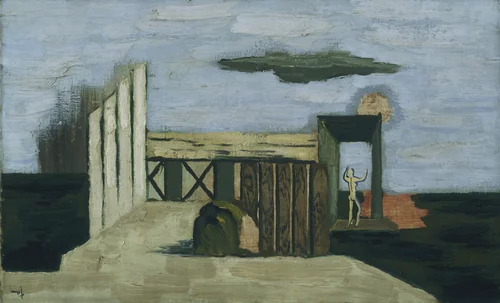
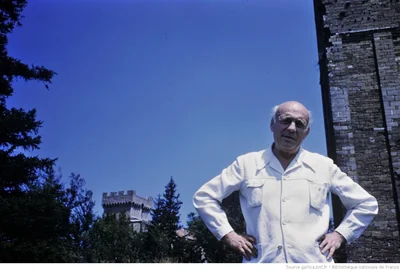
Jean Lurçat (1892-1966) occupies a foundational role in the history of 20th-century decorative arts, earning primary recognition for his singular achievement in reviving contemporary European tapestry. By the mid-20th century, he had successfully elevated the medium from a secondary decorative craft into a monumental artistic statement, demanding that it be treated with the compositional rigor typically reserved for painting.
While his later career focused intensely on textiles, Lurçat was a widely proficient artist who began as an accomplished painter and ceramist. His early commitment to graphic arts, spanning primarily from 1907 to 1925, established his technical dexterity in illustration. This fertile period yielded thirteen distinct illustrated books, confirming his skill in producing sharp, evocative line work suitable for reproduction. His mastery of graphic reduction is evident in studies of motion and form, such as Tortoise and Young Bull, which demonstrate economical yet descriptive detail.
Lurçat’s illustrated volumes frequently display a subtle, theatrical sensibility. Plates like the 2 H.P. from the illustrated book Baroque, or the dynamic figure studies Dancing Harlequin and Harlequin Diplomat from Toupies, reveal his sophisticated engagement with narrative and persona. Lurçat possessed a remarkable ability to infuse the traditional figure of the Harlequin with a modern, slightly detached cynicism, a quality often missed by those focused purely on his large-scale textile designs.
Lurçat’s comprehensive approach, spanning from intimate early drawings to ceramics and monumental tapestries, cemented his influence across multiple domains of French art. Today, his graphic output remains highly valued; many of the artist’s lithographs and original Jean Lurçat prints are preserved in major institutions, including the Museum of Modern Art, establishing them as museum-quality artifacts. As access to his seminal early works expands, these compelling illustrations are often utilized under royalty-free terms, ensuring that his legacy rests not just on the scale of his tapestries, but on his profound ability to infuse traditional artistic crafts with enduring modern vitality.
Source: Wikipedia · CC BY-SA 4.0