Jean-Jacques-François Le Barbier
Jean-Jacques-François Le Barbier (1700-1780) represents the archetypal academically trained artist of the high Ancien Régime, skillfully operating across the demanding disciplines of literary writing, illustration, and historical painting. His proficiency in executing official state narratives was formally recognized by 1780, when he achieved the distinguished status of official painter to the King of France. This appointment confirmed his mastery over the grand, moralizing genres that defined European academic art of the period.
Le Barbier’s artistic practice was fundamentally dedicated to the interpretation and chronicle of French history, mythology, and classical literature. His works served not merely as decoration, but as visual articulations of royal authority and civic virtue. While commissioned historical Jean-Jacques-François Le Barbier paintings were central to his official duties, much of his enduring graphic legacy resides in surviving drawings and prints, which reveal an artist intensely focused on composition and dramatic staging.
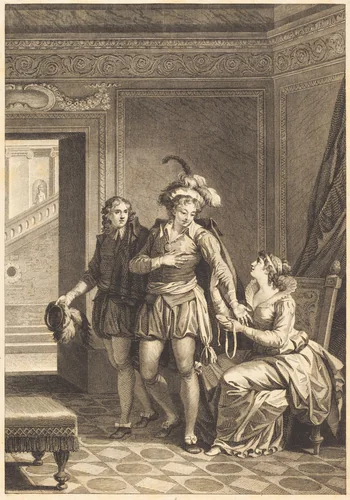
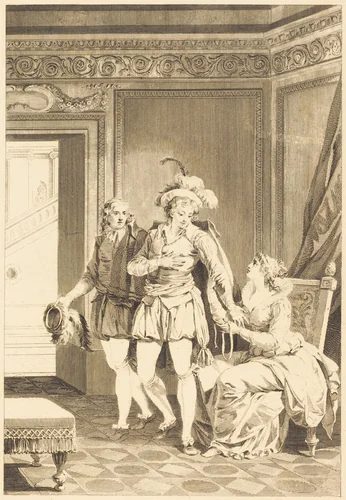
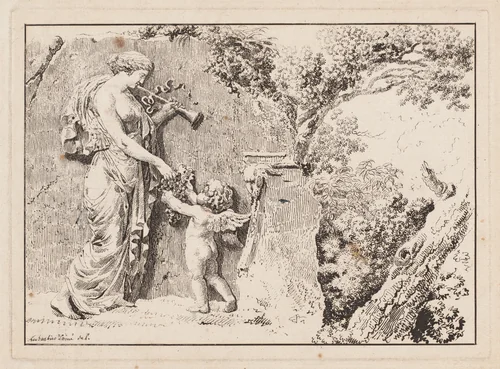
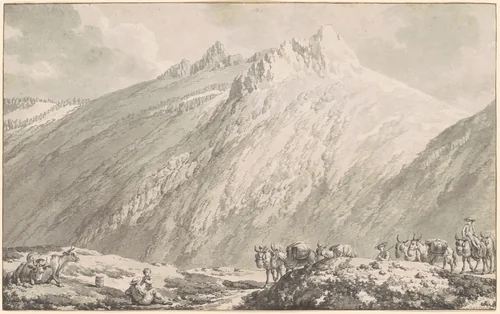
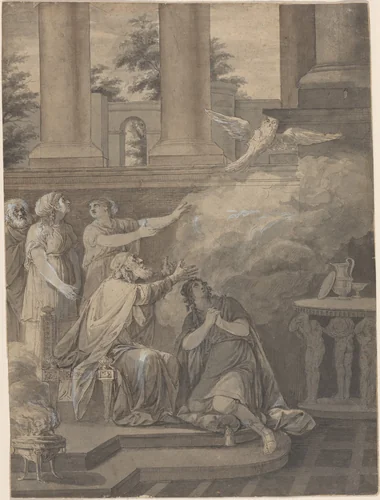
His facility with line is evident in works such as the precise, emotionally charged print Joconde: Le depart, which exemplifies the neoclassical focus on heroic departure or sacrifice. Simultaneously, Le Barbier demonstrated a capacity for acute observation outside the human theater, as seen in the rugged topographical study The Grimsel Pass, a reflection of the emerging taste for sublime European geography. Furthermore, the mythological subject matter of Pallas Athene in the Form of a Bird Leaving Nestor and Telemachus underscores the academic rigor required of court artists, blending historical narrative with classical allusion.
What distinguishes Le Barbier’s surviving material is his remarkably fluid transition between narrative scale and medium. He utilized graphic arts not just for preparatory work, but often as a means of independent storytelling, treating the print media with a finished quality usually reserved for oil on canvas. This consistent dedication across media allowed for the wide dissemination of his compositions, a practice that ensured his visual ideas penetrated the public consciousness. Today, this body of work is preserved in international collections, including the National Gallery of Art. Due to their institutional housing and age, many of Le Barbier’s compositions are now in the public domain, allowing institutions and enthusiasts alike access to high-quality prints. These downloadable artwork files provide a royalty-free glimpse into the historical and mythological imagination of the French court on the eve of revolution.
Source: Wikipedia · CC BY-SA 4.0