Jean Huber
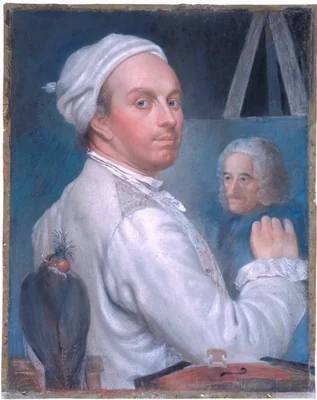
Jean Huber (1721-1790) was a multifaceted Genevan citizen whose career spanned the seemingly disparate worlds of military command, politics, authorship, and the fine arts. A master silhouettiste and painter, Huber’s enduring significance rests on his unique and intimate documentation of Voltaire, capturing the philosopher’s domestic and conversational life at Ferney during the height of the Enlightenment.
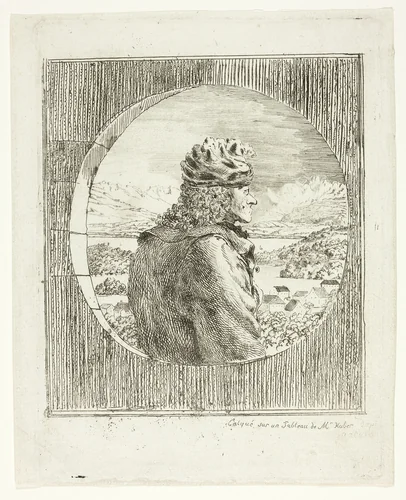
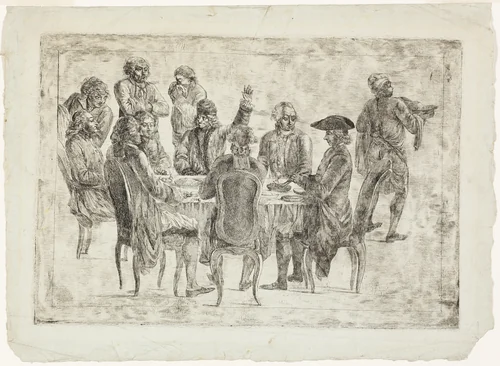
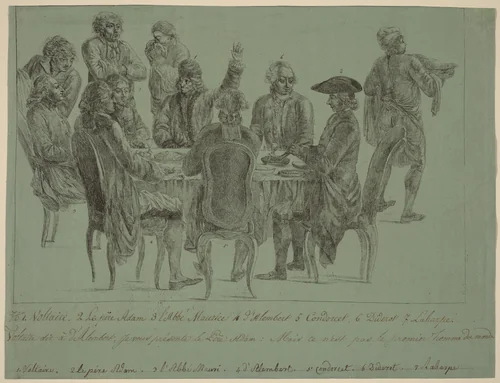
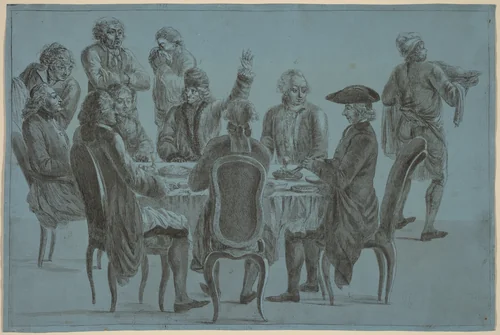
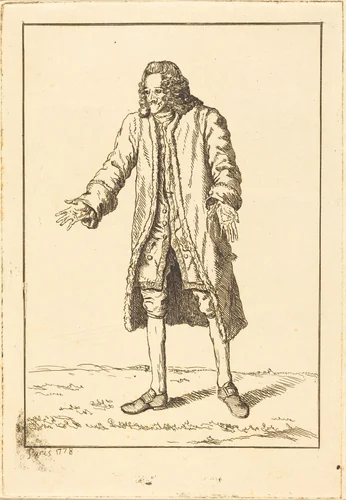
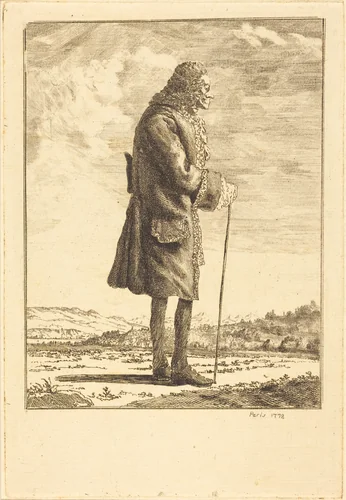
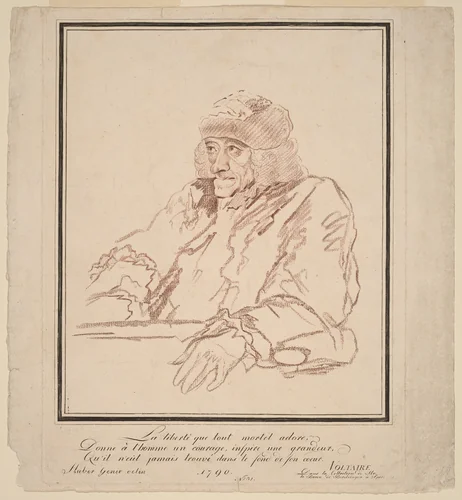
Active between 1741 and 1790, Huber moved beyond the formal demands of traditional court portraiture to create a candid visual history of intellectual life. His best-known works, including the iconic Voltaire Seen in Profile and the complex group study Le Déjeuner de Voltaire à Ferney (also known as The Philosophers' Meal), demonstrate a remarkable acuity for depicting spontaneous interaction. Unlike artists who elevated their subjects to heroic status, Huber placed Voltaire within relatable domestic environments, often showing him entertaining guests or engaging in spirited discussion. The resulting compositions possess a light, anecdotal quality, reflecting a friendship that granted Huber unparalleled access to his subject.
Huber excelled particularly in drawing and printmaking, media well suited for the rapid circulation of ideas and images across 18th-century Europe. His graphic works and associated prints were vital in shaping the public’s perception of the aged Enlightenment titan, creating an iconography that emphasized wit, vitality, and intellectual authority rather than pure physical grandeur. He employed the silhouette with great dexterity, proving that a simple profile could encapsulate complex personality.
It is perhaps fitting that a citizen of the Republic of Geneva, a figure who balanced his own political and military responsibilities, was the one to definitively capture the private life of the era’s most public intellectual. Today, works from his active period are held in major collections, including the National Gallery of Art and the Art Institute of Chicago. These vital historical documents, whether in original form or accessible as high-quality prints, confirm Jean Huber’s prints as crucial visual anchors for studying the iconography of the later Enlightenment.
Source: Wikipedia · CC BY-SA 4.0