Jean Henri Marlet
Jean Henri Marlet was an artist active across five decades, with documented work spanning the period of 1770 to 1820. His artistic output concentrated specifically on printmaking, reflecting cultural and social commentary prevalent during the late 18th and early 19th centuries.
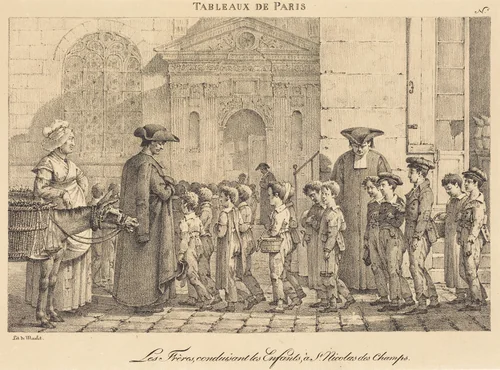
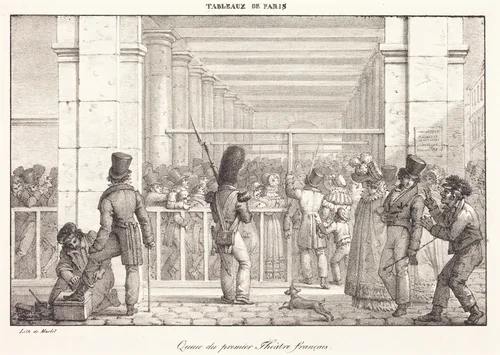
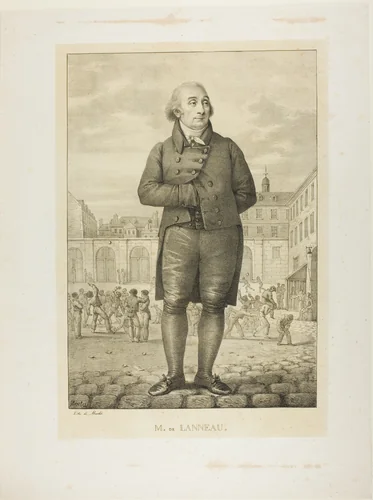
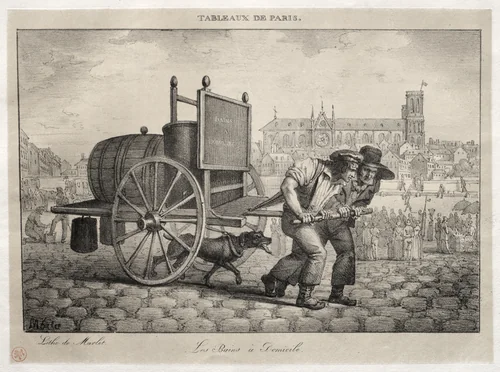
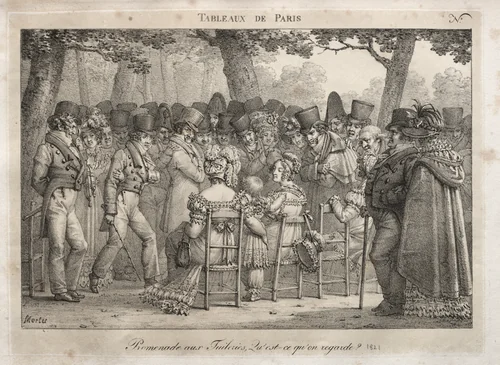
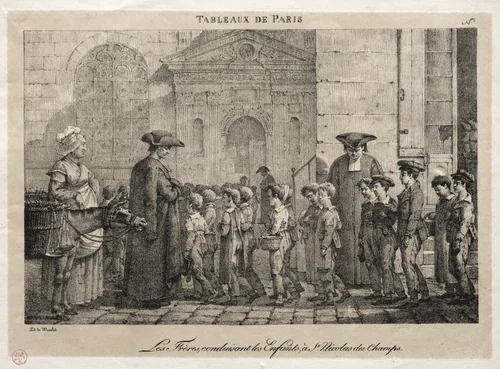
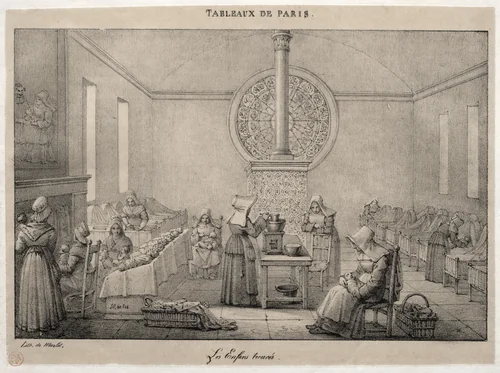
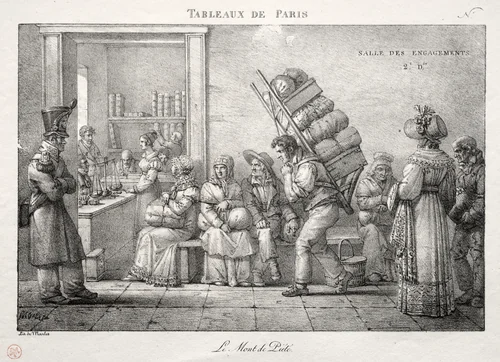
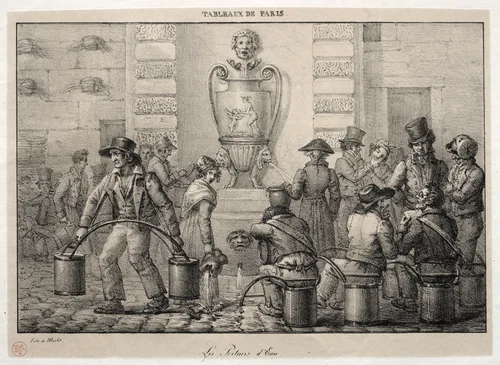
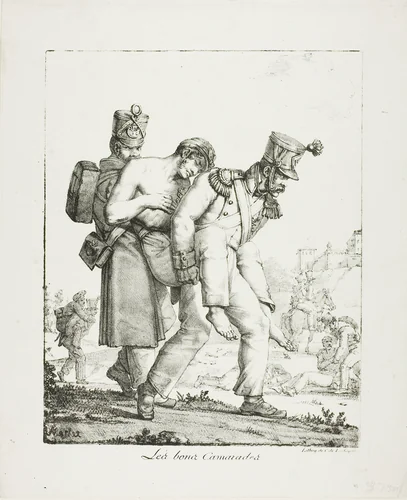
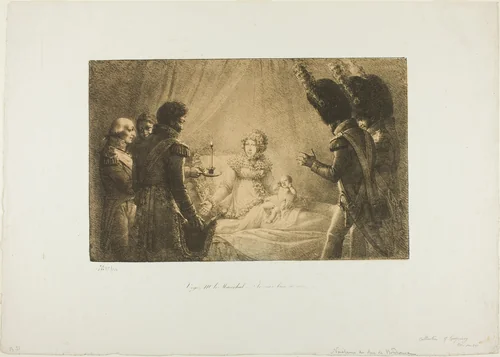
Though an associated artistic movement is not specified in institutional records, Marlet’s documented portfolio suggests an interest in observational scenes, daily life, and portraiture. His works capture distinct vignettes of the era, ranging from common societal interactions to specific institutional documentation. Notable prints include the detailed street scene Les Frères Conduisent les Enfants, à St. Nicolas des Champs, the study of public assembly in Queue du premier Theâtre français, and the private setting observed in Baths at Home. Marlet also engaged in formal portraiture, exemplified by the print Portrait of M. de Lanneau, and documented specific demographics, as seen in Blind Men from the Quinze Vingts, Walking.
Jean Henri Marlet's significance is preserved through his representation in major museum collections. Twelve of his prints are held across institutions including the Art Institute of Chicago, the National Gallery of Art, and the Cleveland Museum of Art. The presence of these museum-quality prints in such collections establishes the lasting scholarly value of the artist. As much of his work predates modern copyright conventions, these Jean Henri Marlet prints are often now in the public domain, allowing for the widespread creation of high-quality prints and downloadable artwork reproductions.
Source: Wikipedia · CC BY-SA 4.0