Jean-François de Troy
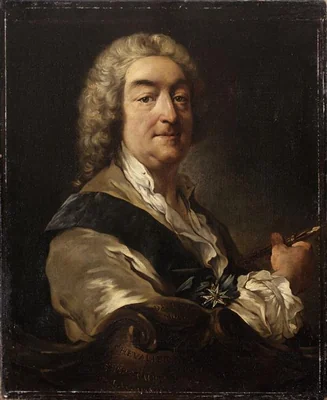
Jean-François de Troy (1679-1752) was a foundational figure in the French Rococo, recognized during his lifetime as one of the nation’s preeminent history painters. Active between 1689 and 1731, his highly successful career encompassed vast decorative fresco cycles, intimate easel paintings, detailed draughtsmanship, and complex tapestry designs. This breadth of technical mastery allowed him to transition seamlessly between academic rigor and delicate observation, defining the visual culture of the early eighteenth century.
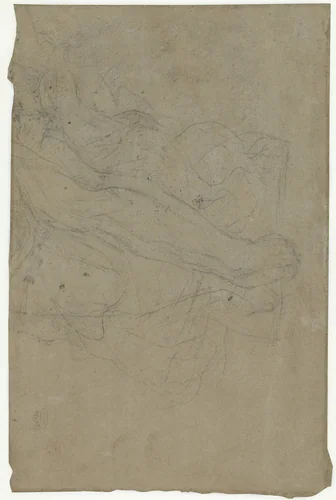
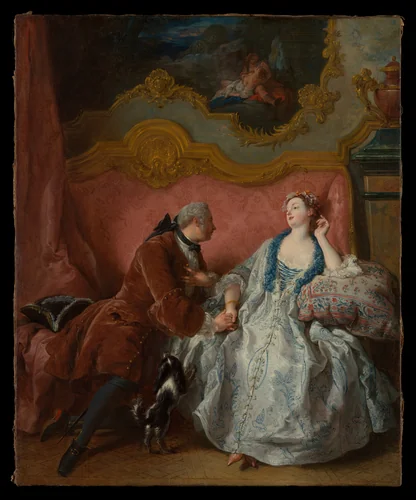
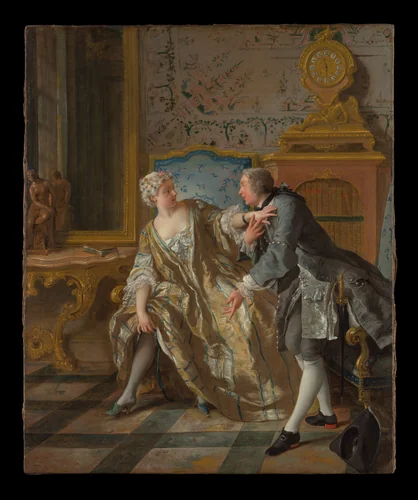
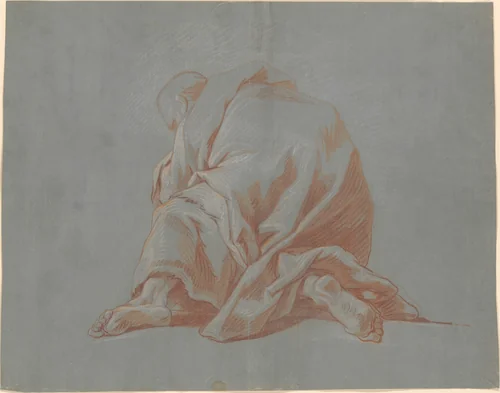
While De Troy achieved renown for monumental classical and mythological subjects, his lasting innovation resides in his specialized genre scenes. He is widely credited as the inventor of the tableaux de modes, paintings that offered a spirited, often witty portrayal of contemporary Parisian fashion, pastimes, and aristocratic manners. These works served as more than social documents; they captured the texture of elite life with an elegance that anticipated the height of the Rococo. Paintings like The Declaration of Love or the study Deel van een studie van een liggend figuur showcase his sophisticated handling of costume and light, cementing his reputation among the discerning collectors of his day.
De Troy was a master of narrative, able to distill complex social interactions into single, compelling moments. His success in balancing the demands of academic history painting with the engaging lightness required for these modern depictions demonstrates a remarkable versatility. Although initially trained for the most serious narrative commissions, De Troy seemed to find genuine pleasure in chronicling the polite frivolity of his age, a delightful contradiction given his stature as a leading academician.
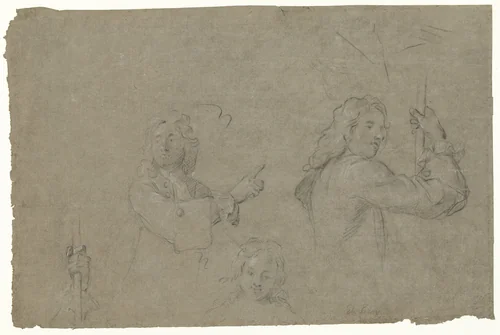
His international influence was solidified late in life by his appointment as director of the French Academy in Rome. Today, Jean-François de Troy paintings and drawings, including sensitive preparatory works like Studies van mannen en hand, are preserved in major collections worldwide, including the Metropolitan Museum of Art and the Rijksmuseum. The enduring appeal of his meticulous draftsmanship and elegant compositions means that downloadable artwork and high-quality prints of his pivotal pieces remain widely accessible to researchers and enthusiasts.
Source: Wikipedia · CC BY-SA 4.0