Jean Duplessis-Bertaux
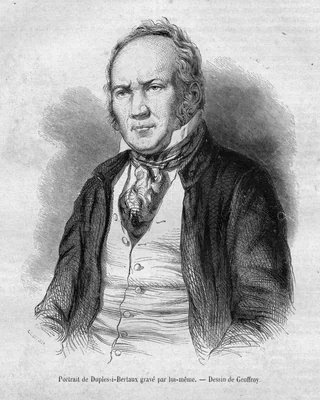
Jean Duplessis-Bertaux (1747–1819) holds a significant position among French draughtsmen and printmakers working across the late eighteenth and early nineteenth centuries. Operating primarily in Paris, his practice was notable for its technical versatility, encompassing painting, drawing, etching, and the exacting skill of burin engraving. This mastery across multiple graphic media allowed him to chronicle the fluid social and political landscape of the French Revolutionary era with documentary precision.
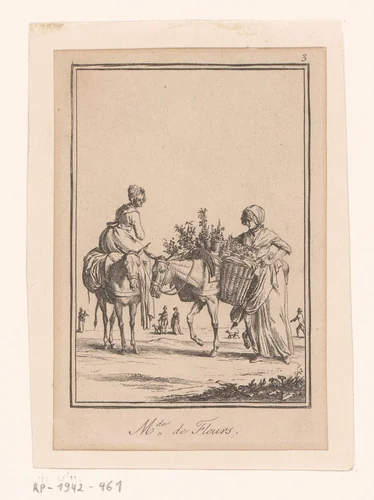
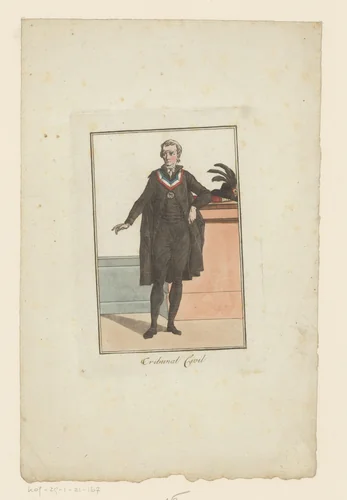
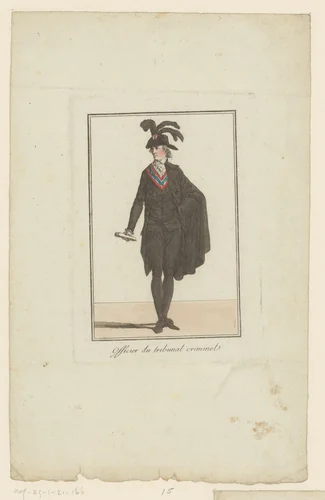
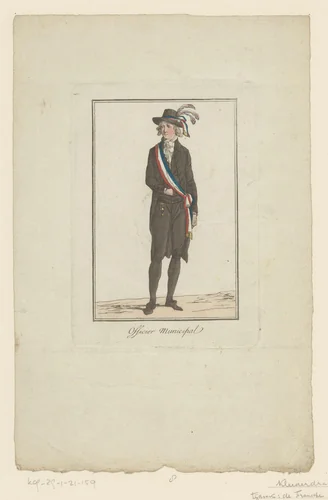
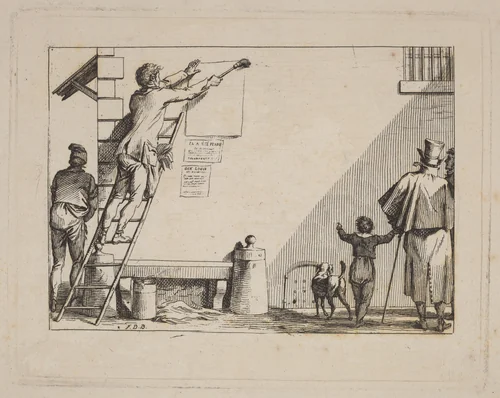
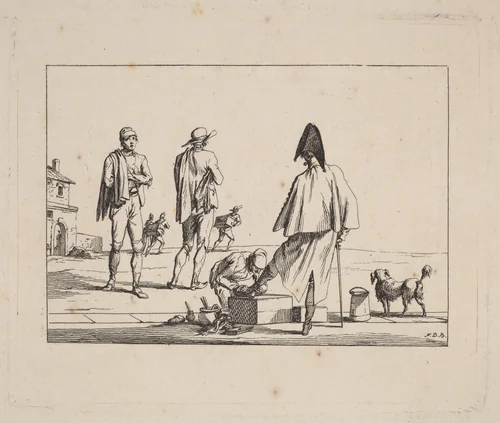
While the historical record identifies him as a painter, Duplessis-Bertaux is best known today for his insightful prints which chronicled contemporary Parisian life. His oeuvre moved fluidly between genre scenes and meticulous documentary studies. Titles such as Bloemenverkoopsters op ezels (Flower Sellers on Donkeys) and Colleur (Billposter) reveal his keen eye for quotidian street life, while other series provided valuable visual records of official society, as seen in works like Kostuum van de officier van het civiele tribunaal (Costume of the Officer of the Civil Tribunal). This attention to detail means his Jean Duplessis-Bertaux prints offer both artistic merit and rich ethnographic information, making them invaluable resources for historians studying the visual culture of the period.
The question of attribution occasionally complicates the study of his impressive output. Duplessis-Bertaux employed several variations of his name, signing works as Duplessi-Bertaux., Jean Duplessi-Bertaux, or simply JD Bertaux. A more complex attribution issue arose when some cataloguers mistakenly attributed works to a singular Duplessis Berthault. This misidentification likely stemmed from conflating the names of the draughtsman Duplessis and his frequent collaborator, the engraver Pierre-Gabriel Berthault. It is a subtle but persistent reminder that in the highly specialized world of eighteenth-century print production, a print often bore two names, and transcription errors are sometimes harder to erase than the original burin lines.
Duplessis-Bertaux’s works are held in major international institutions, including the Rijksmuseum and the National Gallery of Art, underscoring their enduring museum-quality status. Today, due to the age of his original plates and drawings, many of his striking images documenting Revolutionary-era fashion and daily rituals have entered the public domain. Consequently, these historically significant pieces are widely available as high-quality prints and downloadable artwork for study and appreciation worldwide.
Source: Wikipedia · CC BY-SA 4.0