Jean Cousin
Jean Cousin was an artist active across the first six decades of the sixteenth century, documented between approximately 1500 and 1560. The surviving body of work represented in US museum collections highlights the artist’s engagement with preparatory drawings, designs for applied arts, and graphic output.
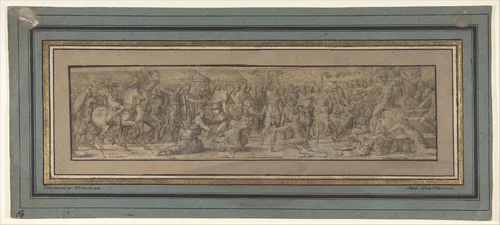
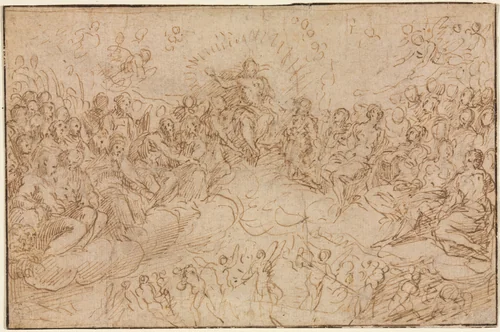
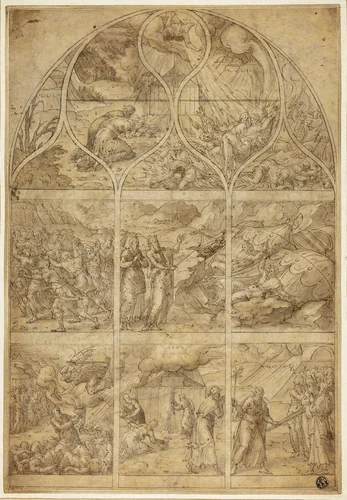
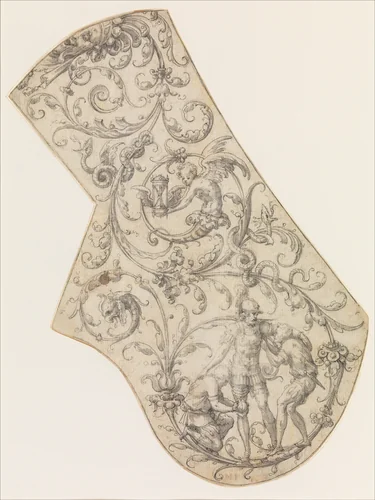
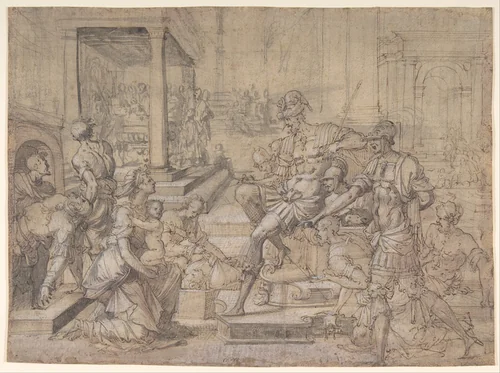
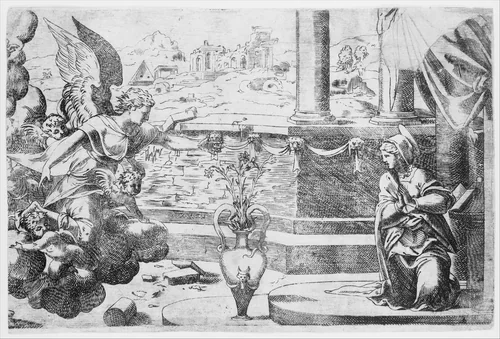
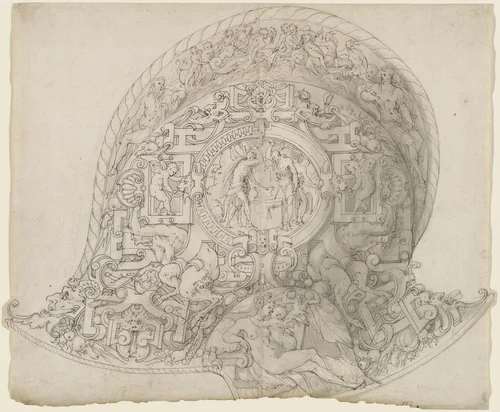
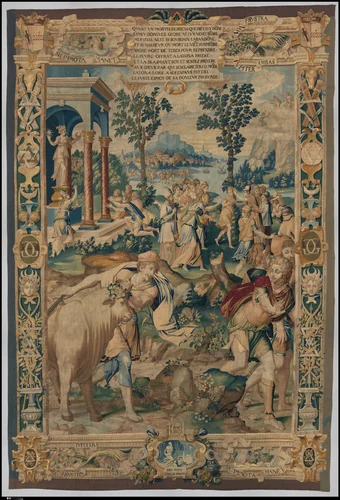
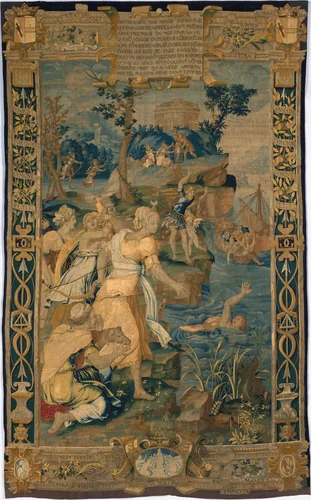
Nine specific works are currently represented across major institutions, cataloged as six drawings, two textiles, and one print. These holdings demonstrate versatility in approaching complex subjects, including the elaborate religious composition The Last Judgment and the narrative scene Cassandra preventing Deiphobe from killing Paris. Jean Cousin’s design skill also extended to specific commissions and crafts, evidenced by works such as the architectural study Design for a Stained Glass Window with the Story of Aaron and the specialized rendering Design for the Right Pauldron of a Parade Armor.
Examples of Jean Cousin prints and original drawings are preserved in significant collections, establishing the artist's institutional credibility. Key examples are housed at the National Gallery of Art, the Metropolitan Museum of Art, and the Art Institute of Chicago. The detailed design work, particularly the surviving textile pieces, establishes a standard for museum-quality early modern European draftsmen. Due to the historical period of the output, many of Jean Cousin’s works are now in the public domain, allowing for the generation of high-quality prints for scholarly research and appreciation.
Source: Wikipedia · CC BY-SA 4.0