Jean-Charles Cazin
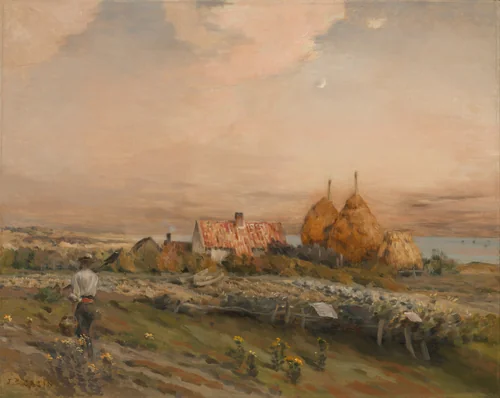
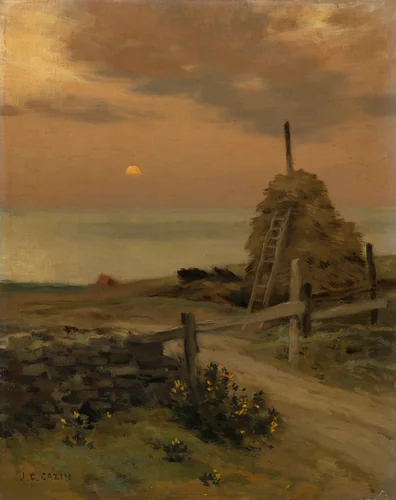
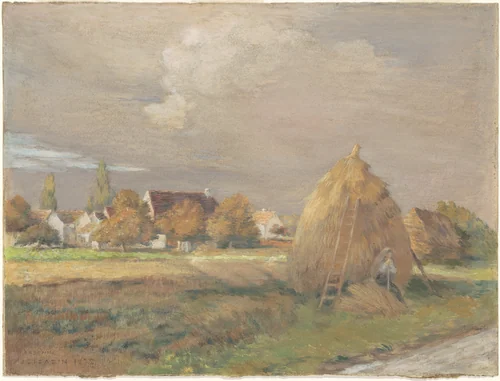
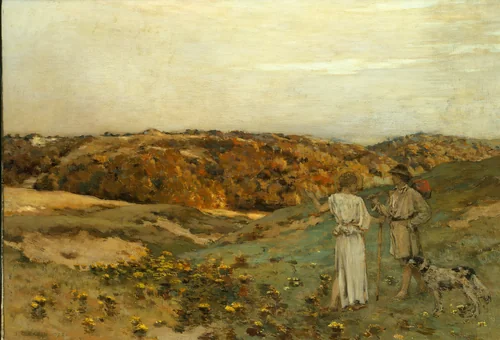
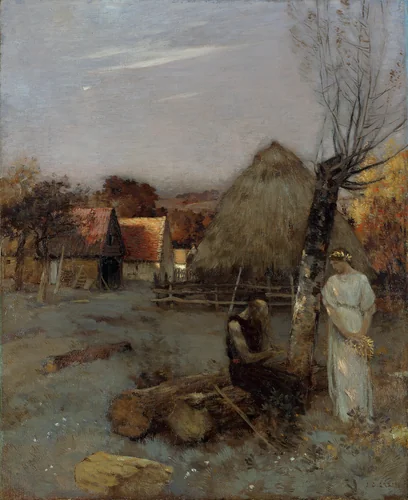
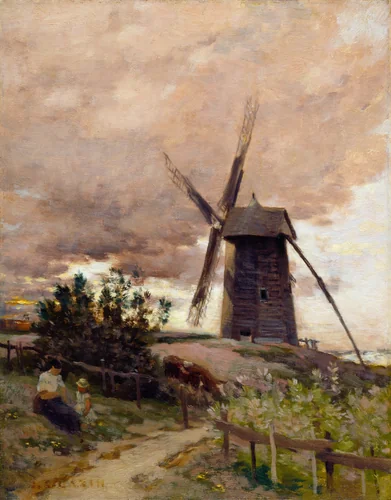
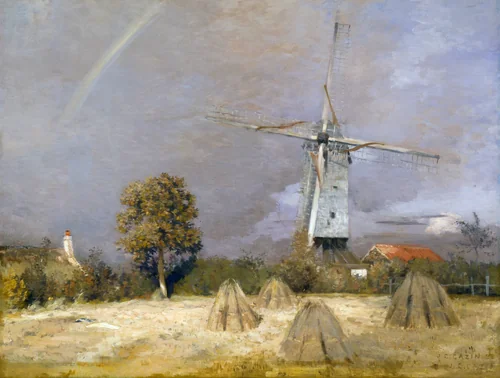
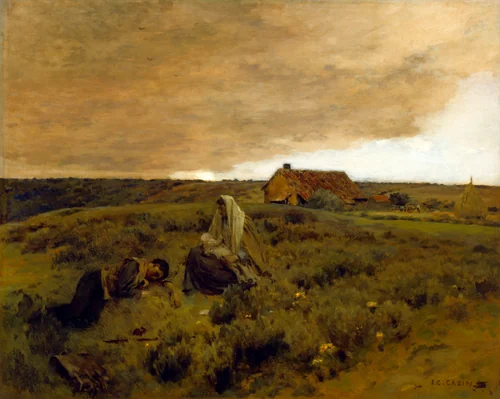
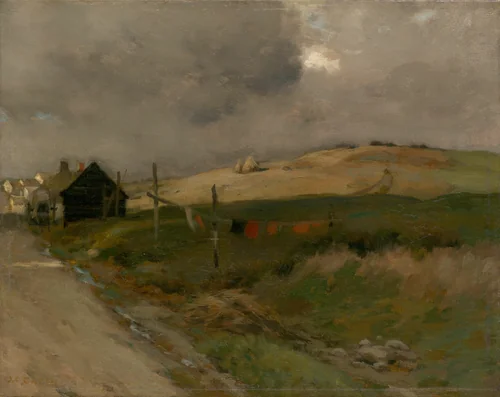
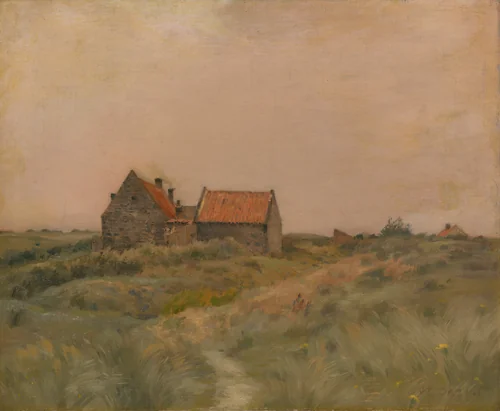
Jean-Charles Cazin (1841-1901) was a defining French figure whose career spanned painting, the decorative arts, and institutional administration. Primarily recognized as a masterful landscapist active in the latter half of the nineteenth century, he utilized a refined, often subdued palette, favoring tonality and atmosphere over the intense color theories dominating Parisian studios.
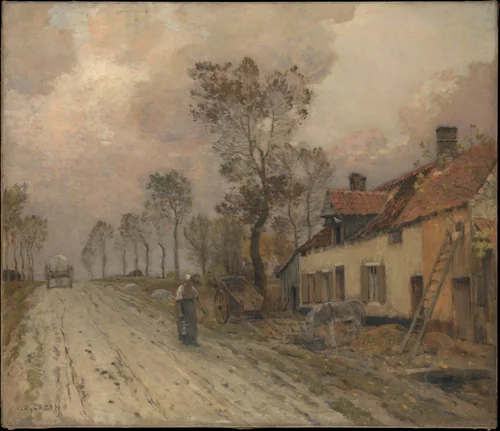
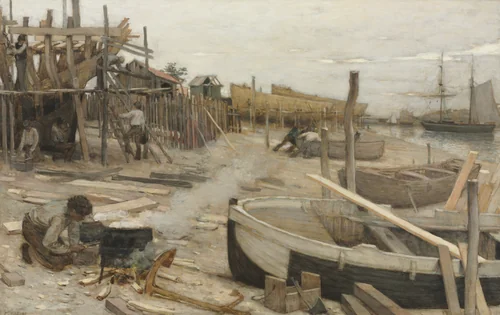
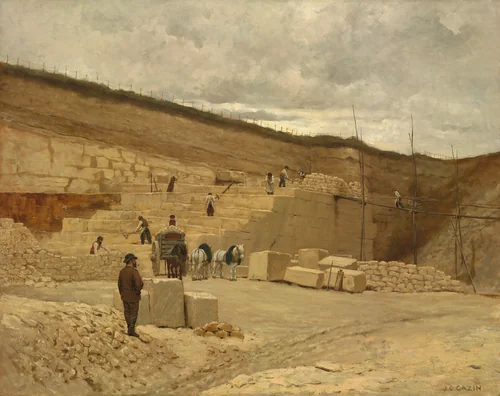
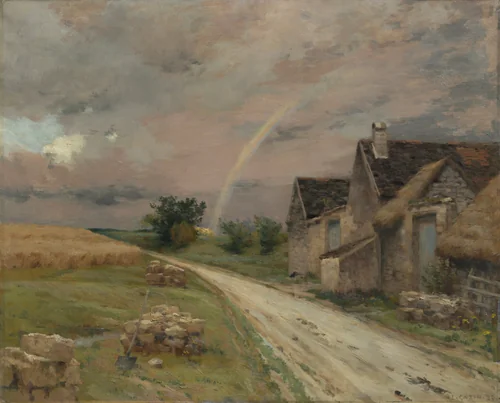
Cazin’s artistic output, spanning roughly the 1840s through 1890, included both intimate genre scenes and sweeping vistas that bridged academic structure with contemporary light study. Unlike the rapid execution associated with pure Impressionism, Cazin employed a more deliberate technique, ensuring the transient effects of light were captured upon a polished, enduring surface. This delicate tension between formal tradition and modern observation is evident in works such as The Boatyard and the atmospheric study The Route Nationale at Samer.
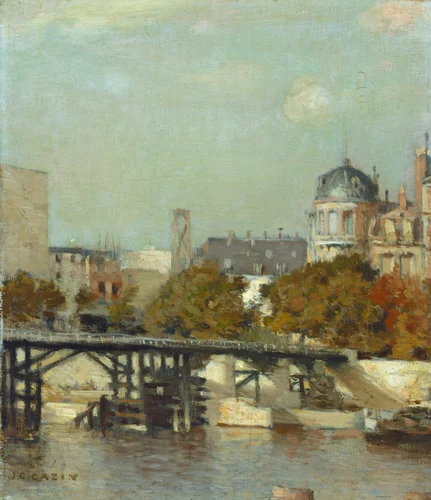
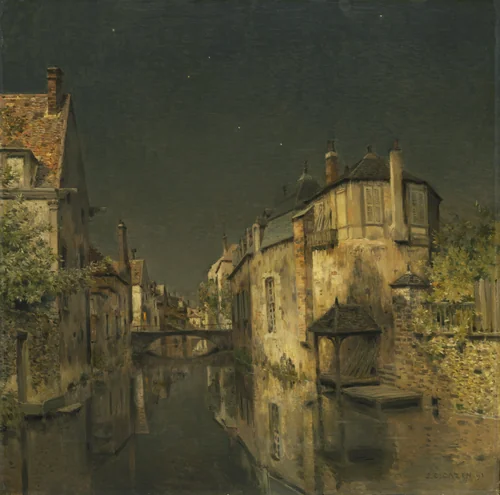
His subjects often reflected the quiet poetry of rural France, yet he was equally adept at urban depictions, demonstrated by the compositionally complex Paris Scene with Bridge. His landscapes, many of which are now held in prominent American institutions like the National Gallery of Art and the Cleveland Museum of Art, demonstrate a unique blend of melancholy and clarity. It is a subtle irony that the artist whose primary subject was rural isolation and reflective solitude simultaneously maintained the demanding organizational responsibilities of a museum curator, underscoring his remarkable versatility.
Cazin's historical importance is amplified by his work as a ceramicist, reflecting the period’s deep connection between fine art and industrial design. Although his roles as curator and administrator sometimes overshadowed his artistic output later in life, the subtle quality of Jean-Charles Cazin paintings ensures his continued legacy. Today, researchers and collectors can appreciate the depth of his technical skill, as many of his mature works are available in the public domain, offering museum-quality downloadable artwork for study and enjoyment.
Source: Wikipedia · CC BY-SA 4.0