Jean Bernard
Jean Bernard, active during the latter half of the eighteenth century, occupies a significant if understated position within the tradition of Dutch drawing. Recognized today primarily through a collection of fifteen finely rendered sheets, his surviving oeuvre provides valuable insight into the technical demands and varied subject matter favored by draftsmen working around 1775. Though biographical details are scarce, the enduring presence of his works in prestigious institutions, including the Rijksmuseum, confirms his standing as a master of precise line work and composition.
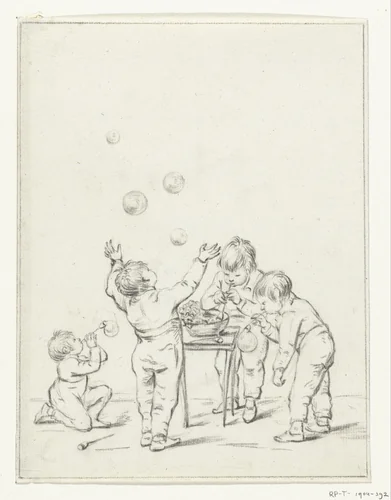
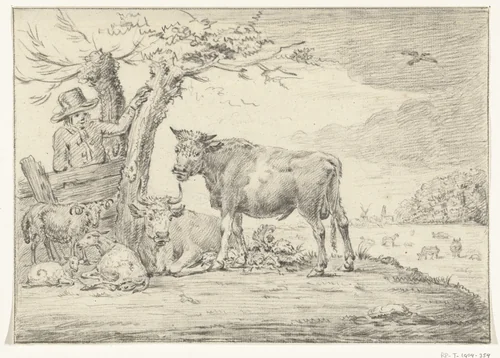
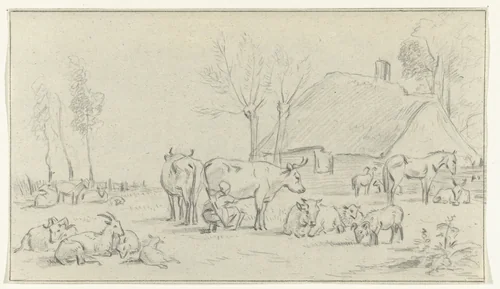
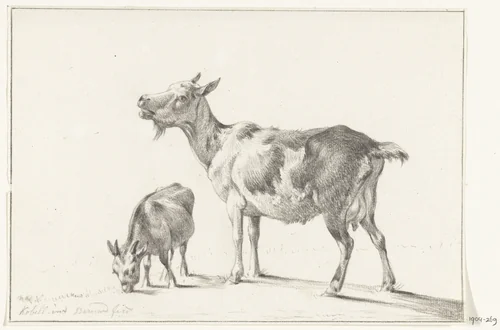
Bernard’s practice demonstrates a remarkable versatility, transitioning smoothly across still life, genre scenes, and detailed depictions of agrarian life. His drawings served as sophisticated studies, capturing the domestic environment with exacting clarity, as seen in the playful observation of Bellenblazende kinderen. Simultaneously, he directed his keen eye toward the rural setting, executing works like Boerenerf met vee en melkende vrouw with the same commitment to naturalistic detail, placing him firmly within the Northern European tradition of realist rendering.
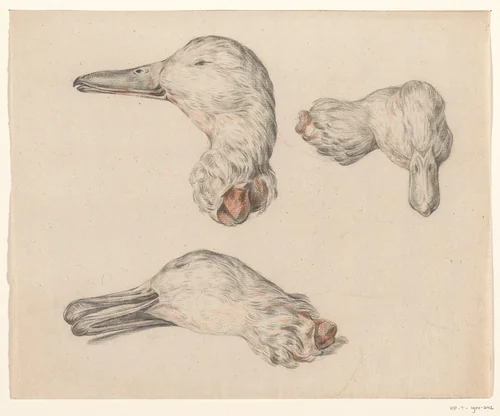
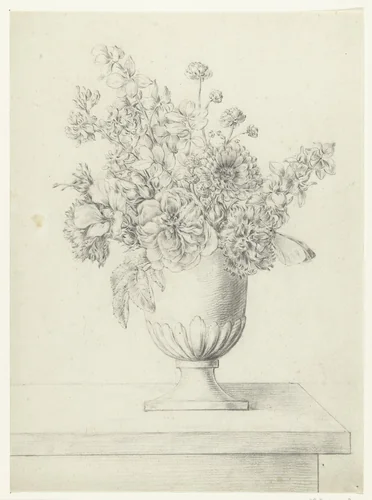
The technical proficiency evident in his genre scenes is perhaps surpassed only by the compelling nature of his still lifes. While Bloemen in een vaas exhibits a conventional beauty, the focused study Afgehakte kop van een eend displays a rigorous, even darkly humorous, dedication to technical accuracy—a reminder that the function of these preparatory drawings was often purely observational rather than decorative. This meticulous approach ensures that his existing portfolio stands as an excellent example of museum-quality draftsmanship from the period.
Jean Bernard’s focused output, though limited, ensures his continued relevance. These detailed historical documents, now recognized as public domain assets, offer researchers and enthusiasts alike access to the visual culture of the era. The availability of downloadable artwork and high-quality prints derived from his originals allows contemporary audiences to appreciate his subtle but powerful contributions to the art of drawing long after the original compositions were made. His legacy rests upon the exacting quality and diverse range contained within these few surviving sheets.
Source: Wikipedia · CC BY-SA 4.0