Jean Baptiste Merlen
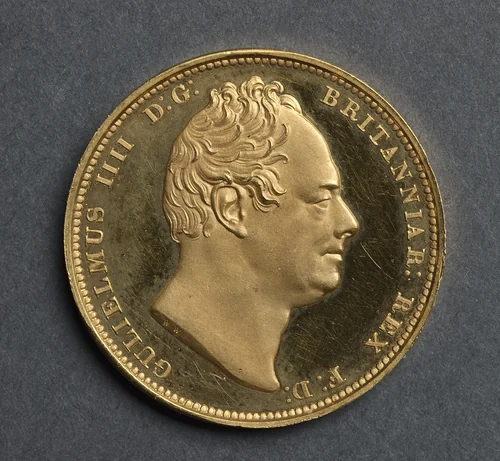
Jean Baptiste Merlen (1769–1850) was a highly specialized French engraver and medallist whose expertise centered on the precise, challenging field of numismatics. His most enduring and historically significant works, dating primarily between 1826 and 1831, capture a critical juncture in early 19th-century British royal history. Merlen’s technical ability lay in his capacity to translate monumental royal portraiture and complex, politically charged heraldry onto the diminutive yet highly visible canvas of coinage.
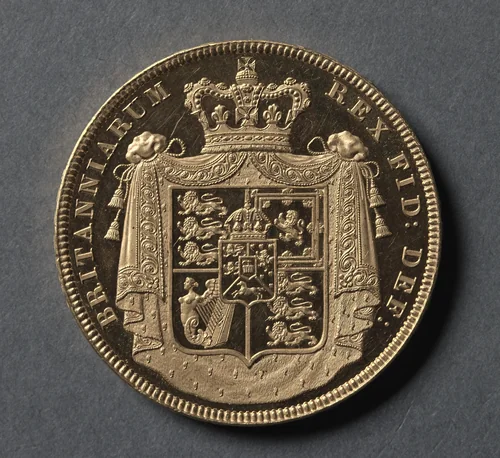
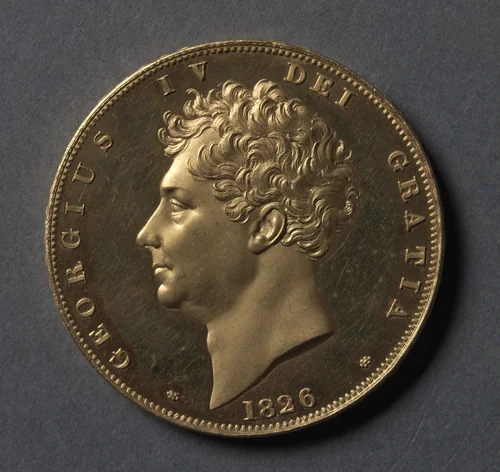
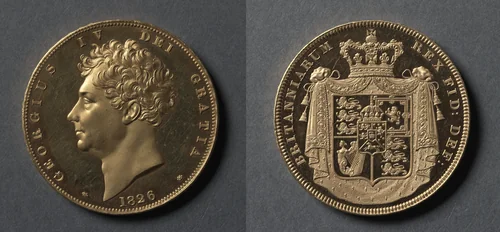
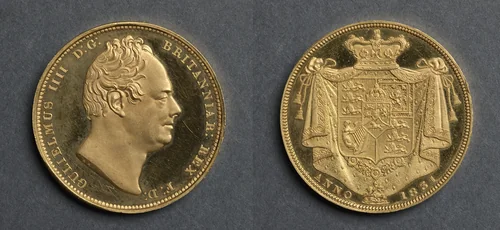
The works attributed to Merlen include high-denomination pieces, such as variations of the Five Pound Piece and the Two Pound Piece, spanning the reigns of both George IV and William IV. Engraving currency of this stature demanded an uncompromising mastery of relief and scale. The obverse typically features a highly articulated, classicist profile of the sovereign, such as the widely circulated portrait of George IV. However, the reverse elements often showcase Merlen’s singular talent for detail.
A prime example is the design for the Five Pound Piece reverse, featuring the elaborate Crowned and Heavily Mantled Shield of Arms. This composition, requiring flawless symmetry and precise depth control in the die, reflects the museum-quality standard demanded of official royal engravers. Merlen was not merely a copyist; he was an interpreter of national identity, ensuring that the regal dignity was conveyed robustly, even across a minuscule surface area.
His career required him to shift seamlessly between the iconography required by George IV and the subsequent standards of William IV, a testament to his professional adaptability. Merlen’s contribution to the permanent visual record was infrastructural, providing the master dies that would subsequently produce millions of circulating units. It is perhaps the highest compliment to an engraver of this era that their work is simultaneously ubiquitous in circulation and yet entirely focused on technical perfection rather than personal flourish. While Merlen’s originals are safeguarded in elite collections, such as the Cleveland Museum of Art, the historical details of these early 19th-century designs are often available in the public domain, facilitating the creation of high-quality prints and downloadable artwork for study by numismatists and art historians alike.
Source: Wikipedia · CC BY-SA 4.0