Jean-Baptiste Mallet
Jean-Baptiste Mallet (active 1700-1820) stands as a definitive figure in the French art historical movement known as the Troubadour style. Characterized by an academic precision applied to scenes of medieval or Renaissance romance, the Troubadour school offered an accessible, highly detailed form of historical painting that appealed strongly to Napoleonic-era sensibilities. Remarkably, Mallet’s extraordinarily long career spanned more than a century, bridging the late Baroque period and the height of Neoclassical dominance, though he is principally remembered for his sensitive, often domestic genre scenes.
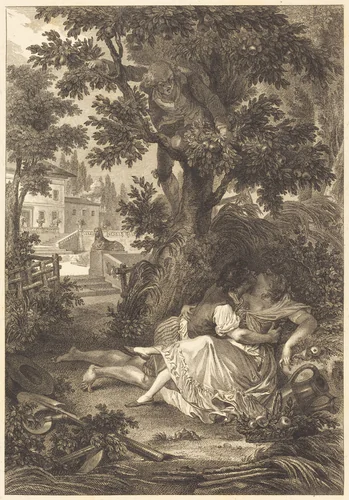
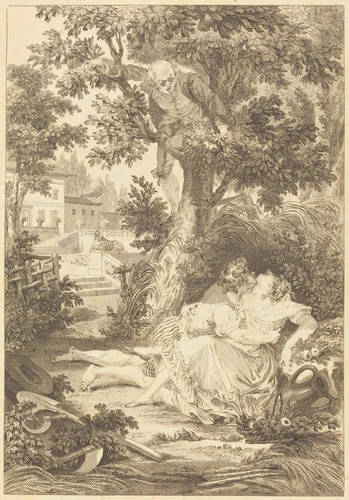
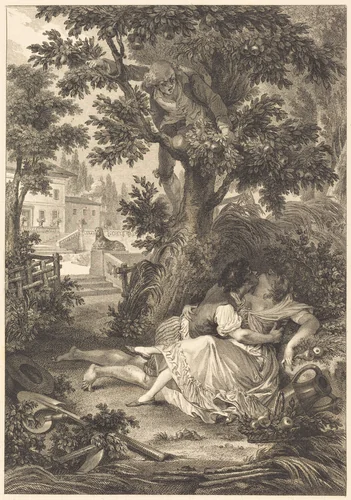
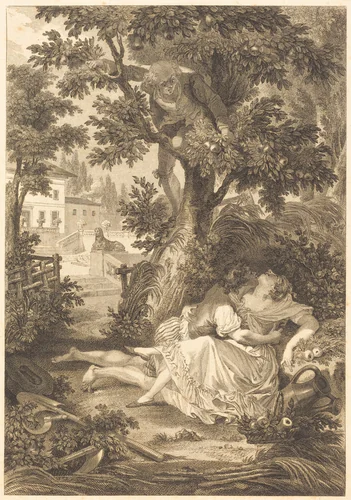
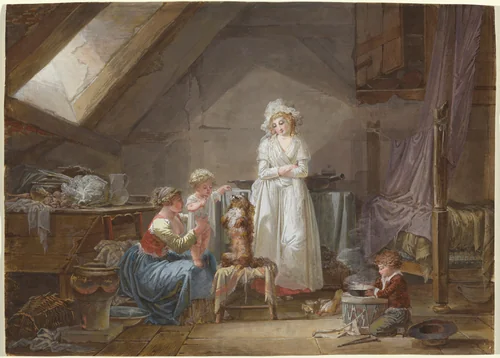
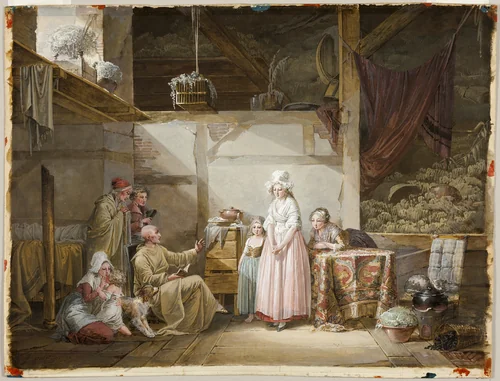
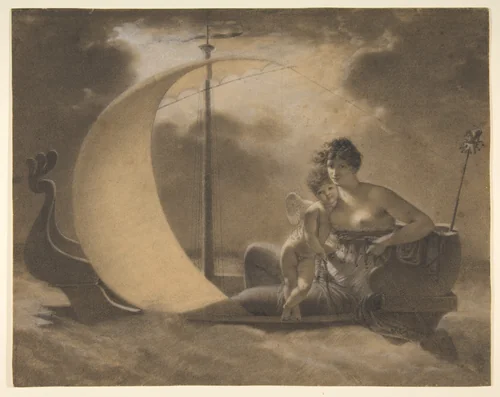
The enduring quality of his draftsmanship and thematic appeal is confirmed by the placement of his limited known oeuvre, which includes five drawings, four prints, and a singular painting, in such premier institutions as the Metropolitan Museum of Art, the Art Institute of Chicago, and the National Gallery of Art. While the historical record designated Mallet primarily a "painter," his surviving body of work leans heavily towards graphic media. These works often capture intimate, precise moments, evidenced by the satirical series concerning a wager among three gossips, La gageure des trois commeres: Le poirier.
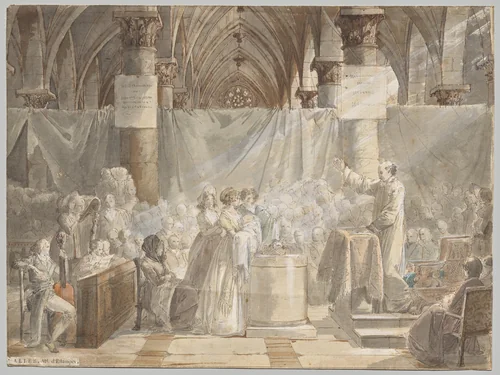
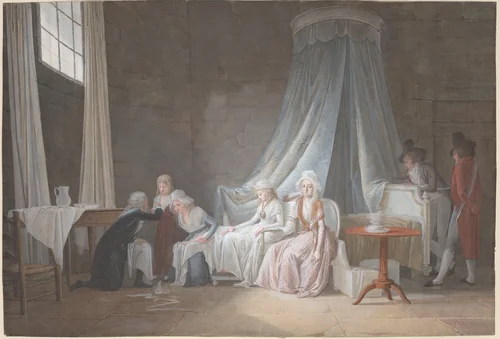
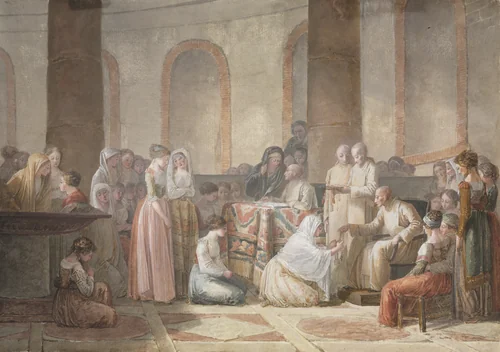
Perhaps the most compelling piece reflecting his chronological context is A Christening in Revolutionary France, a title which hints at the profound societal shifts occurring outside the contained nostalgia of the Troubadour studio. It is an understated observation, given the turbulent political environment of late eighteenth-century France, that Mallet often chose to immortalize domestic squabbles and ceremonial events rather than revolutionary fervor, suggesting a strategic retreat into historical charm.
Mallet’s importance rests on his mastery of the delicate, high-quality prints and drawings that defined the market for sophisticated genre scenes. His technique provided models for succeeding generations of genre artists. Due to the age of these works and the care taken in their preservation, many of Jean-Baptiste Mallet prints and original drawings have entered the public domain, offering unrestricted access to researchers and collectors. The historical record confirms that even in a chaotic era, the quiet appeal of precisely rendered domestic life could capture the attention of museum-quality collections worldwide.
Source: Wikipedia · CC BY-SA 4.0