Jean Baptiste Le Prince
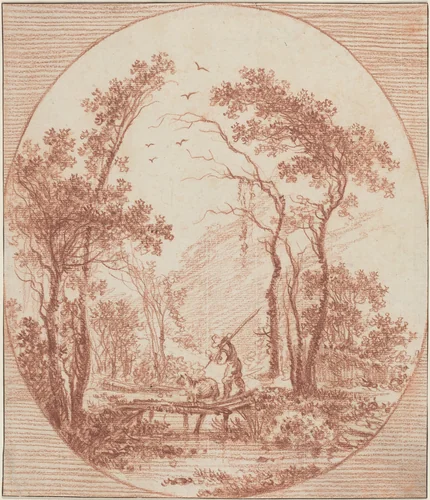
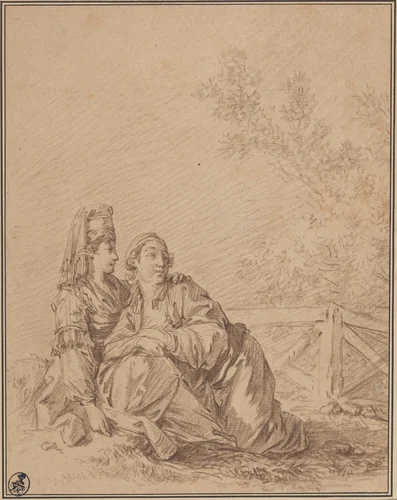
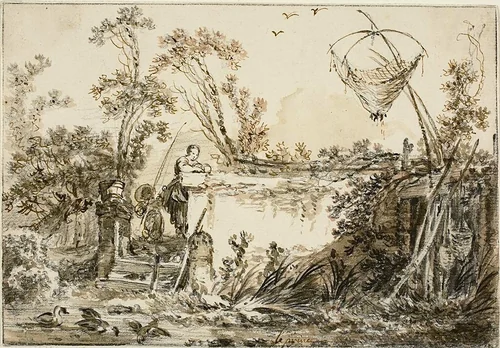
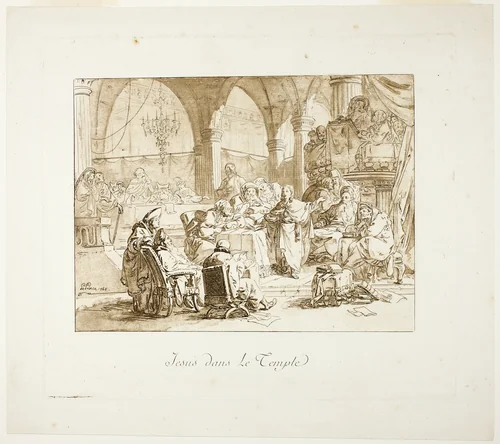
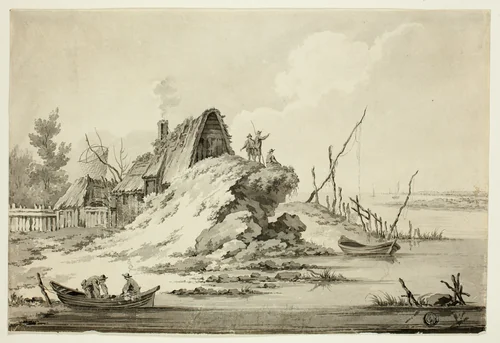
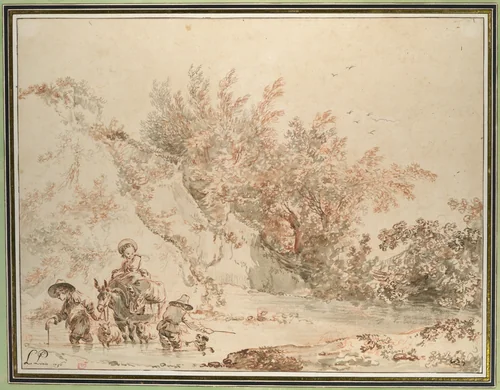
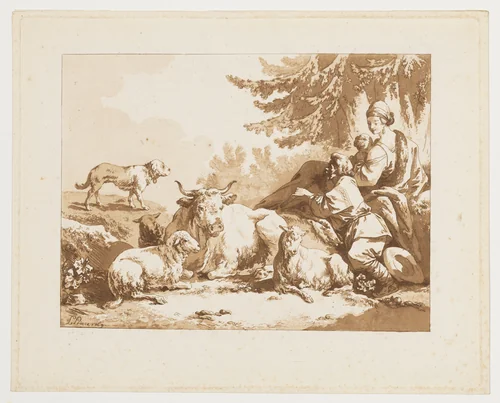
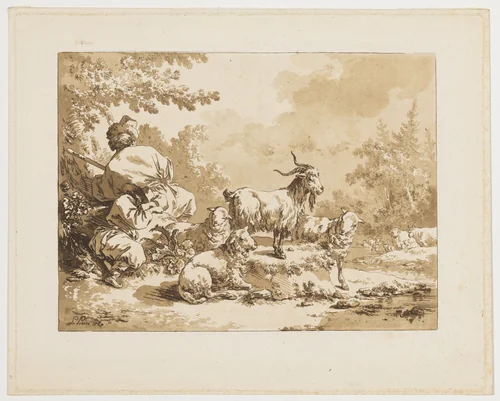
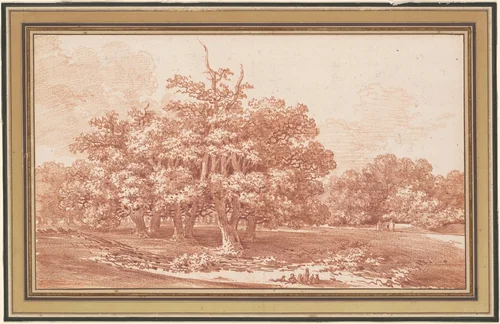
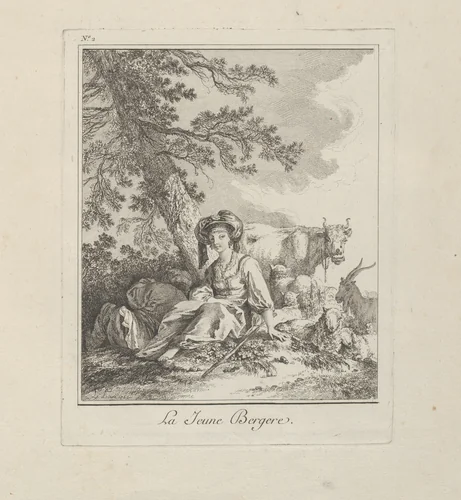
Jean-Baptiste Nicolas Le Prince stands as a pivotal French painter and etcher of the mid-eighteenth century, celebrated for his refined technique and his integral position within the Parisian art establishment. A significant presence in the graphic arts, his prints and drawings, ranging from intimate genre studies to pastoral vignettes like A Farmer and a Sheep Crossing a Rustic Bridge, are held today in major collections, including the Metropolitan Museum of Art and the National Gallery of Art.
Le Prince commenced his formal training studying painting in his native Metz. His career accelerated significantly around 1750 following critical sponsorship from the powerful figure Charles Louis Auguste Fouquet de Belle-Isle, which facilitated his move to Paris. There, he became the favored student of the era’s most influential artistic force, François Boucher.
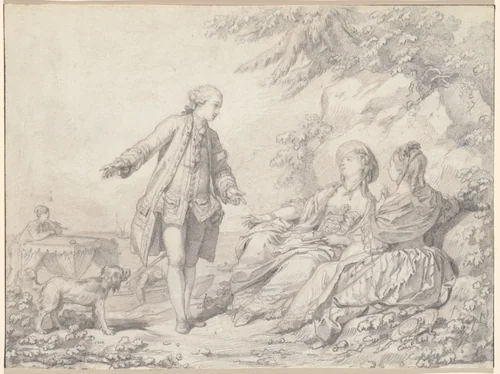
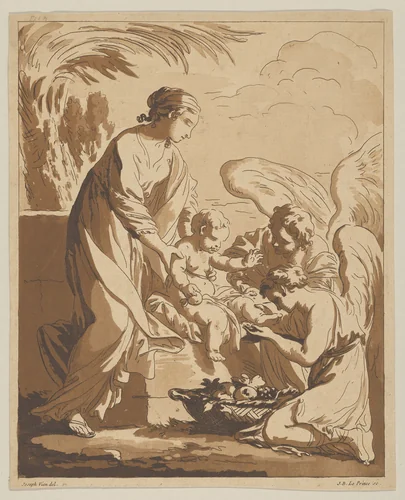
The initial phase of Le Prince’s creative output deeply reflects the instruction received under the maître. Early compositions, both in their thematic concerns and their sophisticated technical execution, adhered closely to Boucher’s established Rococo style, a foundation evident in the elegant framing of scenes like A Man and Two Women on a Rocky Shore.
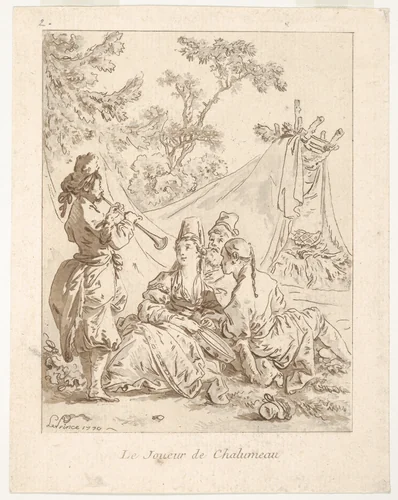
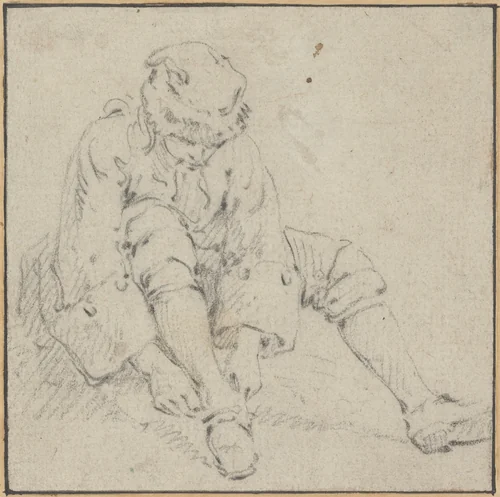
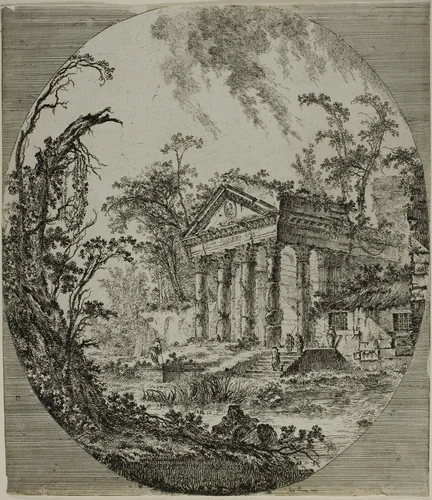
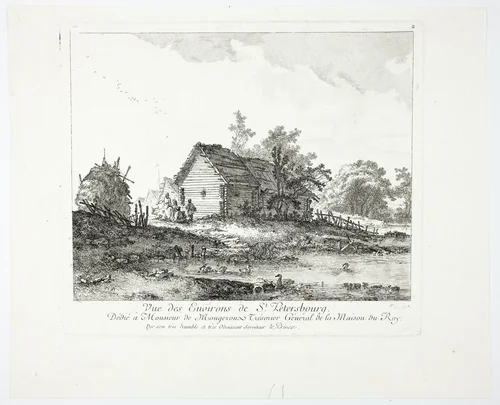
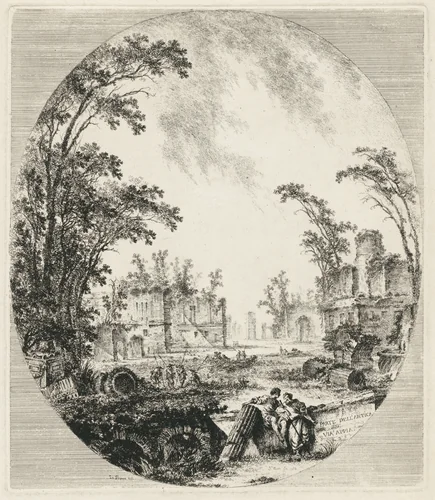
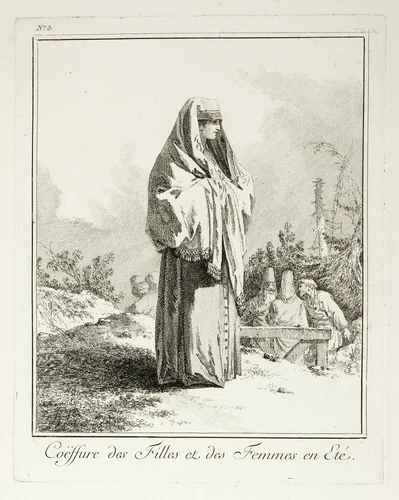
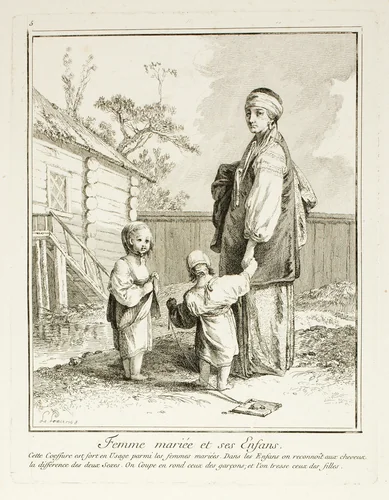
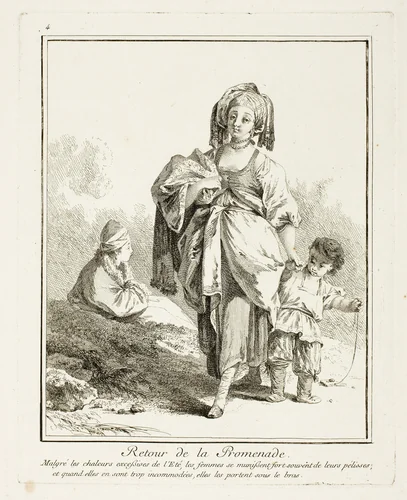
However, Le Prince quickly established his own reputation as a formidable practitioner of etching, producing detailed and evocative scenes that were widely disseminated throughout Europe. His mastery of the medium allowed for nuanced character studies, exemplified by works such as Man Pulling on His Shoe and the atmospheric Le Joueur de Chalumeau. For modern researchers and enthusiasts seeking to appreciate his precision, high-quality prints derived from the original plates are frequently sought after. The extensive catalog of Jean Baptiste Le Prince prints confirms his dedication to graphic media throughout his active years (1734-1765).
A curious biographical footnote reveals a connection to literature: Le Prince was the half-brother of the celebrated French author and educator, Jeanne-Marie Leprince de Beaumont, lending a subtle, intellectual undercurrent to his family’s contribution to the French Enlightenment. His work remains a crucial link between the aesthetic pleasures of the Rococo era and the developing taste for genre realism that followed.
Source: Wikipedia · CC BY-SA 4.0