Jean Baptiste Lallemand
Jean-Baptiste Lallemand (1716-1803) stands among the key French draftsmen and painters of the 18th century, specializing in evocative landscapes and detailed genre scenes. Born in Dijon, he maintained a remarkably long and productive career, spanning from the 1720s well into the final decades of the century. His professional versatility, occasionally signing his works with variants such as Lallemant or Allemanus, speaks to a confidence tailored to varied commissions and market expectations of the time.
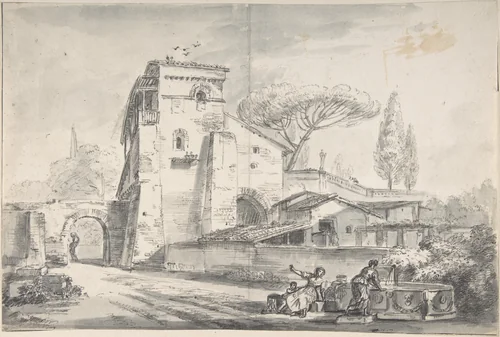
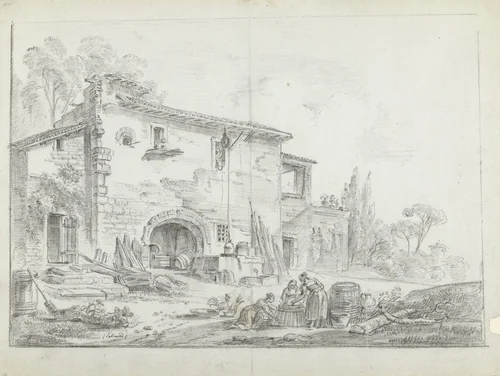
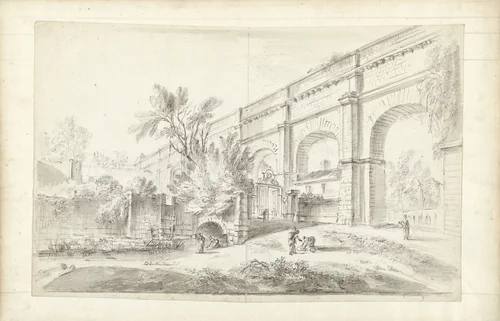
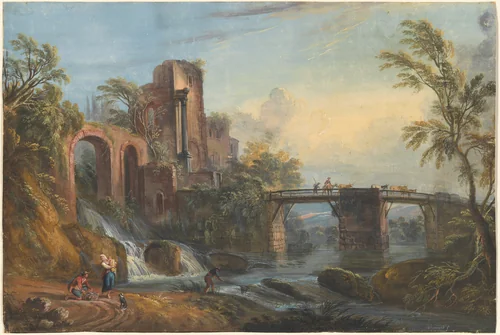
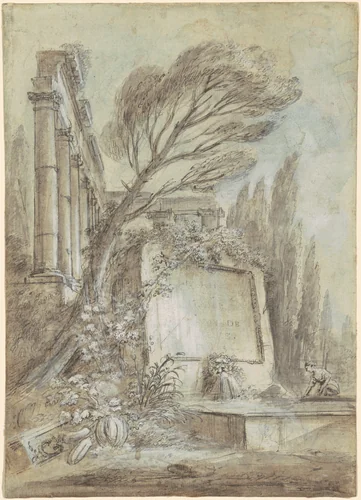
A formative period spent in Italy was crucial to Lallemand’s aesthetic development. This exposure cemented his mastery of vedute and picturesque ruins, lending his subsequent French compositions a classical grounding typical of artists inspired by the Grand Tour. His landscape subjects frequently explored the interplay between human activity and the historic environment, moving seamlessly between detailed rural views, such as Italian Country House Beside a Road, and classical documentation, evidenced by the meticulous View of the aqueduct of Arcueil with figures.
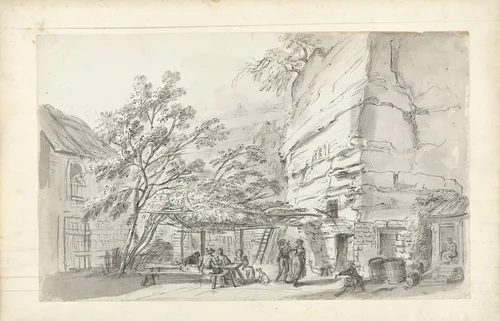
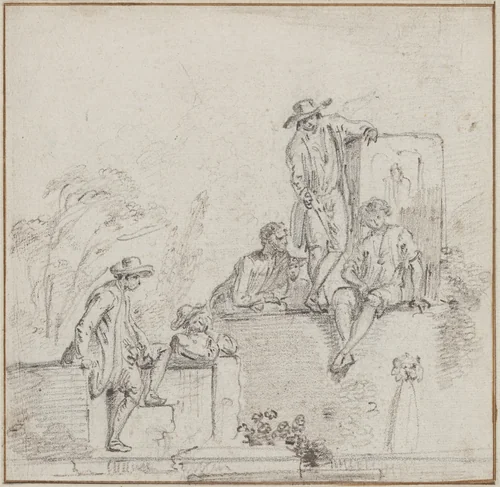
Upon returning to France, Lallemand settled in Paris and secured professional recognition through his membership in the prestigious Académie de Saint-Luc. His genre scenes, sometimes depicting ordinary tasks like Drie vrouwen met vaten en ander materiaal, frequently transition into lively social narratives, as seen in the dynamic composition Drinkende en dansende personen op de binnenplaats van een taveerne tussen ruïnes. Lallemand’s talent lay in synthesizing the romantic decay of antiquity with the quotidian rituals of 18th-century life, often infusing his scenes of everyday figures, such as those Seated Around a Fountain, with an unexpected formal precision.
While the scope of surviving Jean Baptiste Lallemand paintings is noteworthy, his extensive output in drawing is particularly celebrated for its atmospheric quality and technical dexterity. His longevity, allowing him to live nearly a full century and navigate the turbulent artistic shifts of the Enlightenment and Revolutionary periods, is perhaps mirrored in the enduring, careful construction of his compositions. Works held in major international institutions, including the Metropolitan Museum of Art and the Rijksmuseum, confirm his reputation for detailed draftsmanship. Due to the age of his portfolio, many high-quality prints derived from his original works are now considered public domain resources, ensuring continued scholarly and public access to the artistry of this influential figure.
Source: Wikipedia · CC BY-SA 4.0