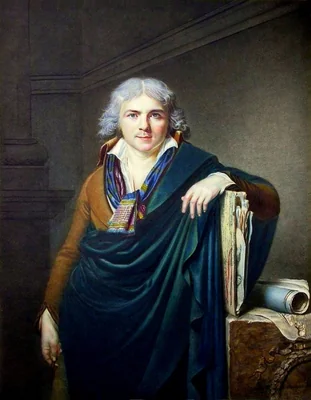
Jean-Baptiste Jacques Augustin
Jean-Baptiste Jacques Augustin (1759-1832) was a dominant figure in French miniature painting, active across the transformative eras of the late Ancien Régime, the Revolution, and the First Empire (1775-1822). His specialization required meticulous technique, often applied in watercolor on ivory, used to create intensely personalized portraits that functioned as private, portable treasures. Augustin secured his lasting significance through a rare combination of artistic consistency and political flexibility, ensuring he maintained crucial commissions through volatile shifts in state power.
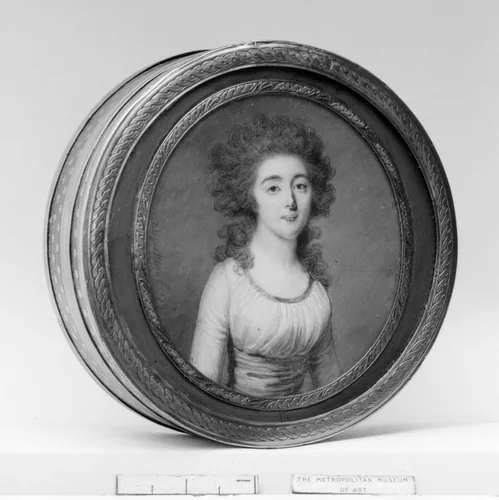
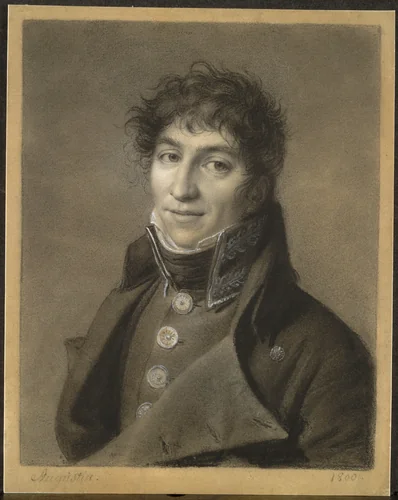
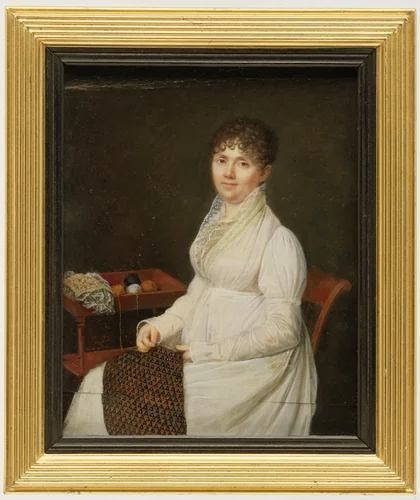
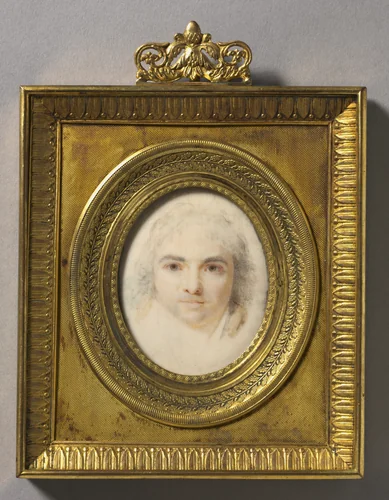
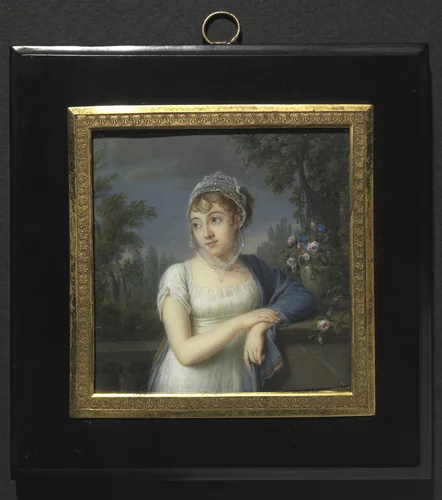
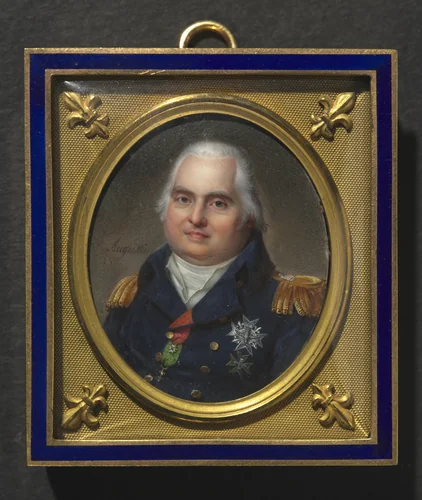
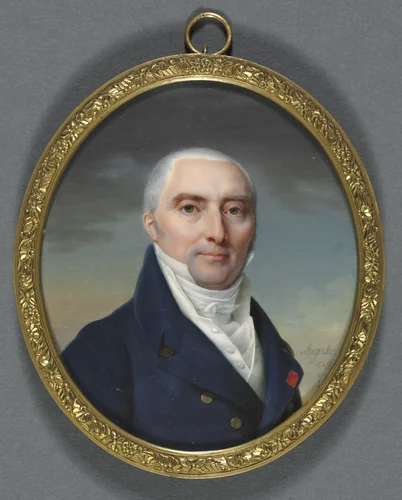
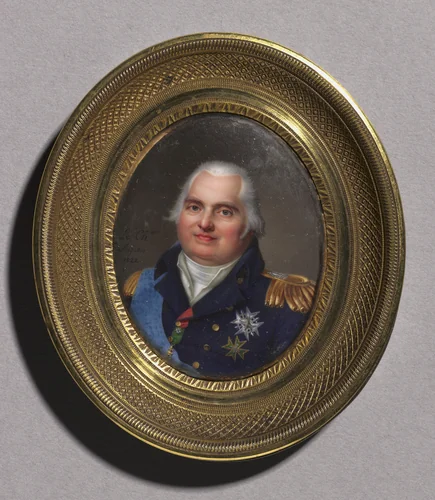
His surviving body of work, though small in number—comprising five known paintings, a specialized metalwork object, and a drawing—reveals an unwavering technical proficiency. Pieces such as the precise Portrait of a Woman with Tapestry Work and the richly detailed Portrait of a Woman Near a Balustrade showcase his skill in rendering fine lace, hair, and character within the genre’s constrained physical limits. The intensity of his focus is particularly evident in the highly finished Self-Portrait.
The work of Augustin highlights the enduring appeal of the miniature as an art form that transcended the grand scale mandates of the Parisian Salons. Unlike artists devoted to monumental history paintings, Augustin’s clientele desired intimacy and lasting mementos. Perhaps the true marker of his success during this period was not merely his artistic output, but his remarkable political longevity—his ability to sustain a high-level career across warring ideologies.
Today, Augustin’s legacy is preserved in significant international holdings, including the Metropolitan Museum of Art and the Cleveland Museum of Art. While the original works remain protected in these institutions, the visual elegance of the Jean-Baptiste Jacques Augustin paintings and his detailed compositions are frequently accessed by the public. Many of his portraits are now available as downloadable artwork or high-quality prints, ensuring that his mastery of the miniature remains fully appreciated in the public domain.
Source: Wikipedia · CC BY-SA 4.0