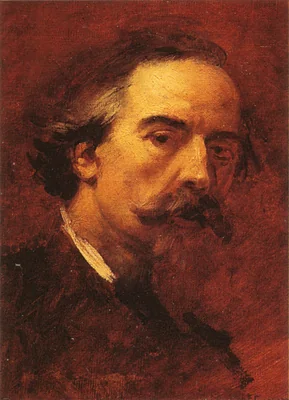
Jean Baptiste Carpeaux
Jean-Baptiste Carpeaux (1827-1875) was a central figure in French art during the politically charged era of the Second Empire under Napoleon III. Primarily known as a sculptor, his paintings and extensive body of preparatory drawings reveal a mastery of composition and a commitment to vigorous, naturalistic form that sought to break with the formal constraints of academic classicism. His approach injected a dramatic intensity into both public monuments and intimate portraiture, shaping the critical transition toward later 19th-century expressive realism.
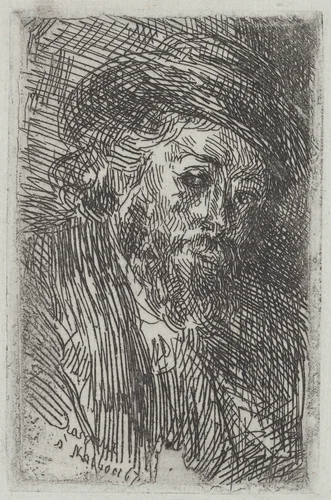
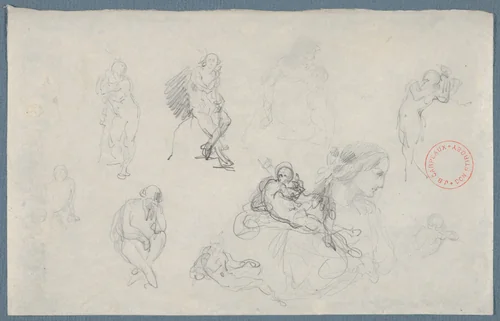
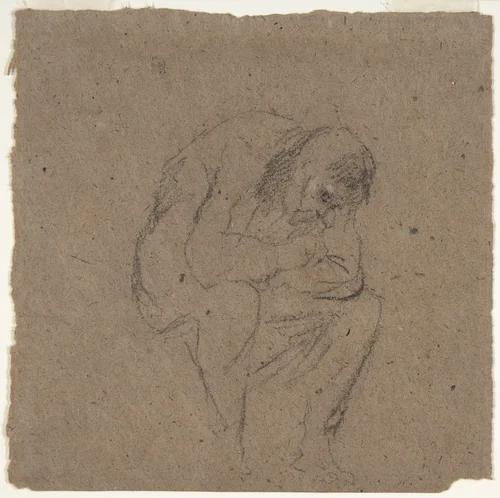
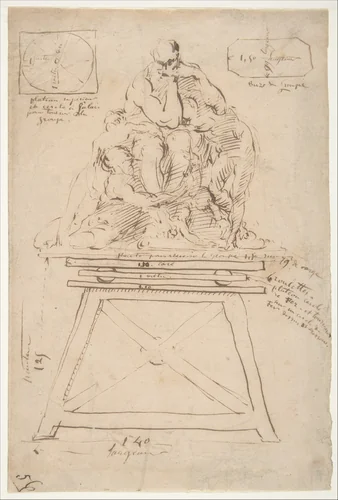
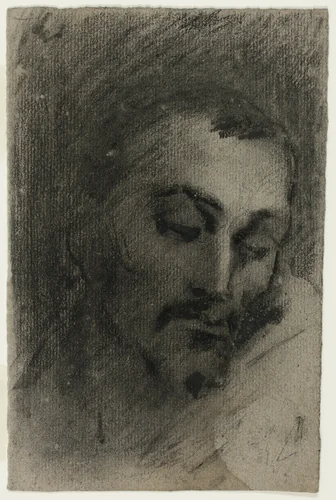
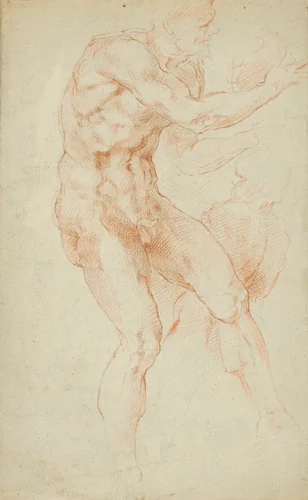
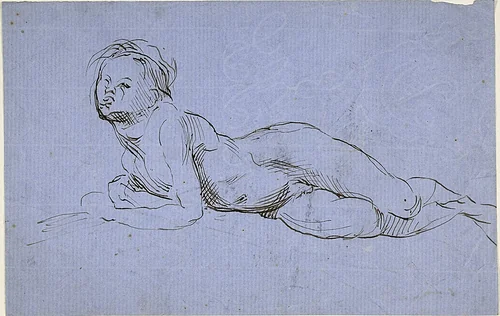
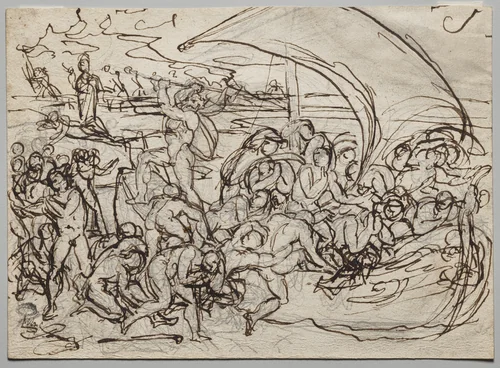
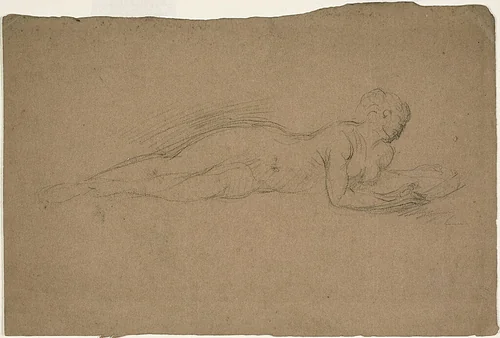
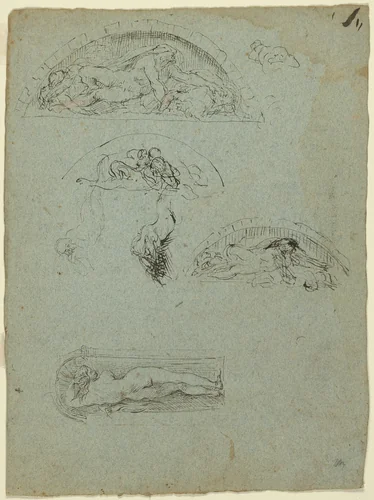
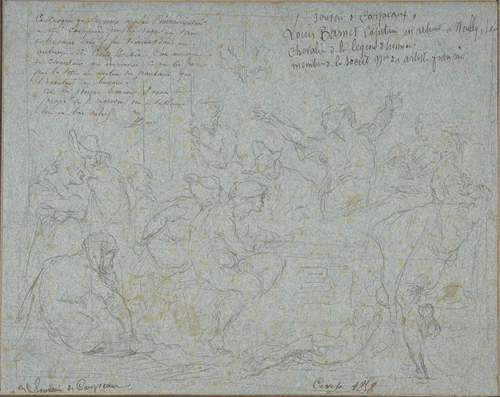
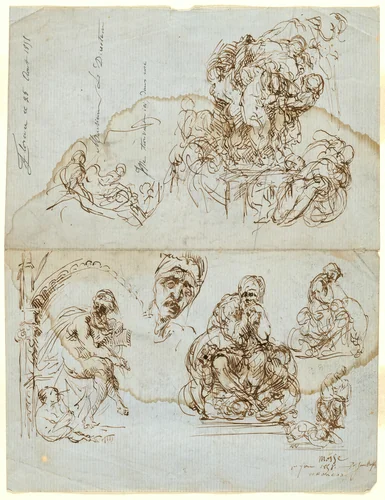
Carpeaux's lasting artistic impact stems from his ability to convey movement and raw, compelling emotion. Unlike many of his contemporaries, he utilized preparatory studies not merely as templates, but as dynamic laboratories for exploring human anatomy and narrative tension. This restless intensity is evident in early, powerful examples, such as the famous Study for Ugolino, which relates directly to his significant sculptural group and captures the raw psychological distress of the mythological figure. Even his academic exercises, demonstrated by the close examination in Studies after Michelangelo or the intimate reverence shown in Schets naar zelfportret van Rembrandt, display his relentless pursuit of depth and volume, filtering historical precedent through his own energetic hand. He was, perhaps, more concerned with the flesh of the moment than the polished finality traditionally demanded by the Salon.
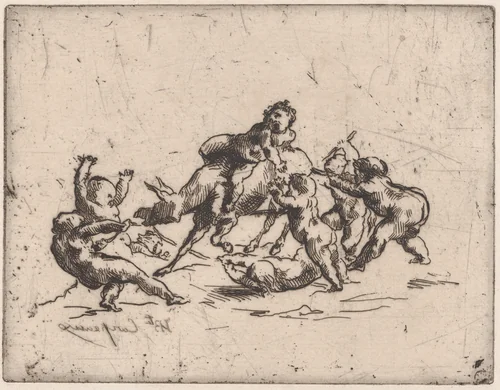
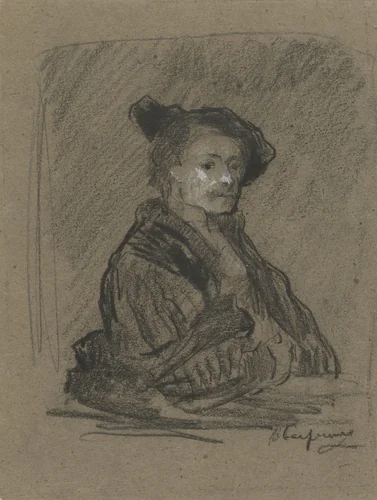
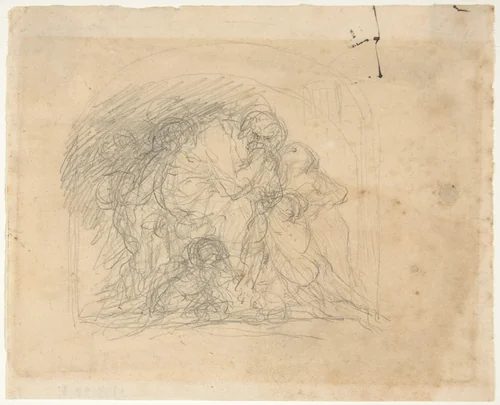
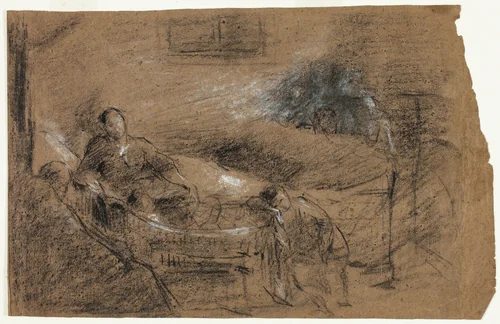
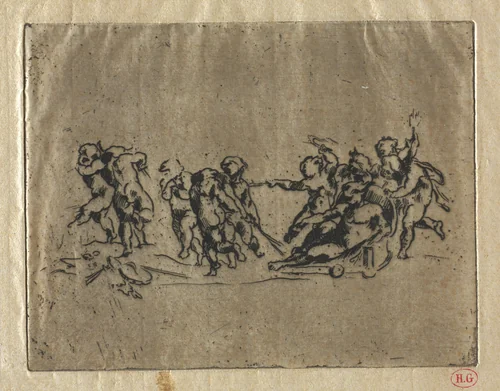
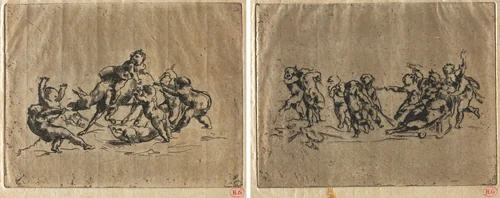
His dedication to capturing the fleeting moment of expression, often pushing the boundaries of neoclassical grace into something more robust and startling, ensured his success with the imperial court. His diverse works, ranging from dynamic compositions like Bacchanale with Children and Donkey to stern, sensitive examples such as Portrait d'Homme, are collected globally, confirming his status as an exceptionally skilled draughtsman and sculptor.
Major institutions including the Metropolitan Museum of Art, the Rijksmuseum, and the Cleveland Museum of Art house significant holdings that illuminate his creative process. While his celebrated sculptural pieces remain fixed monuments, the preparatory drawings and fine Jean Baptiste Carpeaux prints are increasingly available for scholarship and appreciation. Many of these foundational works now reside in the public domain, allowing access to high-quality prints and downloadable artwork that offers invaluable insight into the engine room of Second Empire artistic innovation.
Source: Wikipedia · CC BY-SA 4.0