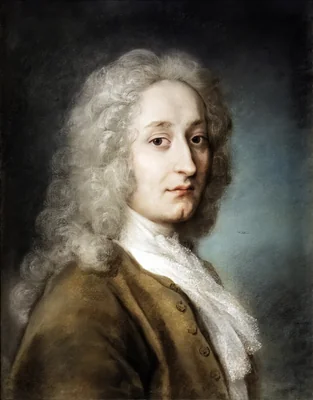
Jean-Antoine Watteau
Jean-Antoine Watteau (1684-1721) remains the pivotal French figure whose tragically brief career initiated the dramatic stylistic transformation that defined 18th-century European art. Active during the early 1700s, this exceptionally skilled painter and draughtsman steered the prevailing artistic sensibility away from the formal solemnity of the late Baroque. Watteau instigated a powerful revival of interest in color and dynamic movement, referencing the sensual traditions of earlier masters like Correggio and Rubens, propelling French art toward the lighter, less severe, and distinctly naturalistic sensibility that would coalesce into the Rococo movement.
Watteau’s most profound innovation was the invention of the fête galante, or "courtship party," a genre dedicated to idealized scenes of leisure. These compositions depict figures in theatrical or pseudo-pastoral settings, combining sophisticated charm with an inherent dramatic air. His subject matter frequently blurred the lines between courtly reality and the stage, drawing heavily from the vibrant, often melancholy, world of Italian Commedia dell’arte and formal ballet. One might observe that he managed to capture, in paint, the precise melancholy of an afternoon spent waiting for the applause that may never come.
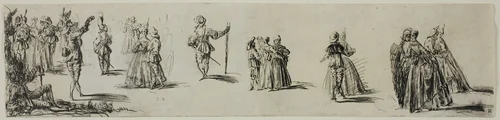
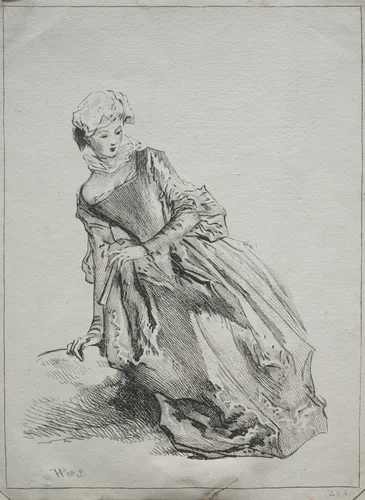
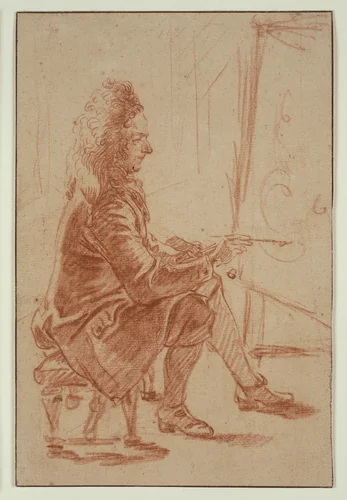
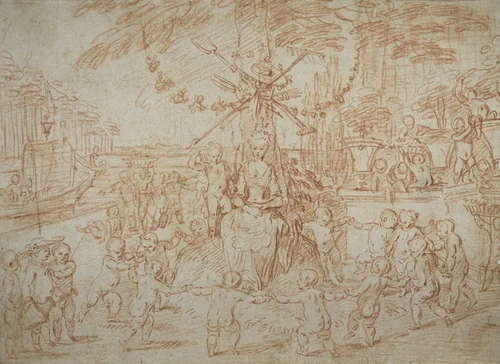
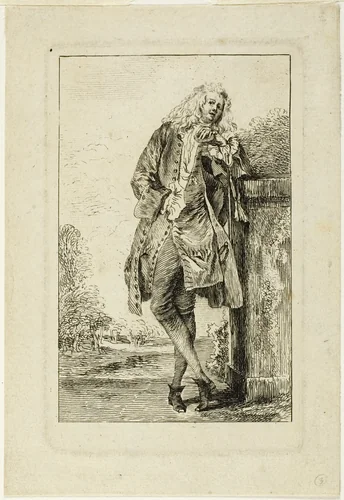
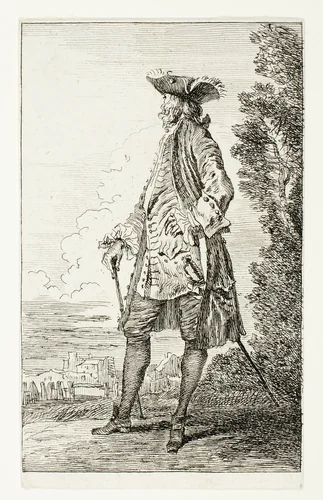
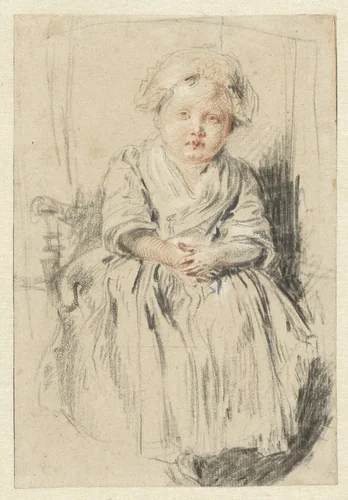
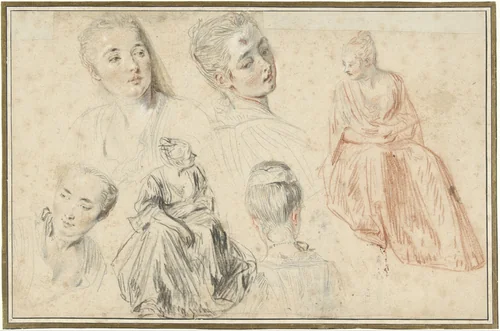
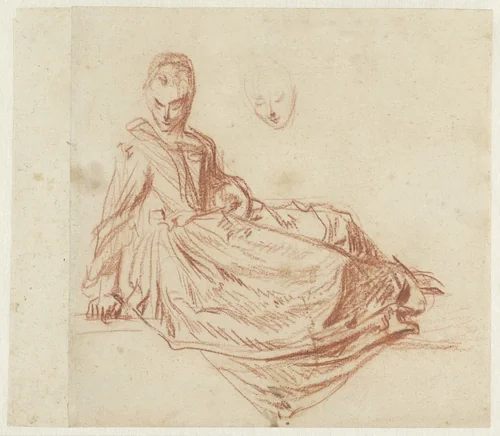
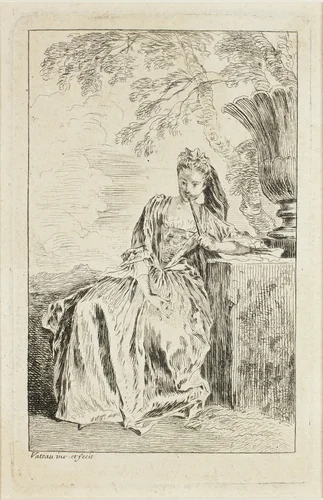
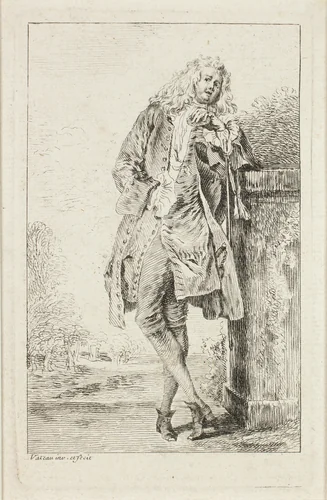
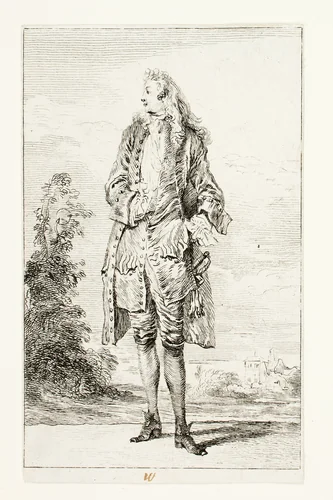
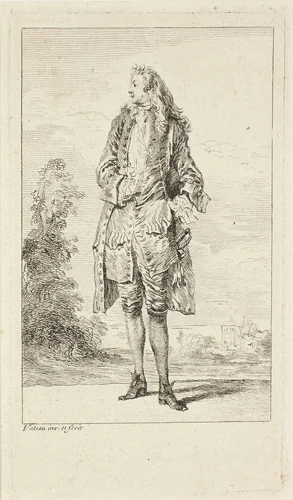
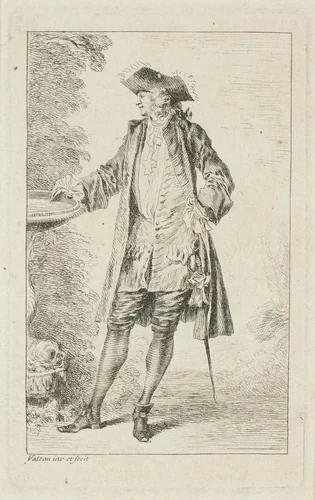
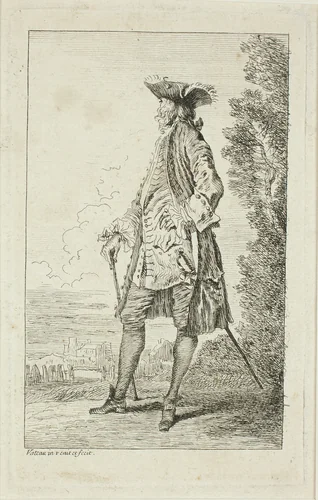
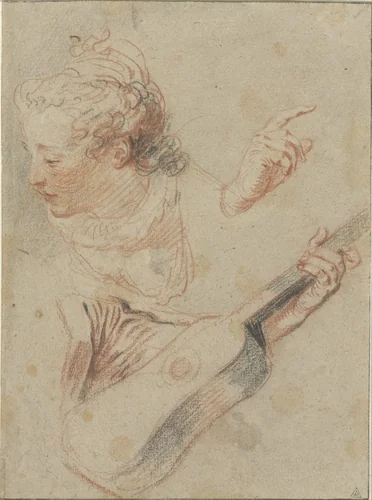
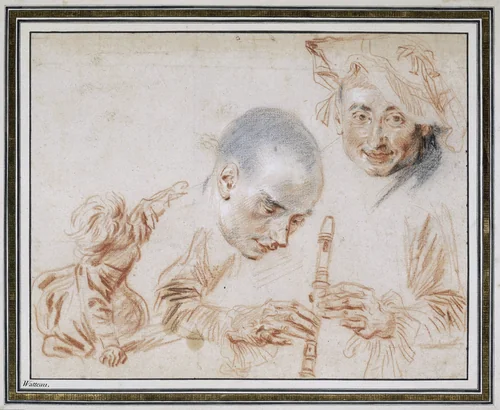
His exceptional facility as a draughtsman is evident in surviving preparatory studies, such as the fluid graphite work Sketches of Ladies and Gentlemen, Dancers, and the focused observation seen in A Bewigged Painter (Possibly Claude Audran), Seated at his Easel, Seen in Profile. Though his relatively short lifespan curtailed the overall number of finished Jean-Antoine Watteau paintings, the influence of his output, which includes the poetic Allegory of Spring, or the Young Gardeners, was immediate and lasting. His defining aesthetic quickly permeated decorative arts and design across Europe.
Today, his oeuvre, which secured the dominance of the Rococo, is preserved in prestigious collections globally, including the Rijksmuseum and the Cleveland Museum of Art. As key works of art history, many of these paintings and drawings are available as high-quality prints, allowing the collector or student immediate access to the foundations of 18th-century refinement.
Source: Wikipedia · CC BY-SA 4.0