Japanese
The span of Japanese artistic output between 1100 and 1720 represents a profound evolution, moving from the religious formalism of the late Heian and Kamakura periods toward the popular, commercialized print culture of the early Edo era. The eight pieces cataloged from this six-century period, primarily housed in the collections of institutions like the Art Institute of Chicago, offer a comprehensive glimpse into the material dexterity and shifting cultural priorities of the archipelago.
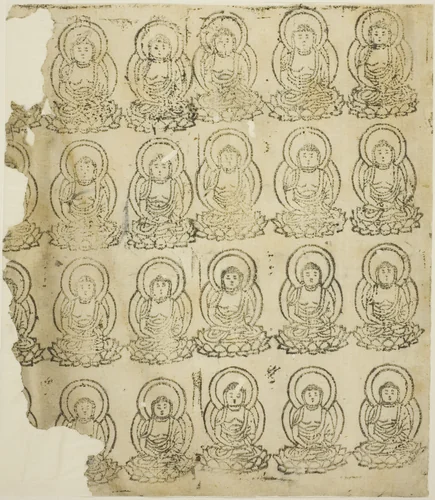
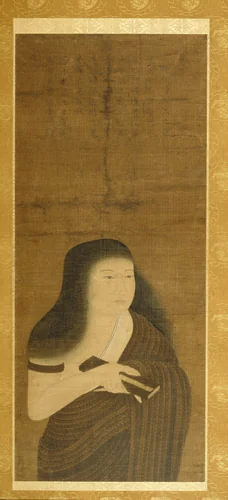
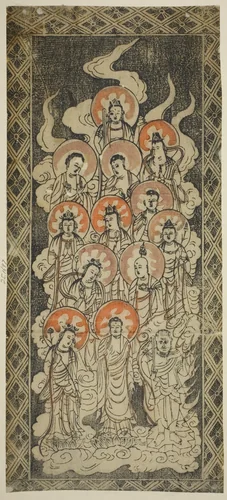
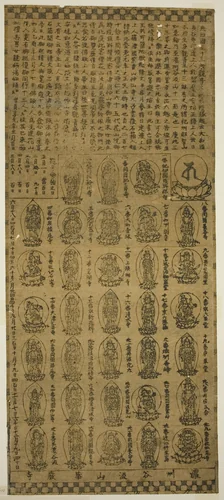
Early religious devotional iconography forms the foundational core of this output. Works like the monumental depiction of Amida Buddha and the complex arrangements found in The Thirteen Buddhas served essential roles in Buddhist worship and instruction, utilizing detailed painted and sculpted forms typical of the Kamakura period (1185-1333). A particularly striking example of regional innovation is the sculpture Monju Dressed in a Robe of Braided Grass (Nawa Monju), which highlights a masterly command of materials in depicting a key Buddhist figure, showcasing the enduring spiritual priorities that guided painting and sculpture for centuries.
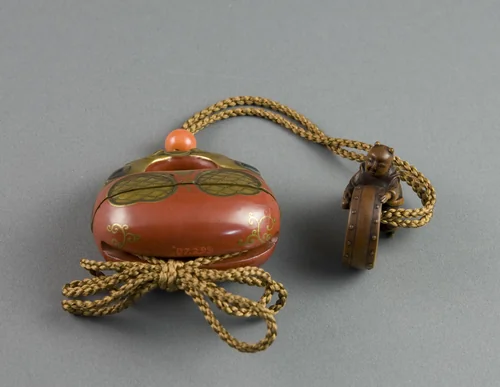
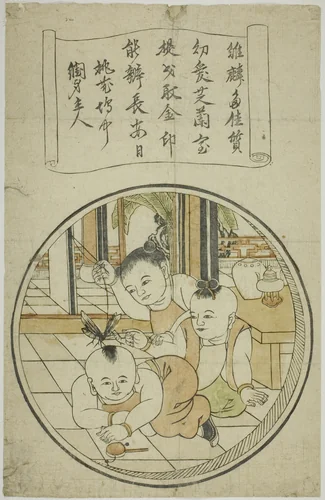
As the focus shifted toward secular genres during the Edo period (1603-1868), the mediums expanded dramatically. The catalog includes examples of miniature sculpture in the form of Netsuke, functional yet highly detailed carvings which accompanied kimono wear, reflecting a growing appreciation for portable, intricate art objects. Alongside these, the rise of the woodblock medium revolutionized visual communication. The collected works, including five registered prints, demonstrate the early mastery of this process, providing accessible imagery to a burgeoning urban population. Today, scholars rely on these archived collections, often available as downloadable artwork, to study these pivotal transitions.
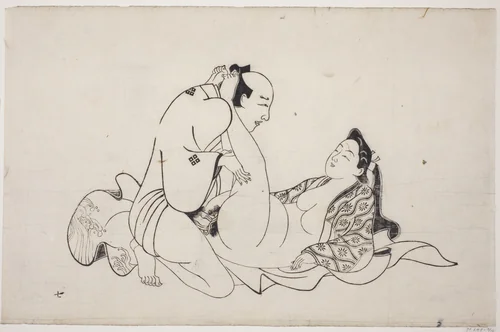
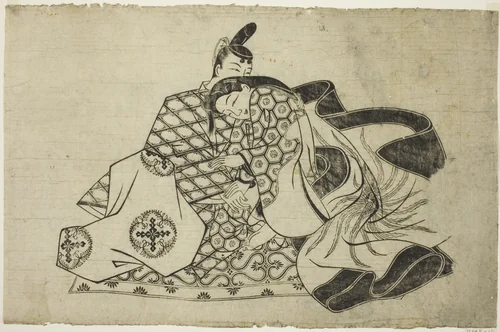
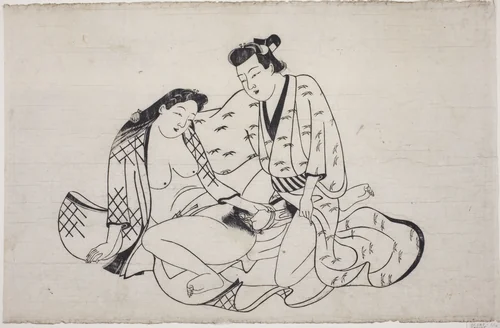
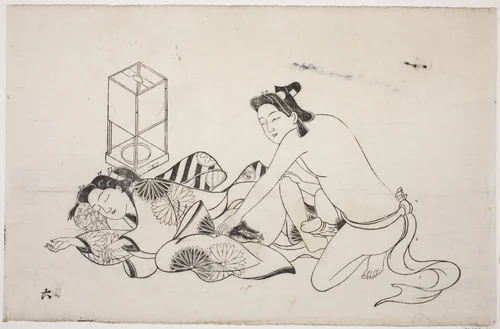
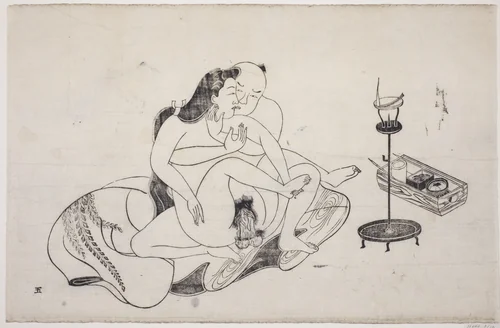
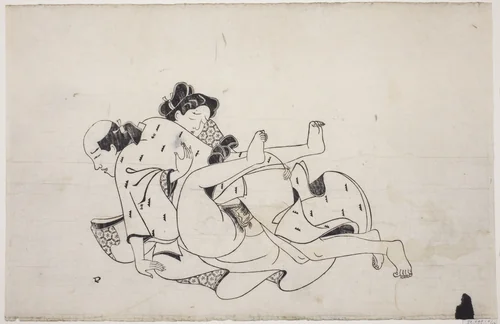
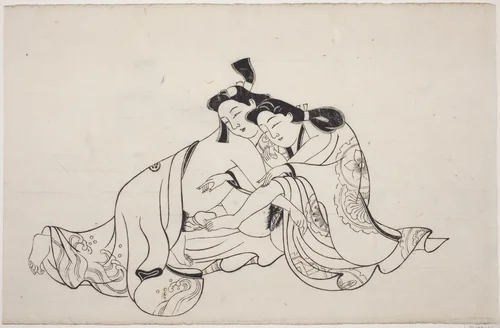
Perhaps the most telling sign of the era's expanding artistic appetite is the inclusion of "A sheet from a shunga album," which, contrasting sharply with the solemnity of Amida Buddha, illustrates the full spectrum of subject matter explored through Japanese prints. This range, spanning the deeply esoteric to the frankly erotic, affirms the era’s commitment to capturing both the spiritual life and the playful, unvarnished realities of society. These historic pieces, often made available as high-quality prints, confirm the tradition's unparalleled versatility and its commitment to diverse visual expression throughout these formative centuries.
Source: Wikipedia · CC BY-SA 4.0