Jan Witdoeck
Jan Witdoeck, also recorded as Hans Witdoeck, was a pivotal Flemish engraver, draughtsman, and art dealer active in Antwerp throughout the first half of the seventeenth century. His historical significance rests primarily on his specialized role within the dynamic workshop of Peter Paul Rubens, where he belonged to the final generation of authorized reproductive engravers entrusted with translating Rubens’s monumental visions into copperplate prints.
Operating between 1615 and 1639, Witdoeck refined the technical discipline required to scale down massive altarpieces into intimate, yet powerful, graphic works. These efforts were critical, ensuring the rapid and widespread dissemination of Rubens’s influential Baroque style across Europe. He began working specifically on these complex assignments around the mid-1630s, succeeding figures like Schelte à Bolswert and Lucas Vorsterman in the demanding art of capturing the master’s fluidity through the precision of the burin.
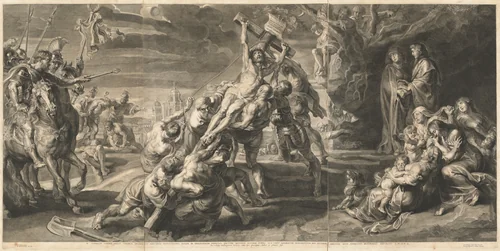
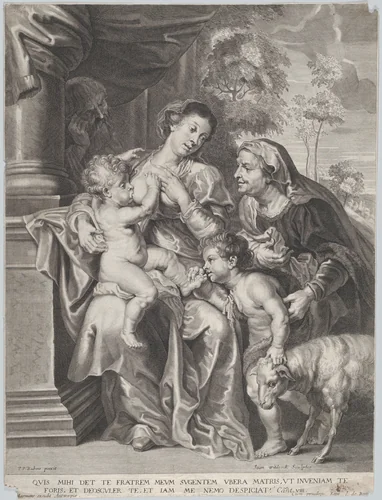
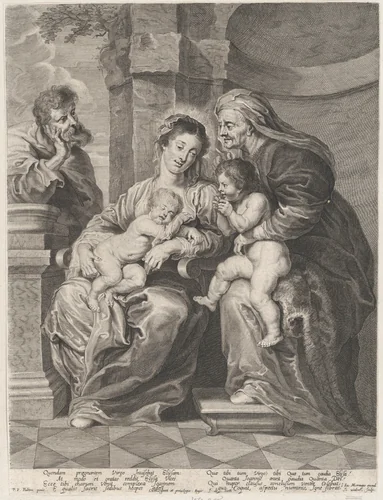
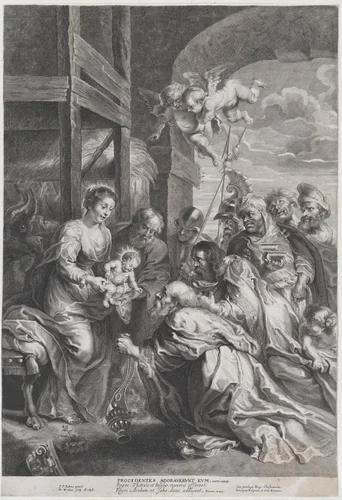
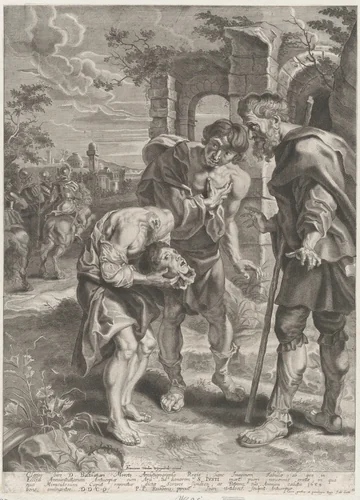
Witdoeck’s prints are characterized by their dramatic depth and meticulous detail, successfully capturing the intensity inherent in their painted sources. His interpretations include theological subjects such as The Holy Family with Elizabeth and the infant Saint John the Baptist, the Virgin nursing the infant Christ, and the compelling narrative of The Adoration of the Kings. Perhaps most arresting is his rendering of The miracle of Saint Just, who stands at center holding his decapitated head in his hands with two onlookers, which masterfully balances high drama and devotional intensity. He also successfully tackled large-scale devotional pieces, notably The Elevation of the Cross.
Unlike many of his printmaker contemporaries who focused exclusively on their reproductive craft, Witdoeck maintained an active parallel career as an art dealer. This dual role suggests a sharp commercial understanding of the European art market he simultaneously helped to supply, ensuring the consistent visibility and profitability of Rubens’s intellectual property.
Today, impressions of Jan Witdoeck prints are held in major public collections worldwide, including the Metropolitan Museum of Art and the National Gallery of Art. Their enduring technical excellence means these museum-quality works remain highly valued historical documents. Many of these important images are now in the public domain, providing researchers and enthusiasts with access to downloadable artwork for study, often available as high-quality prints reflecting the original standard.
Source: Wikipedia · CC BY-SA 4.0