Jan Wierix
Johannes Wierix (Jan Wierix) stands as a formidable figure in the flourishing world of 16th-century Flemish print production. Active primarily as an accomplished engraver, draughtsman, and publisher, Wierix established a formidable reputation for exceptional technical mastery that secured his place in major global collections, including the Metropolitan Museum of Art and the Art Institute of Chicago. His working career coincided with a massive popular demand for readily accessible devotional images and classical themes, a market he expertly served through prolific output.
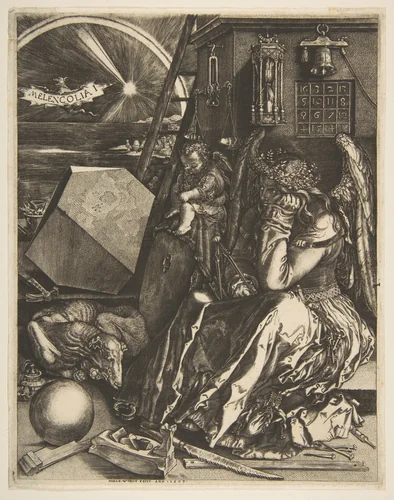
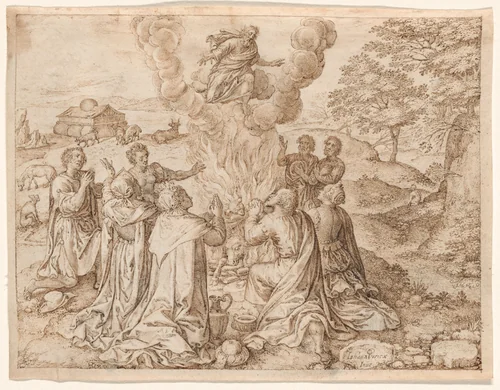
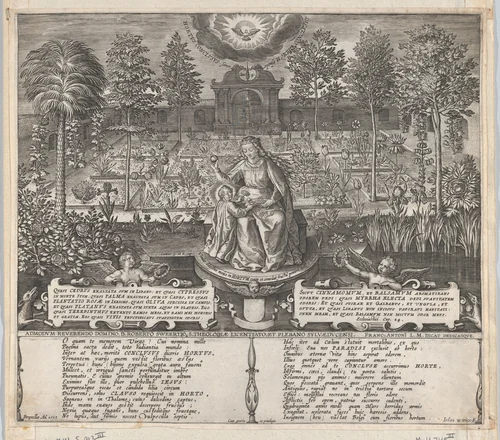
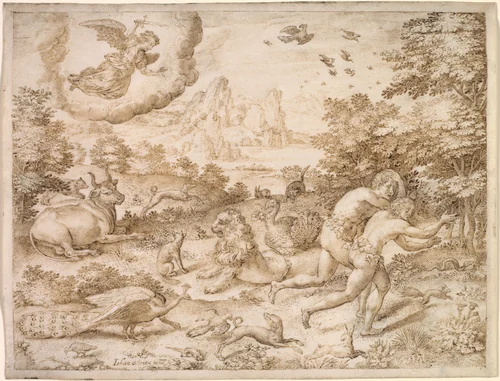
Wierix was known for the almost clinical precision of his line work and the remarkable consistency he maintained across large series. He excelled both in creating original compositions and in translating the vision of others, skillfully producing high-quality prints after the designs of local and foreign contemporaries. Whether interpreting Biblical scenes like the dramatic The Crucifixion (Round), or rendering intimate devotional iconography such as Madonna Crowned by Two Angels, Wierix executed his plates with a clarity that made complex imagery instantly legible to a broad audience. His focus on detail ensures that even copies, such as his version of Adam and Eve, remain definitive examples of period engraving.
Furthermore, Wierix was not confined merely to paper. His exacting draftsmanship extended into luxury materials, where he engraved delicate miniature images onto substrates of silver and ivory. This versatility speaks to a sophisticated clientele and his mastery of media outside of standard graphic production. It is a subtle observation that the sheer perfection of his technique sometimes suggests that Wierix viewed his hand less as an interpretive tool and more as a flawless visual recording instrument.
The thematic scope of Wierix’s output centered predominantly on narrative religious subjects, addressing didactic lessons and hagiography, exemplified by St. Bartholomew. While Jan Wierix paintings are virtually non-existent, his etchings ensured his wide dissemination across Europe. Because many of these historic print series are now considered public domain, institutions make these museum-quality prints accessible, ensuring future generations can study the meticulous detail that defined this crucial era of Northern Renaissance graphic art.
Source: Wikipedia · CC BY-SA 4.0