Jan Weenix
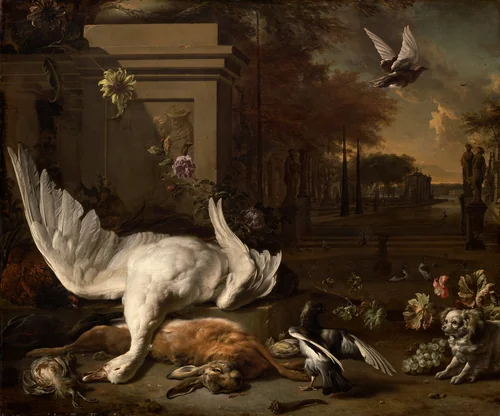
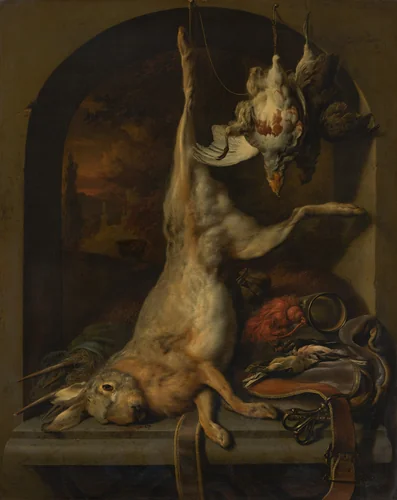
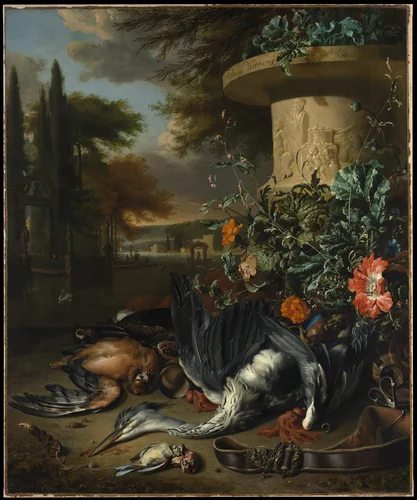
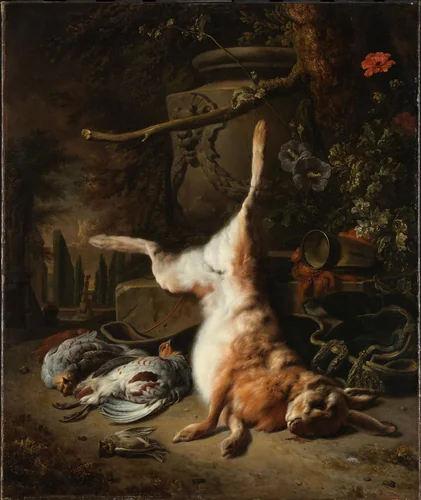
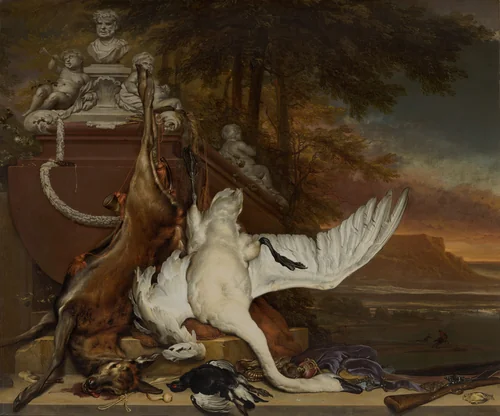
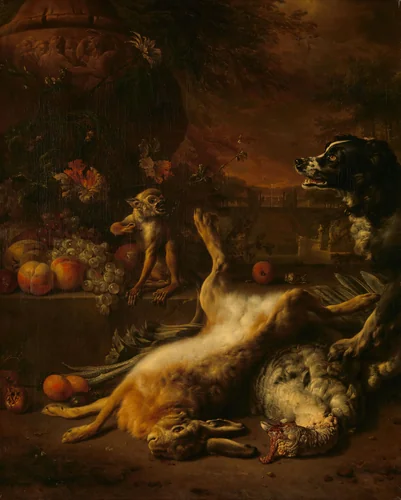
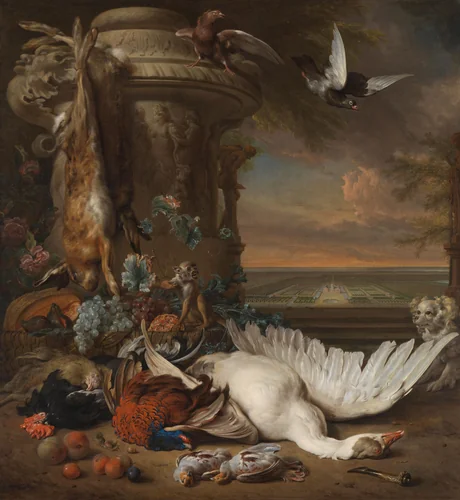
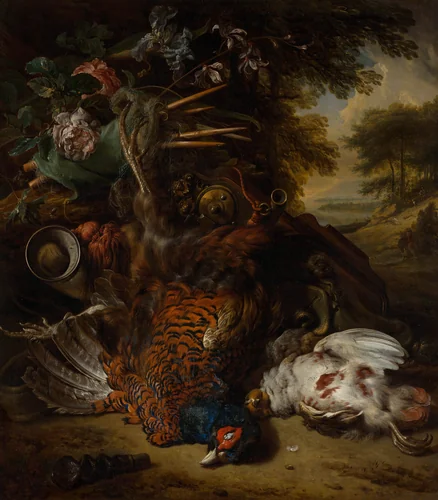
Jan Weenix (1650-1714) is recognized as one of the Dutch Golden Age’s most accomplished practitioners of the still life, celebrated particularly for elevating the hunting trophy and dead game stilleven to a high art form. Active across the latter half of the seventeenth century and into the early eighteenth, his prolific output documents a period of evolving tastes, where detailed representation of the spoils of the hunt and aristocratic pleasures became highly sought-after. Admired for their technical precision, atmospheric settings, and rich textural detail, Weenix’s canvases are cornerstones of major international collections, including the Mauritshuis, the Rijksmuseum, and the National Gallery of Art.
Weenix received his foundational artistic training from his father, Jan Baptist Weenix, working alongside his contemporary and cousin, the noted animal painter Melchior d'Hondecoeter. While he inherited his father’s capacity for diverse subjects, including landscapes and portraits, Jan Weenix eventually focused his considerable talents almost exclusively on richly composed hunting scenes and depictions of dead fowl and animals displayed in elaborate garden or architectural settings.
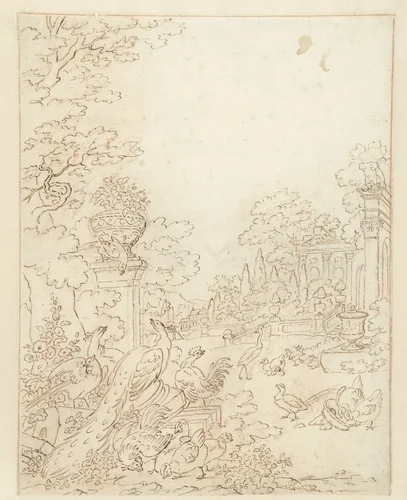
This specialization was so successful that historically, many of the finest Jan Weenix paintings in this specific genre were mistakenly attributed to the elder Jan Baptist, leading to decades of necessary curatorial reassessment. Today, the distinct clarity, refined composition, and almost tactile rendering evident in works like Hoenderhof firmly establish the son’s individual mastery.
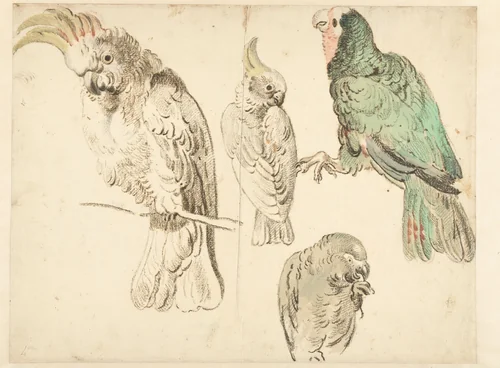
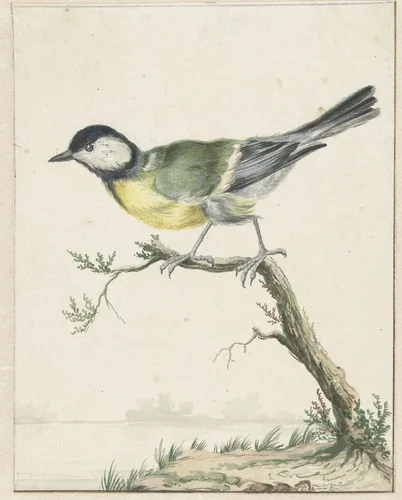
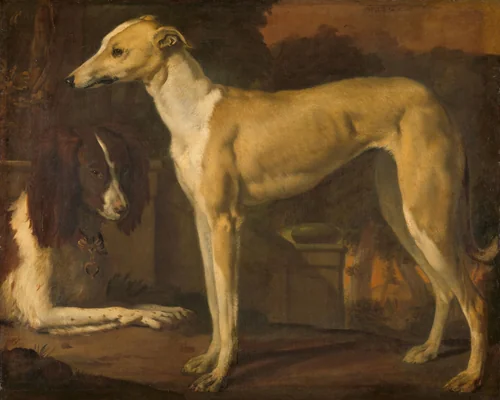
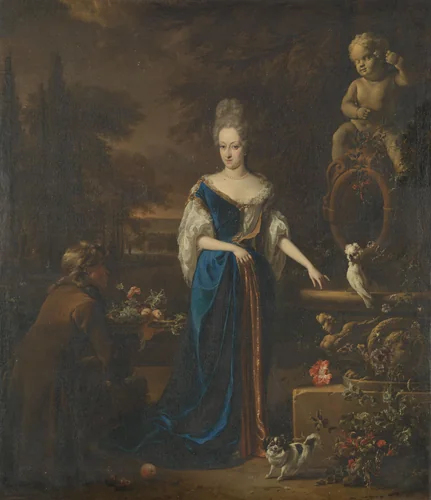
Weenix’s keen eye for anatomical detail and precision extended beyond game birds. He demonstrated an equal facility in commissioned canine likenesses, such as the evocative Portrait of a Greyhound and Spaniel, and exotic studies like Four Studies of Cockatoos. His capacity to capture texture-from the ruffled plumage of the tiny bird in Koolmees to the soft fur of a hare-demonstrates a virtuoso command of oil paint. It is perhaps telling that even when undertaking a portrait of a person, such as Portrait of Maria Cornelisz, Wife of Silvester van Tongeren, he often included a meticulously rendered animal companion or detailed garden setting, reminding the viewer that his greatest allegiance lay with the natural world.
Weenix’s commitment to observation set a high benchmark for subsequent artists in the genre. For researchers and enthusiasts today, the quality of his observation and technique remains accessible; many of his celebrated works have passed into the public domain, allowing for the creation of high-quality prints and downloadable artwork, ensuring that the aesthetic precision of Jan Weenix prints continues to be appreciated globally.
Source: Wikipedia · CC BY-SA 4.0